Cabinet Clears Pune Metro Phase-2 Lines 4 & 4A Expansion
RAILWAYS & METRO RAIL

Cabinet Clears Pune Metro Phase-2 Lines 4 & 4A Expansion

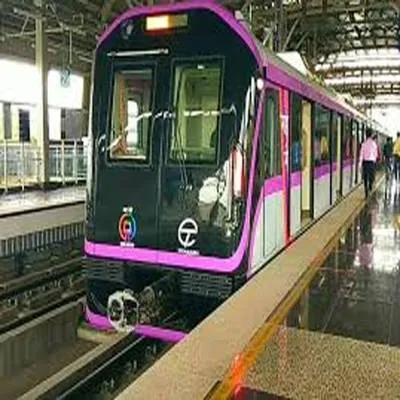
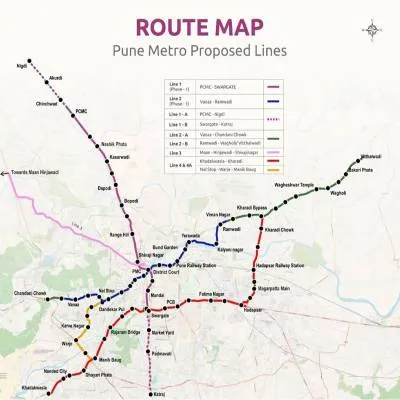
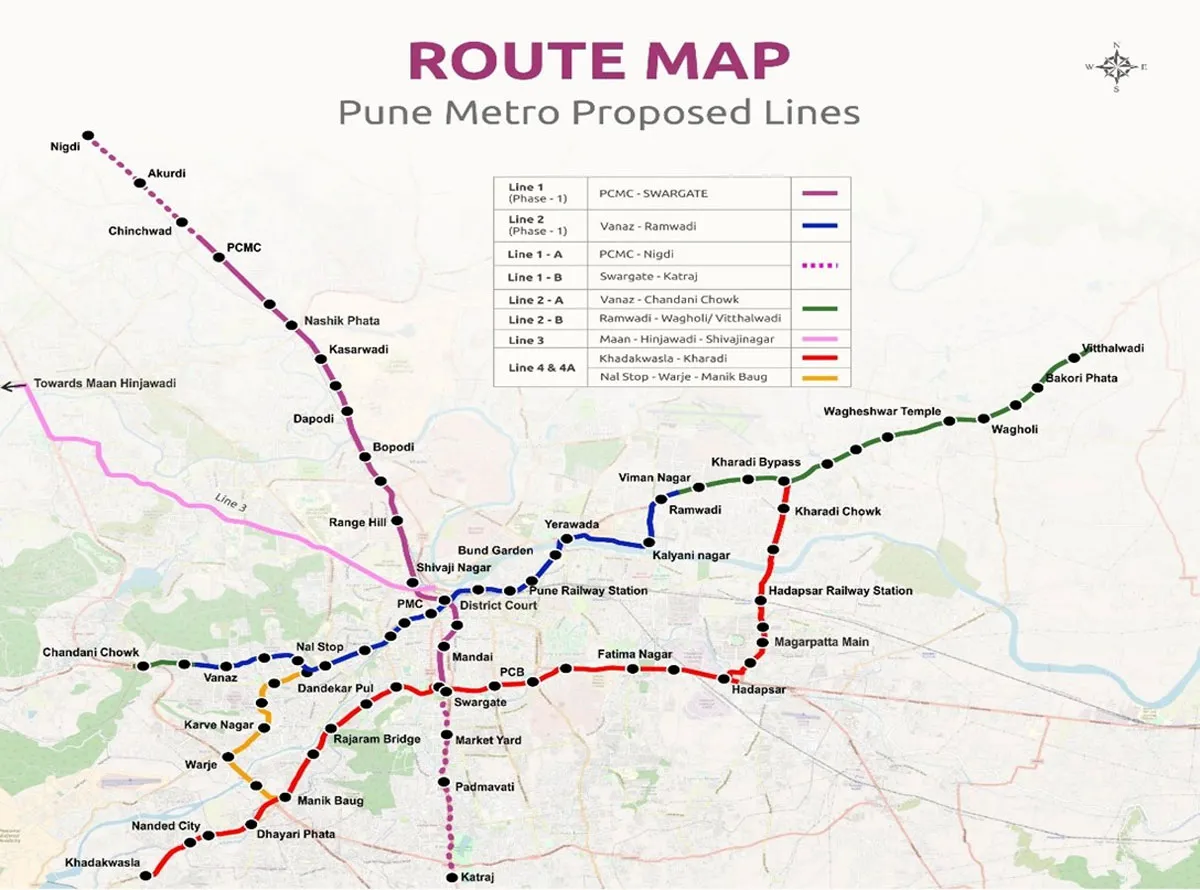
The Union Cabinet, chaired by Prime Minister Narendra Modi, has approved Phase-2 of the Pune Metro Rail Project—comprising Line 4 (Kharadi–Hadapsar–Swargate–Khadakwasla) and Line 4A (Nal Stop–Warje–Manik Baug). This is the second major approval under Phase-2, following the sanction of Lines 2A and 2B.
The two elevated corridors span 31.636 km with 28 stations and will link major IT parks, commercial districts, educational institutions and residential clusters across East, South and West Pune. The project will be completed in five years at an estimated cost of Rs 98.5785 billion, funded jointly by the Government of India, Government of Maharashtra and external financing agencies.
Both lines form an integral part of Pune’s Comprehensive Mobility Plan and will integrate seamlessly with existing and sanctioned routes at Kharadi Bypass, Nal Stop and Swargate. They will also provide interchange at Hadapsar Railway Station and connect with future corridors towards Loni Kalbhor and Saswad Road to strengthen metro-rail-bus connectivity.
Traversing key routes—including Solapur Road, Magarpatta Road, Sinhagad Road, Karve Road and the Mumbai–Bengaluru Highway—the corridors are expected to ease congestion, enhance commuter safety and support sustainable mobility across the city.
Maharashtra Metro Rail Corporation Limited (Maha-Metro) will implement the project, undertaking all civil, electrical, mechanical and systems works. Pre-construction activities—including topographical surveys and design consultancy—are already underway.
With this approval, Pune Metro’s network will cross the 100-km mark, marking a major step towards a modern, integrated and sustainable urban transit system. The new corridors are expected to save travel time, reduce traffic load and offer citizens a reliable, efficient and environmentally friendly alternative for daily commuting.

The Union Cabinet, chaired by Prime Minister Narendra Modi, has approved Phase-2 of the Pune Metro Rail Project—comprising Line 4 (Kharadi–Hadapsar–Swargate–Khadakwasla) and Line 4A (Nal Stop–Warje–Manik Baug). This is the second major approval under Phase-2, following the sanction of Lines 2A and 2B.The two elevated corridors span 31.636 km with 28 stations and will link major IT parks, commercial districts, educational institutions and residential clusters across East, South and West Pune. The project will be completed in five years at an estimated cost of Rs 98.5785 billion, funded jointly by the Government of India, Government of Maharashtra and external financing agencies.Both lines form an integral part of Pune’s Comprehensive Mobility Plan and will integrate seamlessly with existing and sanctioned routes at Kharadi Bypass, Nal Stop and Swargate. They will also provide interchange at Hadapsar Railway Station and connect with future corridors towards Loni Kalbhor and Saswad Road to strengthen metro-rail-bus connectivity.Traversing key routes—including Solapur Road, Magarpatta Road, Sinhagad Road, Karve Road and the Mumbai–Bengaluru Highway—the corridors are expected to ease congestion, enhance commuter safety and support sustainable mobility across the city.Maharashtra Metro Rail Corporation Limited (Maha-Metro) will implement the project, undertaking all civil, electrical, mechanical and systems works. Pre-construction activities—including topographical surveys and design consultancy—are already underway.With this approval, Pune Metro’s network will cross the 100-km mark, marking a major step towards a modern, integrated and sustainable urban transit system. The new corridors are expected to save travel time, reduce traffic load and offer citizens a reliable, efficient and environmentally friendly alternative for daily commuting.

Next Story
Real Estate

A Paradigm Shift

The Indian real-estate and construction sector, which employs a significant number of organised and unorganised workers in the country, has embarked on a paradigm shift in its regulatory framework from an employment law perspective. With the four Labour Codes – the Code on Wages, 2019 (Wage Code); the Industrial Relations Code, 2020 (IR Code); the Code on Social Security, 2020 (SS Code) and the Occupational Safety, Health and Working Conditions Code, 2020 (OSH Code) – coming into effect in India from November 21, 2025, the industry is shifting away from a fragmented, contractor- driven com..

Next Story
Technology

We offer end-to-end traceability at scale

mjunction has evolved from an e-auction pioneer into a multi-vertical digital commerce platform with deep expertise in complex steel and coal supply chains. Its end-to-end, AI-led architecture focuses on price discovery, traceability, compliance and scalability, enabling transparent procurement, efficient logistics and data-driven decision-making across geographies. Vinaya Varma, MD, shares more about the company in conversation with CW.From a technology standpoint, what are the core USPs of mjunction today that differentiate it in steel and coal supply chains?mjunction has evolved b..

Next Story
Infrastructure Urban

Henkel, Rotary Recycle PoP Ganesha Idols Under Project HARMONY

Henkel India, in partnership with the Rotary Club of Navi Mumbai – Joy of Giving and with support from the Navi Mumbai Municipal Corporation (NMMC), has advanced circular sustainability through Project HARMONY by recycling Plaster of Paris (PoP) Ganesha idols into community learning assets. The initiative highlights an integrated approach to environmental restoration and social impact.As part of the project, materials collected after Ganesh Visarjan 2025 at Nerul were responsibly diverted from land and water bodies and processed at an authorised recycling facility, with on-ground execution s..

Advertisement

Subscribe to Our Newsletter

Get daily newsletters around different themes from Construction world.

STAY CONNECTED

Advertisement

Advertisement

Advertisement

Advertisement

Open In App