CAG Flags Railways’ Failure To Monetise Vast Land Assets
RAILWAYS & METRO RAIL

CAG Flags Railways’ Failure To Monetise Vast Land Assets

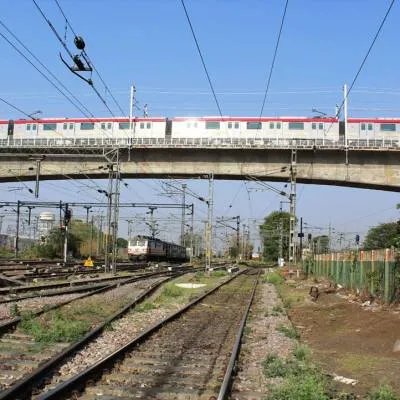
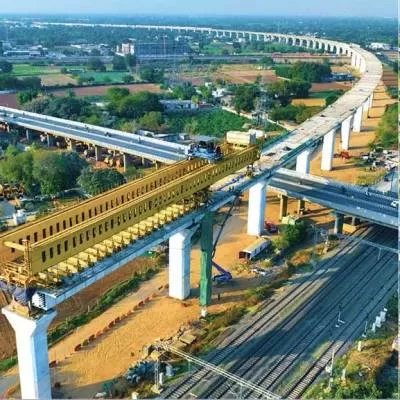
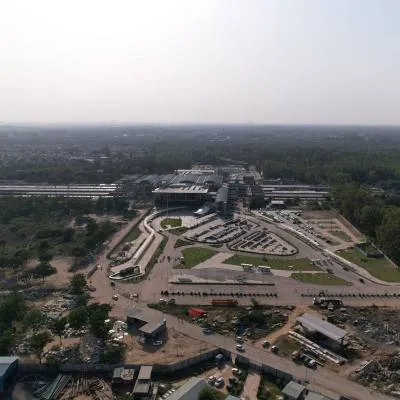
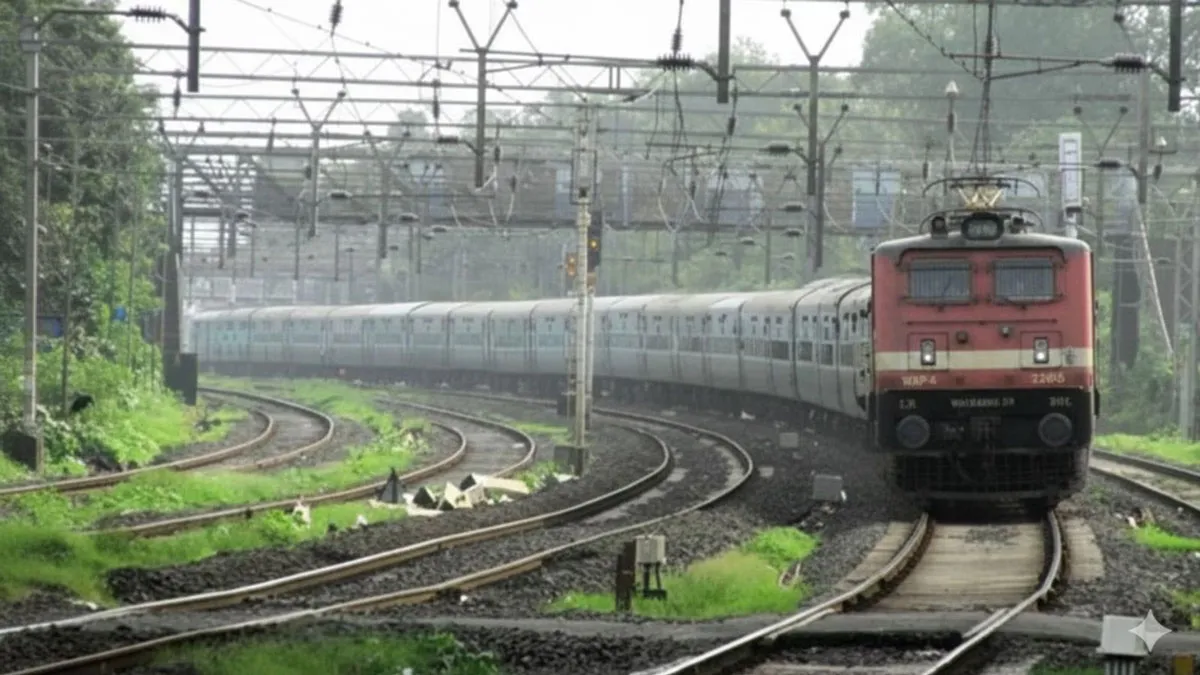
The Comptroller and Auditor General of India has flagged serious shortcomings in Indian Railways’ efforts to monetise its extensive land holdings, warning that weak execution has undermined plans to boost non-fare revenue.

In a report tabled in the Lok Sabha, the CAG said that out of a total land holding of about 488,000 hectares, Railways had identified only 13 per cent as vacant by March 2023 and managed to award just 87.76 hectares, or a negligible 0.14 per cent, to developers. Alarmingly, none of the awarded commercial sites had been developed as of that date, the audit noted.

The report said Railways’ revenues continue to depend largely on passenger and freight traffic, with limited scope to raise passenger fares without affecting affordability, and over-reliance on freight being neither prudent nor sustainable. In this context, the CAG reiterated that non-fare revenue, particularly through land monetisation, is a critical pillar of Railways’ long-term financial strategy.

To professionally develop and monetise surplus land, the Ministry of Railways set up the Rail Land Development Authority in 2006. However, the audit found that outcomes have fallen far short of expectations. Since its inception, around 998 hectares—about 1.59 per cent of total vacant land—has been entrusted to RLDA, but as of March 2023, only 8.8 per cent of this land had been awarded for development.

The CAG observed that several sites were handed over to RLDA despite unresolved land titles, encroachments and other encumbrances, leading to stalled projects and non-monetisation. It identified systemic and operational deficiencies that delayed land development and revenue realisation. Of 188 proposals for commercial sites received by the Ministry of Railways, only 59 were approved and entrusted to RLDA, while 129 proposals, or 69 per cent, remained pending as of March 2023, largely due to missing mandatory clearances.

The audit also flagged weak coordination within Railways, noting that in some cases land-related issues were discovered only after projects were awarded to developers, reflecting serious lapses in due diligence. Several sites were later withdrawn from RLDA, primarily due to encroachment and title disputes.

Even among the limited land awarded to developers, the CAG found deficiencies in a significant number of commercial and multi-functional complex sites, highlighting irregularities across multiple levels, including zonal railways, RLDA and the Ministry of Railways.

The Comptroller and Auditor General of India has flagged serious shortcomings in Indian Railways’ efforts to monetise its extensive land holdings, warning that weak execution has undermined plans to boost non-fare revenue. In a report tabled in the Lok Sabha, the CAG said that out of a total land holding of about 488,000 hectares, Railways had identified only 13 per cent as vacant by March 2023 and managed to award just 87.76 hectares, or a negligible 0.14 per cent, to developers. Alarmingly, none of the awarded commercial sites had been developed as of that date, the audit noted. The report said Railways’ revenues continue to depend largely on passenger and freight traffic, with limited scope to raise passenger fares without affecting affordability, and over-reliance on freight being neither prudent nor sustainable. In this context, the CAG reiterated that non-fare revenue, particularly through land monetisation, is a critical pillar of Railways’ long-term financial strategy. To professionally develop and monetise surplus land, the Ministry of Railways set up the Rail Land Development Authority in 2006. However, the audit found that outcomes have fallen far short of expectations. Since its inception, around 998 hectares—about 1.59 per cent of total vacant land—has been entrusted to RLDA, but as of March 2023, only 8.8 per cent of this land had been awarded for development. The CAG observed that several sites were handed over to RLDA despite unresolved land titles, encroachments and other encumbrances, leading to stalled projects and non-monetisation. It identified systemic and operational deficiencies that delayed land development and revenue realisation. Of 188 proposals for commercial sites received by the Ministry of Railways, only 59 were approved and entrusted to RLDA, while 129 proposals, or 69 per cent, remained pending as of March 2023, largely due to missing mandatory clearances. The audit also flagged weak coordination within Railways, noting that in some cases land-related issues were discovered only after projects were awarded to developers, reflecting serious lapses in due diligence. Several sites were later withdrawn from RLDA, primarily due to encroachment and title disputes. Even among the limited land awarded to developers, the CAG found deficiencies in a significant number of commercial and multi-functional complex sites, highlighting irregularities across multiple levels, including zonal railways, RLDA and the Ministry of Railways.

Next Story
Real Estate

A Paradigm Shift

The Indian real-estate and construction sector, which employs a significant number of organised and unorganised workers in the country, has embarked on a paradigm shift in its regulatory framework from an employment law perspective. With the four Labour Codes – the Code on Wages, 2019 (Wage Code); the Industrial Relations Code, 2020 (IR Code); the Code on Social Security, 2020 (SS Code) and the Occupational Safety, Health and Working Conditions Code, 2020 (OSH Code) – coming into effect in India from November 21, 2025, the industry is shifting away from a fragmented, contractor- driven com..

Next Story
Technology

We offer end-to-end traceability at scale

mjunction has evolved from an e-auction pioneer into a multi-vertical digital commerce platform with deep expertise in complex steel and coal supply chains. Its end-to-end, AI-led architecture focuses on price discovery, traceability, compliance and scalability, enabling transparent procurement, efficient logistics and data-driven decision-making across geographies. Vinaya Varma, MD, shares more about the company in conversation with CW.From a technology standpoint, what are the core USPs of mjunction today that differentiate it in steel and coal supply chains?mjunction has evolved b..

Next Story
Infrastructure Urban

Henkel, Rotary Recycle PoP Ganesha Idols Under Project HARMONY

Henkel India, in partnership with the Rotary Club of Navi Mumbai – Joy of Giving and with support from the Navi Mumbai Municipal Corporation (NMMC), has advanced circular sustainability through Project HARMONY by recycling Plaster of Paris (PoP) Ganesha idols into community learning assets. The initiative highlights an integrated approach to environmental restoration and social impact.As part of the project, materials collected after Ganesh Visarjan 2025 at Nerul were responsibly diverted from land and water bodies and processed at an authorised recycling facility, with on-ground execution s..

Advertisement

Subscribe to Our Newsletter

Get daily newsletters around different themes from Construction world.

STAY CONNECTED

Advertisement

Advertisement

Advertisement

Advertisement

Open In App