Centre Clears Rs 27.81 Billion Rail Projects In Gujarat, Maharashtra
RAILWAYS & METRO RAIL

Centre Clears Rs 27.81 Billion Rail Projects In Gujarat, Maharashtra

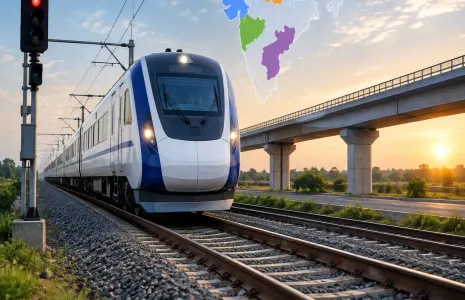
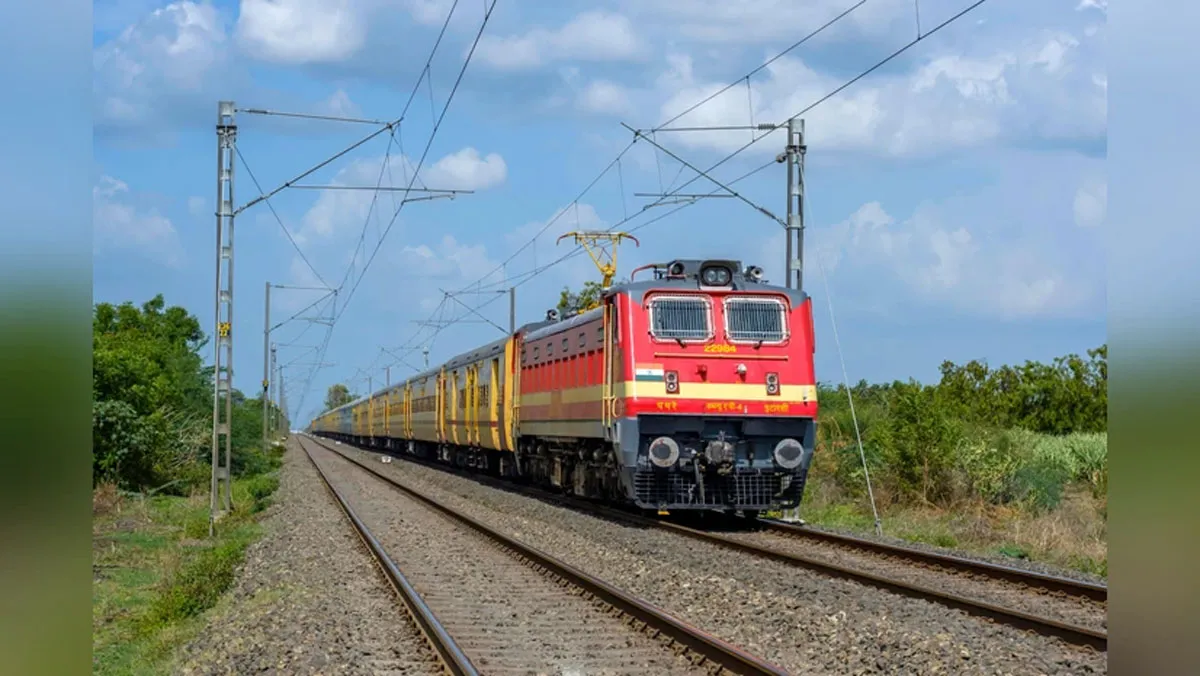
The Cabinet Committee on Economic Affairs on Wednesday approved two major railway projects worth Rs 27.81 billion in Gujarat and Maharashtra to ease congestion, improve services and boost regional connectivity.

Rail Projects Approved

• Devbhumi Dwarka (Okha)–Kanalus doubling (141 km) • Badlapur–Karjat 3rd and 4th lines (32 km)

Together, the two schemes will add 224 km to the Indian Railways network, benefiting nearly 585 villages with a combined population of about 3.2 million. The Kanalus–Okha doubling will improve access to the Dwarkadhish temple and support development across Saurashtra. The Badlapur–Karjat stretch—part of the Mumbai suburban network—will gain two additional lines to reduce congestion on one of India’s busiest commuter corridors. The route is also critical for the movement of coal, salt, containers, cement and petroleum products, and added capacity is expected to allow Railways to handle up to 18 million tonnes more freight annually.

Cabinet Approves Pune Metro Lines 4 & 4A

The Cabinet also approved two new corridors under Phase-2 of the Pune Metro project:

• Line 4: Kharadi–Hadapsar–Swargate–Khadakwasla • Line 4A: Nal Stop–Warje–Manik Baug

This marks the second major approval under Phase-2, following the clearance of Lines 2A and 2B.

31.6 km, 28 Stations

Lines 4 and 4A will span 31.636 km with 28 elevated stations, linking IT hubs, business districts, residential zones and major educational institutes across East, South and West Pune. The project, costing Rs 98.5785 billion, will be completed within five years, taking Pune Metro’s network past 100 km.

Major Interchanges

The new corridors will integrate with existing and upcoming lines at:

• Kharadi Bypass • Nal Stop (Line 2) • Swargate (Line 1)

They will also connect to Hadapsar Railway Station and proposed extensions toward Loni Kalbhor and Saswad Road.

Connectivity Across Key Roads

The lines will run along major corridors including:

• Solapur Road • Magarpatta Road • Sinhagad Road • Karve Road • Mumbai–Bengaluru Highway

Ridership Projections

Combined daily ridership for Lines 4 and 4A is expected to be:

• 409,000 passengers in 2028 • ~700,000 in 2038 • ~963,000 in 2048 • Over 1.17 million in 2058

The Kharadi–Khadakwasla corridor alone will carry 323,000 passengers in 2028, rising to 933,000 by 2058, while the Nal Stop–Warje–Manik Baug spur will grow from 85,555 to 241,000 over the same period.

The Cabinet Committee on Economic Affairs on Wednesday approved two major railway projects worth Rs 27.81 billion in Gujarat and Maharashtra to ease congestion, improve services and boost regional connectivity. Rail Projects Approved • Devbhumi Dwarka (Okha)–Kanalus doubling (141 km) • Badlapur–Karjat 3rd and 4th lines (32 km) Together, the two schemes will add 224 km to the Indian Railways network, benefiting nearly 585 villages with a combined population of about 3.2 million. The Kanalus–Okha doubling will improve access to the Dwarkadhish temple and support development across Saurashtra. The Badlapur–Karjat stretch—part of the Mumbai suburban network—will gain two additional lines to reduce congestion on one of India’s busiest commuter corridors. The route is also critical for the movement of coal, salt, containers, cement and petroleum products, and added capacity is expected to allow Railways to handle up to 18 million tonnes more freight annually. Cabinet Approves Pune Metro Lines 4 & 4A The Cabinet also approved two new corridors under Phase-2 of the Pune Metro project: • Line 4: Kharadi–Hadapsar–Swargate–Khadakwasla • Line 4A: Nal Stop–Warje–Manik Baug This marks the second major approval under Phase-2, following the clearance of Lines 2A and 2B. 31.6 km, 28 Stations Lines 4 and 4A will span 31.636 km with 28 elevated stations, linking IT hubs, business districts, residential zones and major educational institutes across East, South and West Pune. The project, costing Rs 98.5785 billion, will be completed within five years, taking Pune Metro’s network past 100 km. Major Interchanges The new corridors will integrate with existing and upcoming lines at: • Kharadi Bypass • Nal Stop (Line 2) • Swargate (Line 1) They will also connect to Hadapsar Railway Station and proposed extensions toward Loni Kalbhor and Saswad Road. Connectivity Across Key Roads The lines will run along major corridors including: • Solapur Road • Magarpatta Road • Sinhagad Road • Karve Road • Mumbai–Bengaluru Highway Ridership Projections Combined daily ridership for Lines 4 and 4A is expected to be: • 409,000 passengers in 2028 • ~700,000 in 2038 • ~963,000 in 2048 • Over 1.17 million in 2058 The Kharadi–Khadakwasla corridor alone will carry 323,000 passengers in 2028, rising to 933,000 by 2058, while the Nal Stop–Warje–Manik Baug spur will grow from 85,555 to 241,000 over the same period.

Next Story
Real Estate

Modon, Related, Panepinto form JV for Harborside 4 in Jersey City

Abu Dhabi-based Modon Holding PSC has formed a joint venture with US real estate major Related Companies and Jersey City-based Panepinto Properties to develop Harborside 4, a 54-storey luxury residential tower on a prime waterfront site in downtown Jersey City, New Jersey.Under the partnership, Modon will hold a majority equity stake alongside Related and Panepinto, marking another step in the group’s strategy to scale and diversify its global real estate portfolio. The project will be developed on one of the last remaining premium waterfront parcels in the city.Designed by Handel Architects..

Next Story
Infrastructure Urban

P+Ex and Post-Tensioning Institute partner to drive sustainability

P+Ex, the Center of Excellence for Concrete Preservation and Service Life Extension, has announced a strategic partnership with the Post-Tensioning Institute (PTI) aimed at advancing sustainability, durability, and resilience in the built environment.The collaboration brings together P+Ex’s expertise in concrete preservation, repair, and service life extension with PTI’s global leadership in post-tensioning technology. Through this alliance, the two organisations will work to advance best practices in durability-focused design for new structures, while also promoting effective repair, reha..

Next Story
Infrastructure Energy

India’s Largest 2,000 MW Subansiri Hydro Project Turns Operational

India’s largest hydropower project, the 2,000 MW Subansiri Lower Hydroelectric Project, has finally become operational with the commissioning of its first unit, marking a major milestone after nearly 20 years of development marked by delays, protests and cost escalation.The 250 MW Unit-2 of the project, located on the Subansiri River at Gerukamukh on the Assam–Arunachal Pradesh border, was virtually inaugurated from New Delhi by Union Minister of Power Manohar Lal Khattar. The event was attended by Pankaj Agarwal, Secretary (Power), and Bhupender Gupta, Chairman and Managing Director, Nati..

Advertisement

Subscribe to Our Newsletter

Get daily newsletters around different themes from Construction world.

STAY CONNECTED

Advertisement

Advertisement

Advertisement

Advertisement

Open In App