+
Centre Confirms Kanjikode Rail Coach Factory Will Not Proceed
RAILWAYS & METRO RAIL

Centre Confirms Kanjikode Rail Coach Factory Will Not Proceed

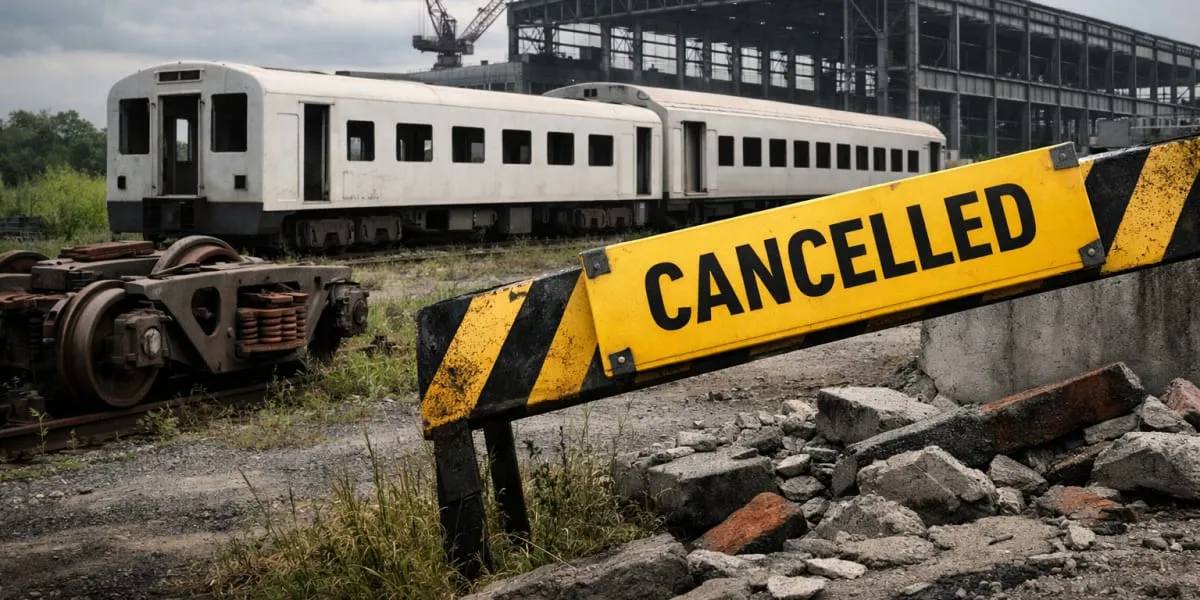
The Union government has confirmed that the proposed rail coach factory at Kanjikode will not be implemented, bringing an end to an 18-year wait for Kerala. The confirmation was included in Railway Minister Ashwini Vaishnaw's reply in the Rajya Sabha on July 31 to a question from MP John Brittas. Local officials and industry observers had anticipated significant job creation and ancillary industrial development in the Palakkad region and now face reconsideration of local economic plans and infrastructure priorities in the near term.

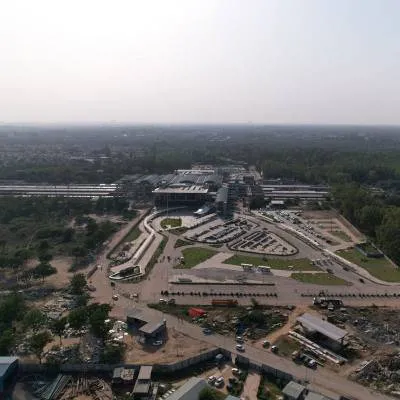
While the reply stopped short of using the word cancelled, it stated that existing railway coach manufacturing units and those already planned are sufficient to meet Indian Railways rolling stock requirements in the near future. It added that the 228 acres of railway land acquired at Kanjikode would instead be utilised for future development and operational needs of Indian Railways. The statement effectively closes the chapter on a project long projected as Kerala's biggest railway manufacturing venture.

The coach factory was first announced in the Railway Budget for 2008-09 and later approved under the Railway Budget 2012-13 in the joint venture and public private partnership mode. For Palakkad and the wider region, the proposal had been held out as a transformative industrial investment that would establish a manufacturing hub. The project did not move beyond the foundation stone and the recent admission amounts to a formal closure of the proposal.

The decision will reshape expectations around rail related industrial development in Kerala and require planners and local stakeholders to reconsider future investment strategies. Authorities have stated the land will be retained for railway operational purposes and used for future development within parameters set by Indian Railways. The outcome leaves a long standing promise unfulfilled and prompts reflection on how large scale industrial commitments are translated into implementation.

The Union government has confirmed that the proposed rail coach factory at Kanjikode will not be implemented, bringing an end to an 18-year wait for Kerala. The confirmation was included in Railway Minister Ashwini Vaishnaw's reply in the Rajya Sabha on July 31 to a question from MP John Brittas. Local officials and industry observers had anticipated significant job creation and ancillary industrial development in the Palakkad region and now face reconsideration of local economic plans and infrastructure priorities in the near term. While the reply stopped short of using the word cancelled, it stated that existing railway coach manufacturing units and those already planned are sufficient to meet Indian Railways rolling stock requirements in the near future. It added that the 228 acres of railway land acquired at Kanjikode would instead be utilised for future development and operational needs of Indian Railways. The statement effectively closes the chapter on a project long projected as Kerala's biggest railway manufacturing venture. The coach factory was first announced in the Railway Budget for 2008-09 and later approved under the Railway Budget 2012-13 in the joint venture and public private partnership mode. For Palakkad and the wider region, the proposal had been held out as a transformative industrial investment that would establish a manufacturing hub. The project did not move beyond the foundation stone and the recent admission amounts to a formal closure of the proposal. The decision will reshape expectations around rail related industrial development in Kerala and require planners and local stakeholders to reconsider future investment strategies. Authorities have stated the land will be retained for railway operational purposes and used for future development within parameters set by Indian Railways. The outcome leaves a long standing promise unfulfilled and prompts reflection on how large scale industrial commitments are translated into implementation.

Related Stories

Gold Stories

Next Story
Infrastructure Urban

KONE Opens India's First Digital Experience Centre in Pune

KONE, a global elevator and escalator manufacturer, has inaugurated its first Digital Experience Centre (DEC) in India, located in Pune. The facility aims to showcase how artificial intelligence (AI), connectivity and data-driven technologies can enhance customer experiences and improve building operations.The centre was inaugurated by Jussi Herlin, Executive Vice Chair, KONE Corporation; Philippe Delorme, President and CEO, KONE; and Nandan Nilekani, Co-founder and Chairman of the Board, Infosys.Designed as an interactive customer environment, the facility demonstrates digital solutions cover..

Next Story
Infrastructure Urban

CII GreenCo Launches Circularity Guidelines for Indian Industry

The Confederation of Indian Industry (CII) GreenCo Council has launched the CII GreenCo Circularity Guidelines – Pilot Version at the 17th CII GreenCo Waste & Resource Management Summit 2026 in Chennai. The initiative aims to strengthen resource efficiency, waste reduction and circular economy practices across Indian manufacturing and process industries.The guidelines introduce a structured framework with circularity indices covering raw materials, consumables, packaging and other resource inputs. These indicators will help industries assess existing practices, identify opportunities to ..

Next Story
Infrastructure Energy

Global Electronics Association Launches IPC-1783-CO2E Standard

The Global Electronics Association has introduced IPC-1783-CO2E, a new international standard aimed at improving consistency, transparency and comparability in product carbon footprint reporting across the electronics manufacturing industry.The standard, titled International Standard for Data Collection and Reporting of CO2 Equivalent (CO2e) Emissions for the Electronics Manufacturing Supply Chain, provides industry-specific guidance for collecting, estimating and reporting carbon emissions data.With increasing regulatory requirements and customer expectations, electronics manufacturers face c..

Advertisement

Subscribe to Our Newsletter

Get daily newsletters around different themes from Construction world.

STAY CONNECTED

Advertisement

SPECIAL OFFER
QR Code