Railway Board Clears Punjab-Made Vande Bharat for 160 kmph
RAILWAYS & METRO RAIL

Railway Board Clears Punjab-Made Vande Bharat for 160 kmph

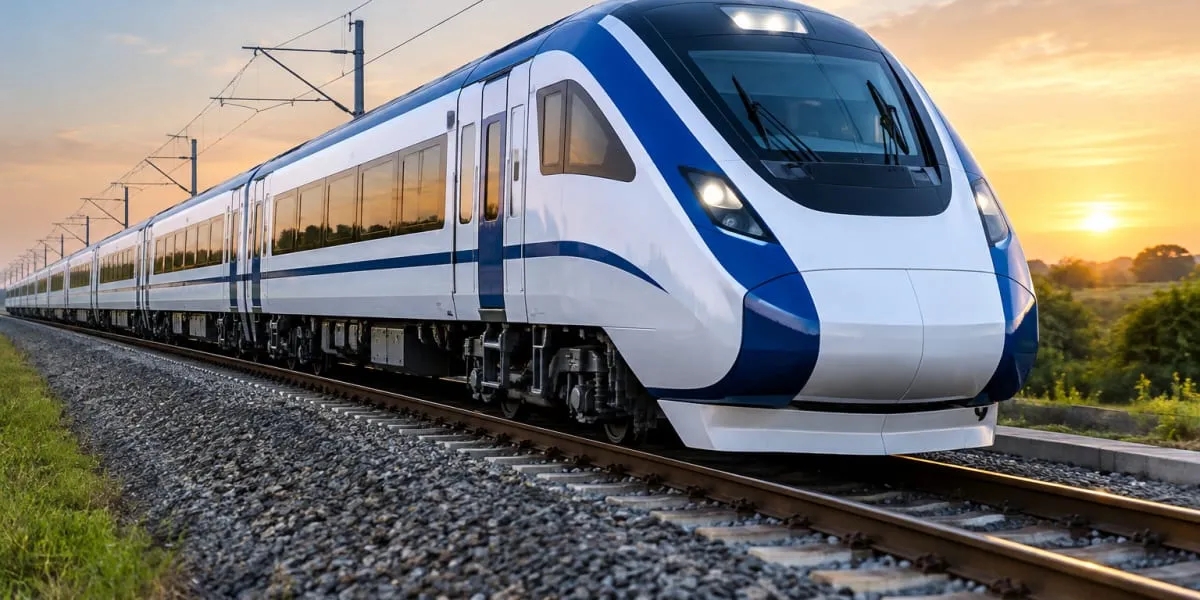
The Railway Board has approved the introduction of a 16-car Vande Bharat Chair Car trainset manufactured at Rail Coach Factory (RCF), Kapurthala, Punjab, with an Alstom propulsion system. The trainset has been cleared to operate at speeds of up to 160 kmph on the Indian Railways network, subject to safety and operational conditions.

The approval applies to tracks that meet the standards prescribed in the Indian Railways Permanent Way Manual, 2024, including geometry requirements for operations at 160 kmph. It follows technical recommendations and clearances from the Research Designs and Standards Organisation (RDSO) and the Chief Commissioner of Railway Safety.

Zonal railways must comply with the conditions in the final speed certificate before introducing the trainset. Track infrastructure must meet requirements for trains operating above 110 kmph and up to 160 kmph, while the General Manager’s sanction will be required before the train enters service.

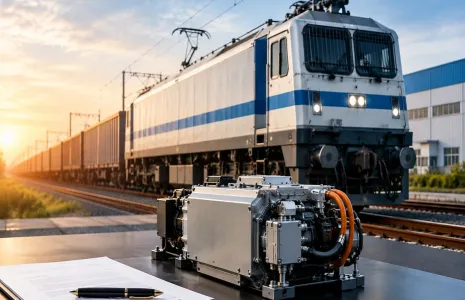
The Board has also asked RDSO and RCF to reassess the rating of selected equipment, including the traction motor. The motor in the Alstom-powered trainset is rated at 270 kW, compared with 210 kW in the Medha-powered version and 225 kW in the Siemens-powered version. The Board also raised concerns over single-pole miniature circuit breakers in electrical control cabinets and directed that double-pole units be used in the current and future trainsets.

Other directions cover the proper securing of fire extinguishers, locking of equipment cubicle doors, and the use of fire-resistant cables for CCTV systems and impact-resistant memory modules in future production. Staff must be trained for emergencies, including fires, passenger alarm operations and the use of fire barrier doors. Tools for uncoupling the semi-permanent coupler within 15 min must be included in driver and guard kits.

The driver’s cab must remain locked during operation, while earthing, onboard communication and coach temperatures must be maintained. Passenger safety announcements are to be made in three languages, with provisions and signage for persons with disabilities and senior citizens.

The Railway Board has approved the introduction of a 16-car Vande Bharat Chair Car trainset manufactured at Rail Coach Factory (RCF), Kapurthala, Punjab, with an Alstom propulsion system. The trainset has been cleared to operate at speeds of up to 160 kmph on the Indian Railways network, subject to safety and operational conditions. The approval applies to tracks that meet the standards prescribed in the Indian Railways Permanent Way Manual, 2024, including geometry requirements for operations at 160 kmph. It follows technical recommendations and clearances from the Research Designs and Standards Organisation (RDSO) and the Chief Commissioner of Railway Safety. Zonal railways must comply with the conditions in the final speed certificate before introducing the trainset. Track infrastructure must meet requirements for trains operating above 110 kmph and up to 160 kmph, while the General Manager’s sanction will be required before the train enters service. The Board has also asked RDSO and RCF to reassess the rating of selected equipment, including the traction motor. The motor in the Alstom-powered trainset is rated at 270 kW, compared with 210 kW in the Medha-powered version and 225 kW in the Siemens-powered version. The Board also raised concerns over single-pole miniature circuit breakers in electrical control cabinets and directed that double-pole units be used in the current and future trainsets. Other directions cover the proper securing of fire extinguishers, locking of equipment cubicle doors, and the use of fire-resistant cables for CCTV systems and impact-resistant memory modules in future production. Staff must be trained for emergencies, including fires, passenger alarm operations and the use of fire barrier doors. Tools for uncoupling the semi-permanent coupler within 15 min must be included in driver and guard kits. The driver’s cab must remain locked during operation, while earthing, onboard communication and coach temperatures must be maintained. Passenger safety announcements are to be made in three languages, with provisions and signage for persons with disabilities and senior citizens.

Related Stories

Gold Stories

Next Story
Building Material

PureSil Paints Develops Mineral Coatings from Industrial Waste

PureSil Paints, a brand of Relic Coatings LLP, has developed an indigenous mineral-based coating technology aimed at reducing dependence on petrochemical-derived raw materials in the paints and coatings industry. Its proprietary Silicification Technology uses agricultural and industrial by-products to manufacture architectural coatings as an alternative to conventional acrylic paints.Developed in-house by Dr Nikhil Dhote, Founder and Chief Technologist, Relic Coatings LLP, the technology uses silicate binders derived from upcycled rice husk ash and industrial coal fly ash. The formulation is d..
Next Story
Infrastructure Energy

Vedanta Eyes AI to Accelerate Mineral Exploration

Vedanta Group is exploring the use of artificial intelligence (AI) to significantly improve efficiency in mineral exploration, geological analysis and resource modelling. The company aims to reduce exploration processes that traditionally take three to four months to just six to seven days through AI-driven technologies.The proposed approach involves AI-led geological analysis and mineral block modelling to accelerate mineral resource assessment and support faster, more cost-efficient development of domestic mineral reserves. The initiative aligns with India's growing focus on critical mineral..
Next Story
Technology

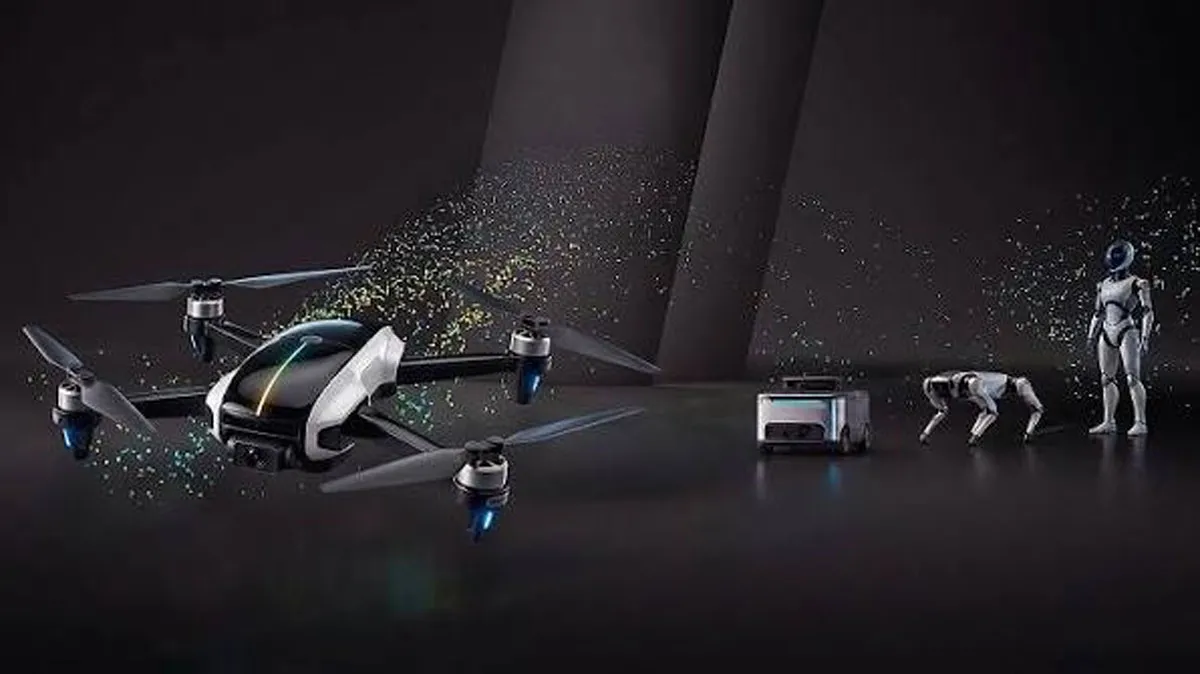
NXP Launches Unified Robotics Platform for Physical AI

NXP Semiconductors has launched a unified robotics platform designed to accelerate the development and deployment of trusted physical artificial intelligence (AI) systems. Built on the company's neural axis architecture, the platform integrates AI processing, connectivity, motor control, security and energy management within a common hardware and software ecosystem.The platform combines an open-source, modular software development kit (SDK) with pre-validated reference designs, enabling developers to build robotic systems more efficiently. It supports development ranging from individual subsys..

Advertisement

Subscribe to Our Newsletter

Get daily newsletters around different themes from Construction world.

STAY CONNECTED

Advertisement

SPECIAL OFFER
QR Code