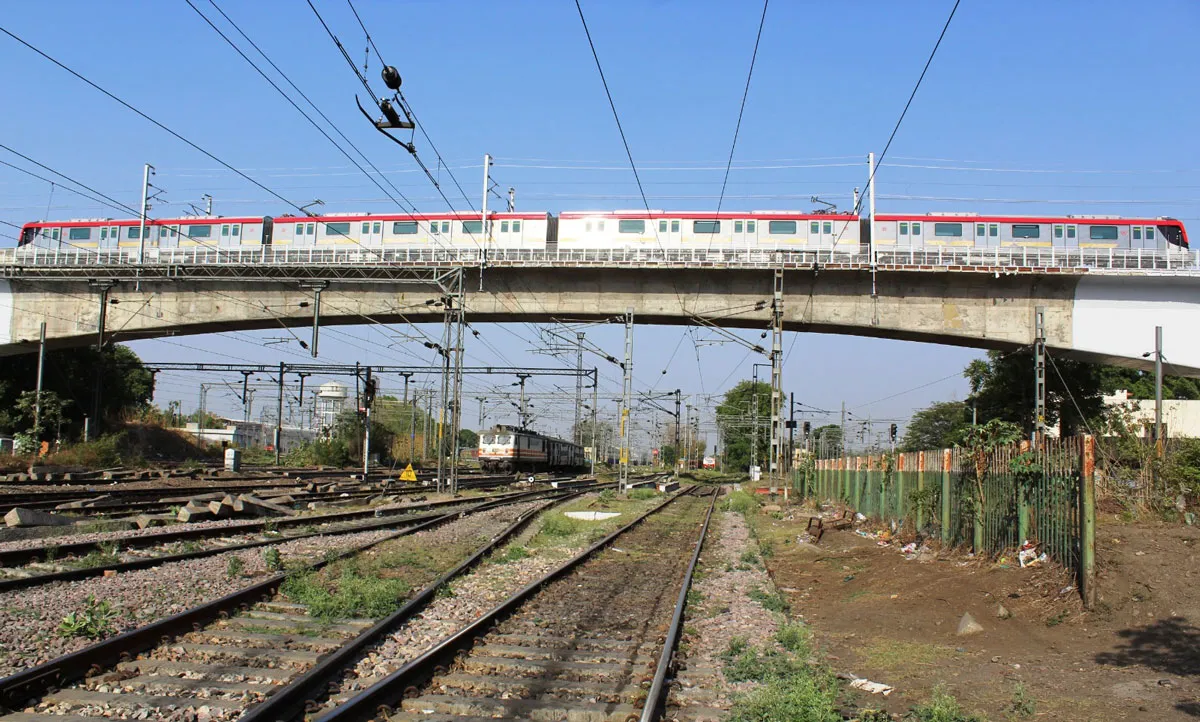
There is no clearer sign that India’s metro-rail revolution is no longer a big-city story than having a metro in 23 cities. From being one-off projects in Kolkata and Delhi, metro rails have evolved into a national urban transformation project aiming at reshaping mobility, land use and sustainability in every city with an operational metro.However, this project has neither seen uniform success across cities, nor success in every city.Experts in unison agree with the observation of Vipul Surana, Senior Vice President and Head of Transit and Rail, India, AECOM: “The Delhi Metro Rail Corporation’s extensive network of interconnected corridors has played a transformative role in reshaping mobility across the National Capital Region,” reducing emissions and road congestion at scale, and enabling major transit-oriented development around some corridors. “A lifeline of the city” is what Rajendra Prasad, Director - Railways, Consulting Engineers Group, calls the Delhi Metro. Today, the Delhi Metro accounts for around 30 per cent of total public transport passenger-kilometres, compared to about 19 per cent for buses (~49 per cent combined), which reflects an extensive network, strong interchanges and integration with the urban fabric, leading to reduced emissions and improved sustainability outcomes, according to Manish Sharma, Leader - Infrastructure, Transport, Logistics and Real Estate, PwC.Typically, the influence of a transit system (population within, say, 1-2 km of the asset) extends not only along metro lines but also around individual stations, where Delhi has succeeded in fostering density (about one station per 1.3 km). Large networks paired with closely spaced stations are key to maximising impact.The success of Delhi Metro and metros in a few other cities has led to a perception shift, says Sharma, towards a metro being a ‘must-have’ for every developing metropolitan city. The danger in this, he says, is many newer metro projects have been greenlighted without adequate due diligence.Consequently, of 20+ cities with metros, Prasad reckons, barely six to seven are attracting enough ridership to recoup their operating cost. Karun Sareen, Partner, Major Projects Advisory, KPMG in India, labels many metros in Tier-2 cities as “costly mobility solutions, rather than transformative investments that shape urban development”. “In some Tier-2/3 cities,” adds Sunil Srivastava, Managing Director, Barsyl, “the metro has become an expensive backbone with low ridership, high subsidies and limited impact on urban form.” As Prasad sums up, “a metro in every city may not work.”CW explores the big question: Just what does it take for a metro to deliver?Dense developmentsIn Delhi and Mumbai, cities with successful metros, the metro rail system didn’t arrive alone. It arrived with coordinated planning, strong institutions behind project delivery and operations and a supportive urban ecosystem, avers Srivastava. In contrast, he says, cities with a metro but no parallel land-use reforms haven’t seen similar success. A case in point is Bengaluru, where the land use still favours a low-density sprawl, so demand for private vehicles keeps growing. The weak enforcement of transit-oriented development, fragmented urban planning and poor last-mile connectivity haven’t allowed the metro to become the success it could have been.In Agra, Kanpur and Jaipur as well, metro stations are often surrounded by low-density development with poor last-mile connectivity. Ample global examples bring out the value of transit-oriented development not only in metro success but also in delivering quality lifestyles.In cities like Copenhagen, Singapore and Hong Kong, Sareen says metro systems aligned with high-density, mixed-use development around stations have been instrumental in cutting the carbon footprint, modal shifts and fostering greener lifestyles.“Tokyo is a classic example of a city with a dense metro network that has helped sustain a large population,” adds R Anantakumar, Director and Chief Operating Officer, Afcons Infrastructure.In Hong Kong, rail-based public transport accounts for roughly 80-90 per cent of daily passenger trips, supported by dense transit-oriented development, mixed-use development and excellent last-mile connectivity.Singapore has a public transport mode share of around 65 per cent (approximately 38 per cent metro and 27 per cent bus), driven by strong mass rapid transit integration with housing and employment centres. Recent analysis by CBRE suggests that India’s leading cities have additional real-estate development potential of over 106 million sq ft if transit-oriented, mixed-use projects are undertaken. “Cities such as Delhi-NCR, Mumbai, Chennai and Bengaluru have made tangible progress by aligning large transport stations with transit-oriented and mixed-use developments, combining offices, retail, residential and logistics functions around high-capacity mobility corridors,” notes Anshuman Magazine, Chairman & CEO - India, Southeast Asia, Middle East & Africa, CBRE.Land monetisationWhen speaking of non-fare revenue, transit-oriented development and land monetisation are frequently cited as a means to make metros “more viable, attractive and ensure returns for the funding agencies”, to quote Anantakumar.However, their implementation is constrained by multiple factors.Ownership of land in close proximity to the metro station, which, arguably, is easiest to monetise, often vests with third parties because it is rare for any metro project to involve the acquisition of more land through government mechanisms than what is needed specifically for the metro, which makes it challenging to monetise, points out Sajith Sreedharan, Managing Director, Eka Infra Consultants. “The closer real estate is to the metro, the more its value appreciates; this creates other challenges, especially in denser cities where the opportunity cost of the land is significantly higher, posing additional costs on the development of metros and increasing the scale of economic benefit required to make the metro viable.”Essentially, he points out that while metro stations and lines create real-estate value, it is often for the benefit of others and is difficult to internalise into the metro’s financial structure. In contrast, in Hong Kong, the Mass Transit Railway Corporation gets the benefits of the co-development of properties with private developers.Srivastava brings out other reasons for land monetisation, while often touted as a silver bullet, to rarely deliver on time or at scale. “While air-rights development, commercial leasing and transit-oriented development can generate revenue, these tools depend heavily on real-estate cycles, zoning flexibility, unified land ownership and simplified approval regimes, all of which vary widely across states,” he explains.International examples like Hong Kong’s Mass Transit Rail and UK’s Crossrail, says Sareen, demonstrate that successful monetisation is achievable when transit agencies have the authority to shape zoning regulations.Value capture financing, the public-finance strategy involving the funding of government infrastructure by capturing some of the increased land/property value that the public investment will create for private owners, relies on mechanisms such as betterment levies, development charges and transferable development rights, all of which Srivastava says “are promising but politically sensitive and administratively complex, keeping lenders and investors cautious, demanding predictable regulatory environments and clearly derisked cash flows”.Tax increment financing, a tool to apply future property tax revenue increases from the area to the metro project, comes with its own challenges, particularly because metro authorities and municipal corporations maintain separate balance sheets, and neither is willing to relinquish revenue, says Sharma.Noting that delays in integrating transit-oriented development and land value capture frameworks with metro planning have frequently resulted in missed revenue opportunities, Surana says a structured land value capture policy, early planning integration and strong coordination between metro authorities and urban local bodies are essential to address these challenges.Another way of generating financing for new corridors, Sharma proposes, could be from the real-estate sector, as they are the prime beneficiaries of the increased land value from investments in public transit. In France, a transportation tax is imposed on all businesses with more than a specific number of employees, with the premise being that the employees will be able to get to work more effectively as a result of the expenditures made in the transportation system.Customer focusNon-farebox revenue could easily account for more than 15 per cent of overall metro revenue, reckons Sharma, if customer needs and experience are focused on, recognising that metro transit is fundamentally a B2C business and should be managed as such.As he points out, “Simply placing shops in open areas without considering customer needs seldom succeeds. But rarely do we see experts beyond infrastructure, transport planning in land value capture and transit-oriented development being involved in discussions. Ideating non-farebox revenue needs experts from sectors like retail/consumer and media/entertainment, who would really understand the B2C space well.”Both farebox and non-farebox revenue strategies could greatly benefit from studying the approach of privatised airports, adds Sharma. These entities have moved beyond treating their operations as mere asset management to fully embrace the B2C dimension of their business.Private financeBeing big-ticket infrastructure projects with a low rate of returns – essentially, inherently financially unviable – earlier metro projects have relied heavily on government-backed loans for funding.While the Metro Rail Policy 2017 has encouraged private-sector participation as a prerequisite for availing Central Government funding, the private sector-led development of metros, as seen in the case of Delhi Metro Airport Express, Hyderabad Metro or Rapid Metro Gurugram, has encountered challenges.Sharma points out that the arbitration case between Reliance and Delhi Metro played out for over a decade, which is detrimental to the interests of private-sector players, especially where large sums of investments are involved.A few metro rail projects developed on the PPP model are struggling to achieve financial stability, notes Sareen.Consequently, most metro expansions today require blended financing, what Srivastava details as “a mix of state support, multilateral funding, Central Government equity, viability gap financing and carefully structured non-fare revenue streams.”Private-sector investments in the operations and maintenance (O&M) space have also been sparse. “With an ageing infrastructure, it is imperative to bring private-sector efficiencies into the system to ensure minimal downtime of operations,” says Sharma. “However, no metro organisations have developed roadmaps to significantly ramp up private-sector investment in the O&M functions.”Intermodal hubs Seamless transfers between metro, suburban rail, bus and other last-mile systems such as rickshaws and taxis, by means of common concourses and unified ticketing and passenger information, reduce travel time and encourage the use of public transport, thus enhancing the sustainability of urban transport networks.If intermodal hub has become a buzzword, it is with good reason. The future of mobility, says Srivastava, is not about new modes but seamless movement across modes.India has a few examples of intermodal hubs, or where the integration facilitates travel across modes with one ticket, a step ahead for not only “reducing travel time and improving freight efficiency but also supporting sustainable urban expansion and attracting institutional capital from top global players”, says Magazine.Anand Vihar functions as a major intermodal transport hub in East Delhi, integrating the Delhi Metro (Anand Vihar station), Anand Vihar Railway Terminal, the Interstate Bus Terminal (ISBT) and city bus station. The metro station, Sharma notes, is located in close proximity to the railway and bus terminals, allowing passengers to move between metro, bus and railway services through at-grade pedestrian crossings and foot overbridges. “Passenger movement is further facilitated by the provision of escalators and elevators. By prioritising physical proximity, direct connectivity and passenger convenience, Anand Vihar demonstrates how metro stations can be effectively integrated with Indian Railways to enable smooth and efficient modal transfers.”The Delhi-Ghaziabad-Meerut RRTS is a leading integration example where multiple Delhi metro lines, interstate bus terminals and future airport links allow for seamless journeys, adds Sareen.Kochi presents a compelling example of multimodal integration where the city’s water metro system seamlessly connects with the conventional metro and bus networks, strengthening last-mile connectivity, offering commuters a smooth, reliable travel experience, and with commercial and public spaces, encouraging compact, mixed-use development, says Surana.In Delhi, Ahmedabad, Hyderabad, Kolkata and Mumbai, integrated stations, uniform ticketing and pedestrian links have significantly boosted ridership and user satisfaction and supported environment-friendly urban growth. In Mumbai, the Maharashtra government has introduced ‘one card’ to enable passengers to hop across multiple public transport modes. However, Sareen says overcoming institutional barriers remains essential to accelerate these advancements.Slow implementation of interoperable ticketing, inconsistent fare systems and insufficient pedestrian infrastructure make such integration challenging, agrees Surana. “Space constraints and utility conflicts make physical integration considerably more difficult in densely inhabited places.”Pointing out that intermodal is still only a buzzword, Prasad says a lot needs to be done on the ground and the first step towards such connectivity may be making it a mandatory element of every metro project.Metro-bus-rail integrationJapan, UK and the EU have shown how a conventional railway system built more than a century ago can be successfully synergised with metros, a comparatively new phenomenon. London’s King’s Cross station is a good example.Metro stations can effectively integrate with railways and bus networks via a transit-oriented development framework. Colocation, common concourses, shared circulation space such as common footbridges and subways, ticketing and fare integration and revenue-sharing agreements, coordinated scheduling, unified passenger information systems, operations and security alignment covering joint emergency response protocols and baggage/parcel rules, clear responsibilities for station services, unified mobility planning, last-mile connectivity and a pedestrian-friendly infrastructure are some of the key elements of such integration. Digital enablers like common mobility cards, real-time passenger information systems and smart wayfinding may also prove critical to ensure smooth transitions between modes, adds Magazine.“Intermodal hubs must be designed for minimal walking time, such that transfers take ideally under five minutes with level or ramped transfer paths, with single wayfinding language (consistent signage, colour coding and platform numbering), a unified fare and fare capping to ensure that transfers don’t add friction or cost surprises, and accessibility and clear staff assistance (tactile paths, audio announcements, staff assistance at peak interchange times),” says Srivastava.While Indian Railways and metro agencies are experimenting with integrated foot-overbridges and concourses, he says the next step will be through ticketing, shared customer service and synchronised operations at key interchange points.Challenges will come in the way of the integration of metro stations with the railway and bus networks. “Overcoming fragmented planning, land constraints, legacy infrastructure and coordination gaps across multiple authorities,” Magazine says, “may require a shift towards integrated governance models, early-stage coordination between transport agencies and private-sector participation to fund and operate high-quality interchange infrastructure.”Station redevelopmentIntegrating metro stations with Indian railways is a station redevelopment issue, according to Sreedharan, citing Charing Cross (UK) as a good example, which has seen major redevelopment, including the development of offices and shops above the tracks.India’s railway stations are some of the most valuable pieces of urban real estate. But to enhance their value, “stations should not only be developed as a transport hub but also as a business hub,” says Prasad. Every station by virtue of seeing voluminous footfalls can present major business opportunities. Can such redevelopment happen effectively via the PPP route?Sareen responds, “PPPs are feasible where stations have strong commercial potential and clear development rights allowing private partners to recover investments through real estate, advertising and user fee”. For his part, Surana says, “Station redevelopment projects are well suited for PPP models, particularly where they are developed as multimodal hubs with integrated commercial, retail and mixed-use components. PPPs enable the leveraging of private-sector capital, innovation and operational efficiencies while optimally allocating risks.”As redevelopment offers vast avenues for commercial development aimed at maximising non-farebox revenues (through retail, hospitality, offices, etc), Sharma says they are particularly suitable for PPP.Under the Amrit Bharat Station Scheme in which 1,300+ stations are being redeveloped, 15 stations are being taken up on PPP basis. The new station in Bhopal (Rani Kamalapati) is a shining example of how private-sector synergy with the public sector can achieve best-in-class infrastructure development.But redeveloping stations via the PPP route presents challenges. To start with, private players who prefer quick returns on investment may choose not to partake in expensive redevelopment projects with longer payback periods and relatively lower financial returns compared to other types of infrastructure, like toll roads, airports, etc, notes Sharma. Limitations arising out of surrounding land use, which severely restrict the product mix offered at the redeveloped stations and thereby affect the yield for private developers, can further keep away the private sector.A key post-linkage challenge is the different business models of stations and metros, which can cause friction between the developer and the metro authority, says Sajith. “Whereas the developer seeks to maximise commercial leasing area close to the footfall from the metro and slowing egress, the metro seeks to maximise the flow of people through the area speeding them past the commercial real estate as quickly as practical.”Certain best practices can help make this work. Sharma underscores the need for a uniform framework that not only has robust revenue-sharing mechanisms across the station’s developmental phases but also prevents elaborate case-specific customisations, which increases contractual complexity.“With the right governance framework, station redevelopment can become a robust PPP opportunity, unlocking mixed-use commercial development, retail zones, mobility hubs and public plazas,” adds Srivastava. When urban local bodies collaborate with railway and metro authorities through joint task forces or SPVs, station areas evolve into vibrant urban centres, engines of economic activity rather than isolated rail assets.He further cautions that PPPs work only when land titles are clean and consolidation is complete, zoning and FSI rules are predictable, risk is balanced between the public and private sectors, approvals are fast-tracked, and minimum revenue guarantees or long-lease structures provide investor comfort.Urban local body supportGreater cooperation between urban local bodies and metro authorities is vital to increase ridership. “Urban local bodies play an important role in enabling the seamless and hassle-free transfer of passengers from the metro station to other modes of transport,” according to Prasad. “The 100 m beyond the entry/exit points of the metro should be well-maintained focal areas to attract all kinds of patronage. This emphasis is missing. In New Delhi, we’ve seen an essential foot overbridge connecting Indian Railways and the metro being constructed more than a decade after the metro was started, which shows the need for government bodies to work in unison instead of in silos.”In a city like Tokyo, the transition from the metro station to the next mode of transport is such a smooth and positive experience that even car owners prefer the metro, he adds.The onus of limiting other modes of high polluting transport in routes with metros and levying congestion charges to discourage private transport also lies on urban local bodies.Framework loopholesWhile the Metro Rail Policy 2017 lays down certain criteria for availing Central Government assistance, a framework with quantifiable criteria for greenlighting metro rail proposals by state governments is missing, points out Sharma. While this framework may include clearly defined threshold levels of local GDP, total population, projected peak-time ridership per hour, etc, he says it should also contain adequate checks and balances so that certain parameters are not overstated in the proposals.Another gap that needs to be filled, which would help the transition from the silo-driven approach in planning for future mobility to a holistic approach where budgetary allocations to respective modes of transport allocations are based on factors such as reliability, savings of time or money, reduction in emissions achieved, accessibility, etc, is the creation of Urban Metropolitan Transport Authorities (UMTAs). As Sharma shares, these statutory bodies were meant to be established in million-plus cities in the National Urban Transport Policy 2006 as well as the Metro Rail Policy 2017, but have still not materialised. “While these bodies are conceived to be multidisciplinary and cross-functional in nature, comprising representatives of departments like urban development, transport, finance and public works, the present policy does not truly empower the UMTA as the prime mover of urban mobility.”A legal mandate requiring the UMTA to be a full-time institution manned by domain experts, positioned as the epicentre of urban mobility planning and operations, is long overdue to prevent frequent inter-agency conflicts, he adds.As Surana notes, establishing UMTAs with legal authority is crucial for ‘one network, one fare, one timetable’.
A crucial choice: Construct elevated or underground?
Elevated metro corridors cost typically 30-50 per cent less to construct than underground corridors besides being easier to maintain, faster to construct and associated with more predictable expenses and reduced lifecycle risks, especially when constructed along wide rights of way. So, for suburban stretches and greenfield corridors with wide median alignments, elevated corridors are a clear winner.
However, underground lines remain indispensable in dense central business districts, heritage or environmentally sensitive areas, corridors where land acquisition is prohibitive, major arterial crossings, areas where the visual and noise impact of viaducts is unacceptable, and where passenger demand justifies higher costs, avers Sunil Srivastava, Managing Director, Barsyl.
In the long run, according to R Anantakumar, Director and Chief Operating Officer, Afcons Infrastructure, underground metros have been more successful in maintaining the city’s architecture, whilst providing a faster mode of public transportation.
Ultimately, says Srivastava, “hybrid networks are often optimal – elevate in suburbs, tunnel in core, guided by a holistic cost-benefit analysis that includes social impact, urban form and long-term value creation.”
While tunnel-boring machines are usually cited as a factor for the higher cost of underground construction, Srivastava points out that tunnel-boring costs themselves have risen due to complex geology, dense urban utilities, material inflation and the sheer engineering effort required for underground stations. In many cases, station cavern costs rival or exceed tunnelling costs.
Tunnel boring aside, Anantakumar says the comparatively longer construction times associated with underground sections are known to add to costs.
Rising costs related to utilities diversion, geotechnical risk management and skilled labour all significantly increase the cost of underground metro construction, says Vipul Surana, Senior Vice President and Head of Transit and Rail, India, AECOM.
Complex decisions such as building elevated or underground must be based on value-for-money assessments including the land cost, environmental/social impacts, and lifecycle O&M, explains Srivastava. While Sajith Sreedharan, Managing Director, Eka Infra Consultants, says the choice between the two is usually dictated by the ability to deliver the route, Anantakumar believes this choice should be founded on the urgency, budget and city’s landscape (urbanisation goals).
Two global examples are worth citing here. Sreedharan points out that London’s development was driven by its underground. As it expanded into suburbs and suburbs developed around those lines, closing the distance between the centre and faraway living spaces, the city saw a large movement of population away from the centre. “New York adopted London’s approach but initially with elevated lines, which soon gave way to the underground because they were noisy, dirty and unappealing in other ways.”
Metros and regional rapid transit systems: Complementary systems
Closely allied to the metro rail is the regional rapid transit system (RRTS) designed to facilitate efficient regional commutes over distances of approximately 50-100 km, or 45-90 minutes, typically between core metropolitan regions and surrounding satellite towns.
In filling the gap between the metro (intracity) and intercity rail, a well-planned RRTS relieves road and rail corridors and shapes regional urbanisation. Essentially, the RRTS allows populations of surrounding metropolitan regions to access core city employment and services without having to migrate, a win-win proposition for both the metropolitan region and satellite towns.
Citing the Delhi-Meerut RRTS as a good example, Prasad believes that efficient RRTS could also help decongest cities by encouraging reverse migration.
RRTS can enable the development of “contra-magnetic cities”, secondary cities to maintain the jobs-housing balance across regions, according to Karun Sareen, Partner, Major Projects Advisory, KPMG in India. “The RRTS model,” he says, “mirrors the Paris RER and Tokyo rail models that have been largely regarded as successful models to support the growth of satellite cities and decongest the metropolis.”
Sunil Srivastava, Managing Director, Barsyl, sees the RRTS as adding most value in polycentric regions with multiple satellite towns such as the NCR, Pune-Mumbai corridor and Bengaluru. “When paired with coordinated land-use policy across jurisdictions,” he says, “RRTS-type systems can reshape settlement patterns, especially in cities like Mumbai, Pune, Bengaluru and Hyderabad, where satellite towns are growing faster than the core. Otherwise, unmanaged RRTS can also spur peripheral sprawl.”
Role of digital tools in metro project management
Digital tools have been extensively deployed by project management consultancies to monitor and deliver large metro projects with many interdependencies.
According to R Anantakumar, Director and Chief Operating Officer, Afcons Infrastructure, “BIM is a very effective tool for the entire project lifecycle, if exploited to its fullest potential. Digital twins and AI are additional enablers that can help expand BIM’s full capability.”
“BIM offers a common, interdisciplinary model to reduce errors in coordination and rework,” explains Vipul Surana, Senior Vice President and Head of Transit and Rail, India, AECOM. “BIM facilitates clash detection, interface clarity and 4D/5D integration of scope, time and cost.”
Anantakumar points out that BIM is a mandate for any tender submission in Singapore, Europe, etc, and is slowly getting incorporated in the Indian system as well.
“IoT replaces fragmented, delayed data with real-time visibility, i.e. environmental conditions, equipment utilisation, quality, safety and progress,” adds Surana. “Before making decisions, digital twins forecast results, test delay-recovery solutions and model situations using live data and BIM. AI transforms the project management consultancy from a reactive management body to predictive, evidence-based leadership by handling massive data streams, finding root causes, anticipating early hazards, maximising resources across limits and providing explainable, quick decision support.”
Upcoming metro opportunities
Pune Metro Rail Project Phase 2
Covering two elevated corridors (Vanaz-Chandani Chowk and Ramwadi-Wagholi), 12.75 km with 13 stations
Delhi Metro
Extension of the Aerocity-Tughlakabad Corridor to Indira Gandhi Domestic Terminal 1, 2.16 km, underground
Magenta Line Extension (Line 8) – Ramakrishna Ashram Marg to Indraprastha, 9.913 km, underground
Golden Line Extension (Line 10) – Tughlakabad to Kalindi Kunj, 9 km, elevated
Noida Sector 51 to Knowledge Park V, 17.435 km
Ahmedabad Metro Rail Project Phase-2A
Extension for direct connectivity to Sardar Vallabhbhai Patel Airport, 6.032 km
Bangalore Metro Phase 3
45 km
Expansion of water metro
Replicating the Kochi Water Metro, technical feasibility studies for water metros in 24 cities
Delhi Metro's extensive network of interconnected corridors has played a transformative role in reshaping mobility across the NCR.
- Vipul Surana, Sr. Vice President and Head of Transit and Rail, India, AECOM
Ideating non-farebox revenue needs experts from sectors like retail/consumer and media/entertainment.
- Manish Sharma, Leader - Infrastructure, Transport, Logistics and Real Estate, PwC
A metro in every city may not work.
- Rajendra Prasad, Director - Railways, Consulting Engineers Group
In some Tier-2/3 cities, the metro has become an expensive backbone with low ridership, high subsidies and limited impact on urban form.
- Sunil Srivastava, Managing Director, Barsyl
Ownership of land in close proximity to the metro station often vests with third parties, which makes it challenging to monetise.
- Sajith Sreedharan, Managing Director, Eka Infra Consultants
Building elevated or underground should be founded on the urgency, budget and city’s landscape.
- R Anantakumar, Director and Chief Operating Officer, Afcons Infrastructure
RRTS can enable the development of contra-magnetic cities.
- Karun Sareen, Partner, Major Projects Advisory, KPMG in India
India’s leading cities have additional real-estate development potential of over 106 million sq ft if transit-oriented, mixed-use projects are undertaken.
- Anshuman Magazine, Chairman & CEO - India, Southeast Asia, Middle East & Africa, CBRE
The Big Picture
To ensure India’s metro-rail revolution transitions from a perceived must-have trend into a sustainable urban reality, the focus must shift from mere construction to comprehensive integration and institutional reform. This begins with the mandatory implementation of intermodal hubs and the legal empowerment of Urban Metropolitan Transport Authorities (UMTAs) to finally deliver a one network, one fare, one timetable experience. Financial sustainability hinges on moving beyond farebox collection by involving retail and media experts to drive non-fare revenue and strictly enforcing Transit-Oriented Development (TOD) to unlock the significant real-estate potential around stations. Ultimately, the success of future corridors depends on rigorous due diligence to avoid costly mobility solutions, the adoption of digital twins and AI for predictive project management, and a balanced, hybrid approach to construction that weighs the cost-efficiencies of elevated lines against the indispensable necessity of underground routes in dense urban cores.
Policy TakeawaysPrioritise integration over expansion
Mandate TOD with metro approvals
Empower UMTAs with legal authority
Link land value capture to metro funding
Align metro projects with city form
Quick Bytes
Integration, not tracks, drives success
Density and TOD unlock ridership
Many metros financially unviable
Institutions and UMTAs enable coordination
Non-fare revenues and PPPs crucial
Multimodal integration of the Hyderabad Metro by KVB REDDY, MD & CEO, L&T Metro Rail (Hyderabad)
Hyderabad Metro was designed as a multimodal mobility backbone, not a standalone rail system. From a planning perspective, integration with Indian Railways, multimodal transport system (MMTS) suburban rail and city bus services operated by Telangana State Road Transport Corporation has been a key priority.
Today, the 69.2-km Hyderabad Metro network with 57 stations interfaces with major rail and bus corridors at multiple locations. Stations such as Secunderabad, Begumpet, Ameerpet, MGBS and Parade Ground are positioned close to Indian Railways and MMTS nodes, enabling walkable transfers supported by skywalks, subways and integrated station forecourts. On the bus side, feeder services and dedicated bus bays have been developed at high-footfall metro stations to improve first and last-mile access.
Consequently, Hyderabad Metro has achieved 30 per cent last-mile connectivity – the highest among all metro systems in India – which has played a significant role in encouraging modal shift from private vehicles to public transport. Currently, Hyderabad Metro records over 5 lakh passenger journeys daily, with a substantial share of commuters using the metro in combination with buses or suburban rail.
Integration has also been reinforced operationally. Metro stations are aligned with city bus routes and service planning is periodically reviewed to match peak-hour demand patterns. Digital platforms such as the T-Savaari app further assist commuters in planning multi-leg journeys by providing real-time information and seamless ticketing options.
One of the key complexities associated with achieving effective multimodal integration in a dense urban environment has been coordinating across multiple agencies, each governed by different operational frameworks, legacy systems and timelines. Physical constraints in built-up areas, limited right of way near railway stations and the need to retrofit connectivity into existing infrastructure have required innovative engineering and phased execution.
Another challenge has been synchronising schedules and passenger information systems across different transport modes. While physical connectivity can be created through infrastructure, operational integration demands continuous coordination, data alignment and behavioural change among commuters. Integration is a continuous, data-driven process.
“Technology is enhancing efficiency of execution of metro projects”
- S V Desai, Whole Time Director & Senior Executive Vice President (Civil Infrastructure), Larsen & Toubro (L&T)
What opportunities has the regional rapid transit system (RRTS) created for L&T so far?
L&T is proud to have been associated with India’s first Delhi-Ghaziabad-Meerut RRTS, the reliable, high-frequency, point-to-point, high-speed regional travel option along a dedicated pathway. L&T constructed more than half of the elevated structures, including associated stations and a high accuracy precast ballastless track system for the entire route, which is critical to support high-speed operations and ensure a smooth ride. L&T has set up a world-class, integrated, automated slab track factory to produce high-quality slab tracks.
How can the latest technologies help execute metro projects?
Technology, as the prime enabler, is already playing a key role in enhancing efficiency of execution of metro projects. In the execution of the Delhi-Ghaziabad-Meerut RRTS project, we implemented a digital solution for quality, safety and workmen induction and supply chain management to build India’s first precast track slab system for high-speed urban transit.
A case in point was the adoption of the FARO 3D Laser Scanning System that assures quality and dimensional accuracy by capturing the entire geometry of an object or surface in real time to minimise rework and rejection rates and achieve consistency and reliability. Another tech tool was the SDS (Slab Distribution System) scanning system that precisely and automatically tracks slabs in the RRTS project (47,000 slabs of over 30 types) and detects defects or non-conformities early, to significantly reduce manual inspection time and effort and improve safety and operational efficiency at the precast yard. We have taken giant leaps in construction design automation through a customised dynamo-based automation module for Civil 3D and OpenRail Designer. Implemented in various projects including the Mumbai-Ahmedabad High-Speed Rail project, Bangalore Metro, Chennai Metro, Bhopal-Kanpur-Agra Metro and RRTS, this tool has quickened drawing generation with improved quality and savings up to ~15,000 man days.
We have significantly leveraged AI/ML for end-to-end autonomous BOM/BOQ generation from overhead contact system layout plans, achieving >98 per cent accuracy; reducing manual effort with features including built-in design intelligence. While design automation is fast-tracking the design process, linear project management tools (TILOS) are helping to promptly identify potential conflicts, manage dependencies, streamline workflows and efficiently optimise resource allocation.
Multimodal integration of the Delhi Metro
by RAJIV DHANKHER, Director (Projects & Planning), Delhi Metro Rail Corporation (DMRC)
In designing the integration of the metro network with railways, DMRC has tried to make the transition between long-distance rail and urban transit as smooth as possible. DMRC has provided foot overbridges and underground walkways at major railway stations in Delhi. For instance, New Delhi, Delhi Main (Old Delhi), Anand Vihar and Nizamuddin (Sarai Kale Khan) stations allow passengers to move from the railway station to the metro station directly without using roads. Anand Vihar station has been designed as a ‘multimodal hub’, where the metro, regional rapid transit system (RRTS) station, railway station and interstate bus terminus are all within a 50-100 m walking radius. Similarly, Sarai Kale Khan is also being developed as a multimodal hub. Recently, we have also integrated with the Namo Bharat (RRTS) at stations like Sarai Kale Khan, New Ashok Nagar and Anand Vihar, creating a transit hub (metro + IR + RRTS).
We coordinate closely with the Delhi Transport Corporation and cluster bus operators to ensure that instead of competing, different modes of transport complement each other. We have implemented multimodal integration at 69 major stations, which involves creating dedicated ‘bus bays’ in the area of metro stations so that passengers don’t have to move through traffic to catch a bus.
To provide more last-mile connectivity options, DMRC has made e-auto services available at 40 stations, 2/3/4 wheeler charging facilities at 47 stations, 3-wheeler battery swapping facility at 34 stations, battery-operated cycles at 43 stations and pedal cycles at 18 stations. These facilities are also being augmented at other stations.
Building in an already dense city throws up many integration challenges. Many stations in Old Delhi (like Chawri Bazar) or congested hubs (like Laxmi Nagar) simply do not have the road width to accommodate bus bays or large e-rickshaw stands. This is compounded by the use of the limited space by informal vendors or unauthorised parking, forcing commuters onto the main road and breaking the seamless flow of traffic we aim for.
Multimodal integration of the Lucknow Metro
By SUSHIL KUMAR, Managing Director, Uttar Pradesh Metro Rail Corporation
Lucknow Metro has been designed and developed with a strong focus on seamless multimodal integration, ensuring smooth connectivity with Indian Railways and city bus services. From the planning stage itself, the metro corridor was aligned to link major railway stations, bus terminals and key travel nodes, recognising Lucknow’s role as a capital city with a large daily influx of passengers from nearby towns and districts.
Lucknow Metro has entered into a tie-up with Lucknow City Transport Services Ltd to rationalise city bus routes and strengthen integration with bus services. This initiative has significantly improved first and last-mile connectivity, allowing passengers to conveniently access metro stations from residential and commercial areas. Collaborations with mobility partners such as Rapido, Ola and Uber have further enhanced doorstep connectivity, making the overall travel experience more efficient and passenger-friendly.
Integration with Indian Railways has been one of the strongest pillars of Lucknow Metro’s multimodal strategy. Key metro stations such as Charbagh, Durgapuri, Badshahnagar and Alambagh serve as excellent examples of this seamless connectivity.
The Charbagh Railway Station is directly connected to the metro station through a foot overbridge equipped with lifts. Durgapuri Metro Station is internally connected to the Lucknow Junction, enabling passengers to reach railway platforms directly from the metro concourse via foot overbridges and escalators. To further ease transfers, a railway ticket counter has also been provided at the station.
Badshahnagar Railway Station lies within 120 m of the Badshahnagar Metro Station gate, ensuring easy pedestrian access. Alambagh Bus Terminal, the largest bus terminal in Lucknow, is just 22 m from the Alambagh Bus Stand Metro Station and connected through a foot overbridge.
Chaudhary Charan Singh (CCS) Airport is merely 92 m from the CCS Airport Metro Station, allowing passengers to move comfortably with luggage trolleys between the terminal and the metro. The station lounge further adds value by offering a convenient space for rest and refreshments.
As a result of these measures, metro usage is increasing among daily commuters as well as intercity travellers, helping reduce congestion on city roads and improving travel reliability.
However, achieving such integration posed many challenges such as land acquisition, smooth route diversion during construction and construction and execution in densely populated and congested areas like jam-packed railway stations and bus stands, without obstructing their schedules.
Going forward, the second corridor of the Lucknow Metro, the upcoming East-West corridor, branches out from Charbagh Metro Station – a strategic move to make Charbagh, the city’s most populous railway station, the junction point of all metro routes.
Lucknow Metro’s comprehensive multimodal integration has earned national recognition, including the National Award for Excellent Multi-Modal Integration.