Delhi Metro To Upgrade 70 Trains On Red And Blue Lines By November 2027
RAILWAYS & METRO RAIL

Delhi Metro To Upgrade 70 Trains On Red And Blue Lines By November 2027

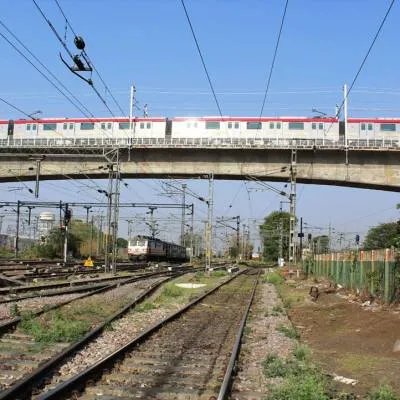
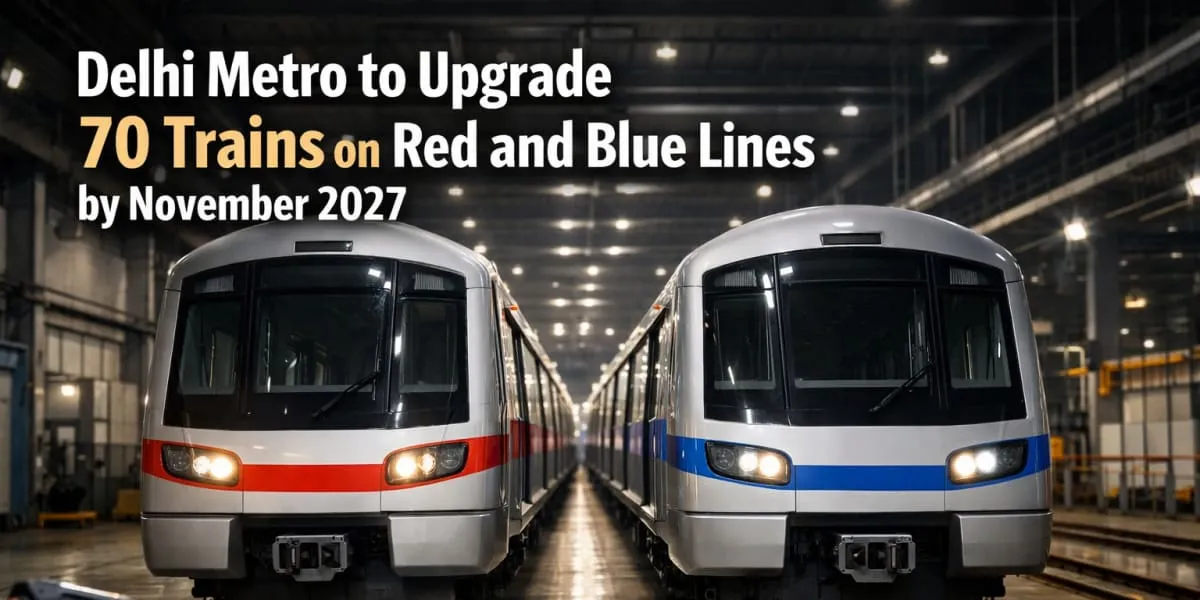
The Delhi Metro Rail Corporation (DMRC) has set a target to upgrade 70 trains on the Red and Blue Lines by November 2027, focusing on mid-life refurbishment to extend service life and improve reliability. The trains were inducted between 2002 and 2007 and have completed 19 to 24 years of service, prompting a programme to install modern systems to meet current rolling stock standards. The initiative aims to enhance passenger safety and comfort while reducing operational disruptions.

The refurbishment will proceed in three phases, with 12 trains upgraded in the first phase and 18 trains refurbished in the second phase, while work on another nine trains will begin soon and a further nine are planned. In the third phase, 22 Blue Line trains will be refurbished by November 2027 to ensure steady progress across the network. In total, 31 trains have been refurbished so far.

Work on each train includes repainting of passenger areas and driver cabins to address wear and tear, and upgrades to electrical panels to enhance performance and reliability. The upgraded trains will be fitted with Internet Protocol (IP)-based passenger announcement and passenger information systems (PA-PIS), closed circuit television (CCTV) and liquid crystal display (LCD)-based dynamic route maps (DRM) and display screens to provide real-time travel information.

Safety enhancements include installation of fire detection systems with smoke and heat detectors and replacement of old relays and miniature circuit breakers with advanced units.Additional improvements comprise new jumper cables and connectors to support the upgraded systems and to accommodate future enhancements, together with mobile and laptop charging points in all coaches. The retrofitting campaign is intended to keep the oldest rolling stock compliant with evolving standards and to improve communication between passengers and train operators during emergencies. DMRC expects the phased approach to deliver a more comfortable and reliable commute for Delhi Metro users by November 2027.

The Delhi Metro Rail Corporation (DMRC) has set a target to upgrade 70 trains on the Red and Blue Lines by November 2027, focusing on mid-life refurbishment to extend service life and improve reliability. The trains were inducted between 2002 and 2007 and have completed 19 to 24 years of service, prompting a programme to install modern systems to meet current rolling stock standards. The initiative aims to enhance passenger safety and comfort while reducing operational disruptions. The refurbishment will proceed in three phases, with 12 trains upgraded in the first phase and 18 trains refurbished in the second phase, while work on another nine trains will begin soon and a further nine are planned. In the third phase, 22 Blue Line trains will be refurbished by November 2027 to ensure steady progress across the network. In total, 31 trains have been refurbished so far. Work on each train includes repainting of passenger areas and driver cabins to address wear and tear, and upgrades to electrical panels to enhance performance and reliability. The upgraded trains will be fitted with Internet Protocol (IP)-based passenger announcement and passenger information systems (PA-PIS), closed circuit television (CCTV) and liquid crystal display (LCD)-based dynamic route maps (DRM) and display screens to provide real-time travel information. Safety enhancements include installation of fire detection systems with smoke and heat detectors and replacement of old relays and miniature circuit breakers with advanced units.Additional improvements comprise new jumper cables and connectors to support the upgraded systems and to accommodate future enhancements, together with mobile and laptop charging points in all coaches. The retrofitting campaign is intended to keep the oldest rolling stock compliant with evolving standards and to improve communication between passengers and train operators during emergencies. DMRC expects the phased approach to deliver a more comfortable and reliable commute for Delhi Metro users by November 2027.

Related Stories

Gold Stories

Next Story
Infrastructure Urban

KONE Opens India's First Digital Experience Centre in Pune

KONE, a global elevator and escalator manufacturer, has inaugurated its first Digital Experience Centre (DEC) in India, located in Pune. The facility aims to showcase how artificial intelligence (AI), connectivity and data-driven technologies can enhance customer experiences and improve building operations.The centre was inaugurated by Jussi Herlin, Executive Vice Chair, KONE Corporation; Philippe Delorme, President and CEO, KONE; and Nandan Nilekani, Co-founder and Chairman of the Board, Infosys.Designed as an interactive customer environment, the facility demonstrates digital solutions cover..

Next Story
Infrastructure Urban

CII GreenCo Launches Circularity Guidelines for Indian Industry

The Confederation of Indian Industry (CII) GreenCo Council has launched the CII GreenCo Circularity Guidelines – Pilot Version at the 17th CII GreenCo Waste & Resource Management Summit 2026 in Chennai. The initiative aims to strengthen resource efficiency, waste reduction and circular economy practices across Indian manufacturing and process industries.The guidelines introduce a structured framework with circularity indices covering raw materials, consumables, packaging and other resource inputs. These indicators will help industries assess existing practices, identify opportunities to ..

Next Story
Infrastructure Energy

Global Electronics Association Launches IPC-1783-CO2E Standard

The Global Electronics Association has introduced IPC-1783-CO2E, a new international standard aimed at improving consistency, transparency and comparability in product carbon footprint reporting across the electronics manufacturing industry.The standard, titled International Standard for Data Collection and Reporting of CO2 Equivalent (CO2e) Emissions for the Electronics Manufacturing Supply Chain, provides industry-specific guidance for collecting, estimating and reporting carbon emissions data.With increasing regulatory requirements and customer expectations, electronics manufacturers face c..

Advertisement

Subscribe to Our Newsletter

Get daily newsletters around different themes from Construction world.

STAY CONNECTED

Advertisement

SPECIAL OFFER
QR Code