Flaw Detected At Bhopal Metro Station Before Launch
RAILWAYS & METRO RAIL

Flaw Detected At Bhopal Metro Station Before Launch

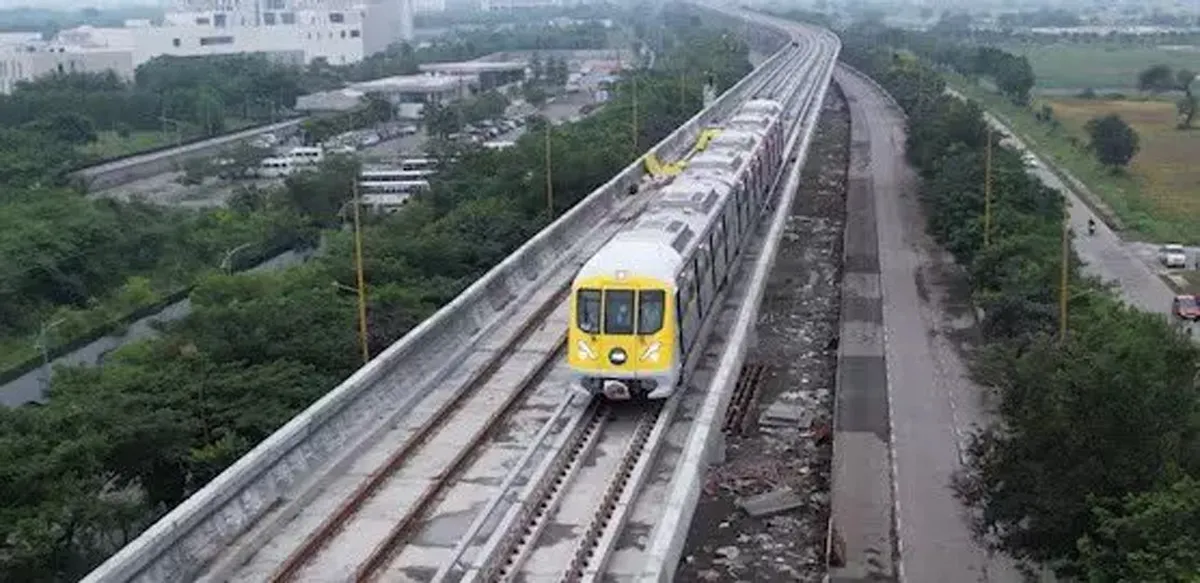
Just weeks ahead of the Bhopal Metro’s long-awaited launch, a construction flaw has been detected at one of its stations, prompting urgent rectification work by the authorities. The Madhya Pradesh Metro Rail Corporation Limited (MPMRCL) has begun lowering a road by around four feet to address inadequate ground clearance for larger vehicles near the project’s main depot.

According to officials, the issue came to light barely days before the Research Design and Standards Organisation (RDSO) granted safety clearance for passenger operations. The flaw involved one of ten piers at the Kendriya Vidyalaya station, which was found to be 0.5 metres shorter than required. “The error was identified in the original contract and will now be rectified,” a senior Bhopal Metro officer said on condition of anonymity.

Work to excavate and lower the affected road section began on Saturday, ensuring that buses, trucks, and other heavy vehicles can pass smoothly beneath the structure once the adjustment is complete.

The Bhopal Metro service, originally scheduled for launch much earlier, has faced multiple delays and is now expected to commence operations in December 2025.

This latest discovery adds to a series of design-related controversies in Madhya Pradesh’s infrastructure projects. A similar issue was reported at the Aishbag railway overbridge (ROB) in Bhopal, where a sharp 90-degree turn in the structure raised safety concerns and attracted national attention. Chief Minister Mohan Yadav publicly vowed not to inaugurate the bridge until the defect was corrected.

In another incident, a hand pump constructed in the middle of a newly built road in Dol Kothar village, Sidhi district, under a Central scheme, also sparked public outrage, leading the local administration to order a formal investigation.

The Bhopal Metro project, part of Madhya Pradesh’s effort to modernise urban transport, is expected to enhance mobility, reduce congestion, and support sustainable urban development once it becomes operational — provided all safety and design concerns are fully resolved.

Just weeks ahead of the Bhopal Metro’s long-awaited launch, a construction flaw has been detected at one of its stations, prompting urgent rectification work by the authorities. The Madhya Pradesh Metro Rail Corporation Limited (MPMRCL) has begun lowering a road by around four feet to address inadequate ground clearance for larger vehicles near the project’s main depot. According to officials, the issue came to light barely days before the Research Design and Standards Organisation (RDSO) granted safety clearance for passenger operations. The flaw involved one of ten piers at the Kendriya Vidyalaya station, which was found to be 0.5 metres shorter than required. “The error was identified in the original contract and will now be rectified,” a senior Bhopal Metro officer said on condition of anonymity. Work to excavate and lower the affected road section began on Saturday, ensuring that buses, trucks, and other heavy vehicles can pass smoothly beneath the structure once the adjustment is complete. The Bhopal Metro service, originally scheduled for launch much earlier, has faced multiple delays and is now expected to commence operations in December 2025. This latest discovery adds to a series of design-related controversies in Madhya Pradesh’s infrastructure projects. A similar issue was reported at the Aishbag railway overbridge (ROB) in Bhopal, where a sharp 90-degree turn in the structure raised safety concerns and attracted national attention. Chief Minister Mohan Yadav publicly vowed not to inaugurate the bridge until the defect was corrected. In another incident, a hand pump constructed in the middle of a newly built road in Dol Kothar village, Sidhi district, under a Central scheme, also sparked public outrage, leading the local administration to order a formal investigation. The Bhopal Metro project, part of Madhya Pradesh’s effort to modernise urban transport, is expected to enhance mobility, reduce congestion, and support sustainable urban development once it becomes operational — provided all safety and design concerns are fully resolved.

Next Story
Real Estate

RBI Rate Cut Boosts Confidence Across Housing Market

Industry Context and Market DynamicsThe real estate industry has welcomed the RBI’s rate cut as a timely boost to affordability and demand. With home prices having risen steadily across major markets, even a marginal reduction in interest rates meaningfully strengthens purchasing power, especially for first-time and mid-income buyers.Ashish Jerath, President – Sales & Marketing, Smartworld Developers, observes:“The RBI’s 25-basis-point cut, bringing the repo rate down to 5.25%, is a timely boost for the real estate sector. Lower interest rates reduce borrowing costs, enabling homeb..

Next Story
Infrastructure Transport

BMC Resumes Rs 170 Billion Road Works, Targets 80 per cent By Jan 2026

Following the withdrawal of the southwest monsoon in October, the Brihanmumbai Municipal Corporation (BMC) has restarted work on 645 roads—covering 297.49 kilometres—under its large-scale concretisation programme. Data shows that more than 60 per cent of the resumed works are located in the western suburbs. Officials said the civic body aims to complete concretisation on 80 per cent of the roads where fresh work has begun by January 2026. Launched in 2022, the Rs 170 billion project seeks to concretise 700 kilometres of roads across Mumbai. All civil works were halted during the monsoon ..

Next Story
Infrastructure Urban

India Pushes Digital Shift In Urban Land Mapping

The Department of Land Resources (DoLR) under the Ministry of Rural Development has convened a National Symposium on NAKSHA – the National Geospatial Knowledge-based Land Survey of Urban Habitations – to advance India’s transition to modern, technology-driven land mapping. Speaking at the inaugural session, Secretary Manoj Joshi underscored the urgent need to move revenue departments away from outdated, tape-based methods and rough hand-drawn sketches. He stressed that adopting latitude–longitude-based digital mapping and GIS-linked registration systems is essential for economic stabi..

Advertisement

Subscribe to Our Newsletter

Get daily newsletters around different themes from Construction world.

STAY CONNECTED

Advertisement

Advertisement

Advertisement

Advertisement

Open In App