GST Network Adds Metro Rail to E-Way Bill System
RAILWAYS & METRO RAIL

GST Network Adds Metro Rail to E-Way Bill System

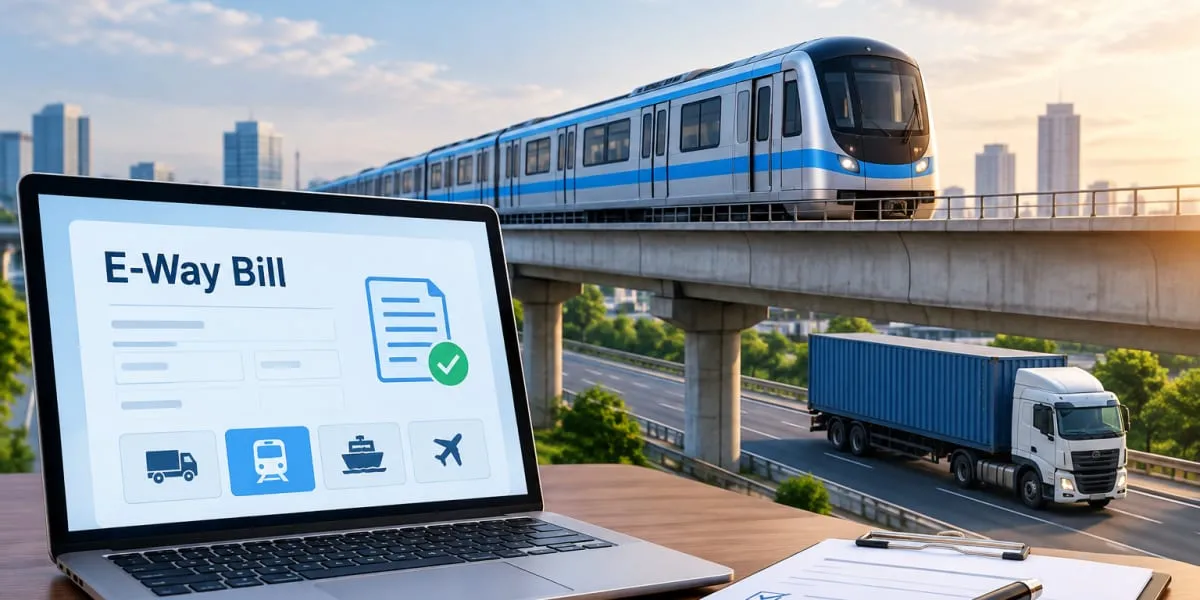
The Goods and Services Tax Network (GSTN) has added metro rail as a new mode of transport in the e-way bill system, expanding the options available to businesses and transporters moving goods. The facility has also been released in the Sandbox environment for API users to test and make the necessary changes to their software systems.

GSTN, which manages the information technology backbone of the Goods and Services Tax (GST), said the rollout in the live API environment will be announced separately. The separate announcement will indicate when businesses and transporters can use the metro rail option in the operational system.

With the addition of metro rail, the e-way bill system now provides five modes of transport: road, rail, air, ship and metro rail. The expansion allows users to identify metro rail when recording the mode used for transporting consignments through the system.

Under the GST regime, an e-way bill is mandatory for the movement of goods valued at Rs. 50,000 or more. The requirement applies to both inter-state and intra-state movement. An e-way bill is an electronic document used to record and facilitate the transit of goods under GST provisions.

API users are businesses or transporters whose software is connected directly to the GST portal. This connection enables them to generate e-way bills and undertake other GST-related activities through their own systems, rather than logging in and completing the processes manually on the portal. The Sandbox release gives these users an opportunity to test the new metro rail facility before its live API rollout.

The Goods and Services Tax Network (GSTN) has added metro rail as a new mode of transport in the e-way bill system, expanding the options available to businesses and transporters moving goods. The facility has also been released in the Sandbox environment for API users to test and make the necessary changes to their software systems. GSTN, which manages the information technology backbone of the Goods and Services Tax (GST), said the rollout in the live API environment will be announced separately. The separate announcement will indicate when businesses and transporters can use the metro rail option in the operational system. With the addition of metro rail, the e-way bill system now provides five modes of transport: road, rail, air, ship and metro rail. The expansion allows users to identify metro rail when recording the mode used for transporting consignments through the system. Under the GST regime, an e-way bill is mandatory for the movement of goods valued at Rs. 50,000 or more. The requirement applies to both inter-state and intra-state movement. An e-way bill is an electronic document used to record and facilitate the transit of goods under GST provisions. API users are businesses or transporters whose software is connected directly to the GST portal. This connection enables them to generate e-way bills and undertake other GST-related activities through their own systems, rather than logging in and completing the processes manually on the portal. The Sandbox release gives these users an opportunity to test the new metro rail facility before its live API rollout.

Related Stories

Gold Stories

Next Story
Infrastructure Transport

Shillong Airport Expansion on Track for December 2027 Finish

Work on the expansion of Shillong Airport and its runway is progressing according to schedule, with completion targeted for December 2027, Transport and Civil Aviation Department Secretary Sanjay Goyal said. The construction is being carried out under the approved master plan, and officials are monitoring progress to ensure the planned timeline is maintained. Goyal said the work was in full swing and there was currently no reason to anticipate a delay. The project is intended to improve the airport’s capacity and strengthen air connectivity to and from the region as demand for air travel inc..

Next Story
Infrastructure Transport

GMR Hyderabad Airport Enhances Cargo Capacity

GMR Hyderabad International Airport has enhanced its cargo-handling infrastructure by commissioning an upgraded Elevated Transfer Vehicle (ETV)-based storage system at its Cargo Terminal. The facility has been upgraded within the existing terminal footprint, allowing the airport to expand capacity without requiring additional space. The new system has increased Unit Load Device (ULD) storage capacity from 33 to 80 ULDs. This represents an increase of more than double and is intended to provide greater operational flexibility as cargo volumes and freighter activity expand. The additional storag..

Next Story
Infrastructure Urban

Visteon Expands Chennai Manufacturing with Cellular NAD Line

Visteon has launched a production line for Cellular Network Access Device (NAD) modules at its manufacturing plant in Chennai, Tamil Nadu. The investment expands the automotive technology company’s local manufacturing capabilities and strengthens its regional supply chain. The line was inaugurated by Sachin Lawande, Visteon’s President and Chief Executive Officer, along with members of the company’s leadership team. Production in Chennai positions India as a manufacturing base for Cellular NAD technology and enables the company to serve customers in international markets from the region...

Subscribe to Our Newsletter

Get daily newsletters around different themes from Construction world.

STAY CONNECTED

Advertisement

SPECIAL OFFER
QR Code