Hitachi Rail Powers Opening of Chennai Metro Phase II Line
RAILWAYS & METRO RAIL

Hitachi Rail Powers Opening of Chennai Metro Phase II Line

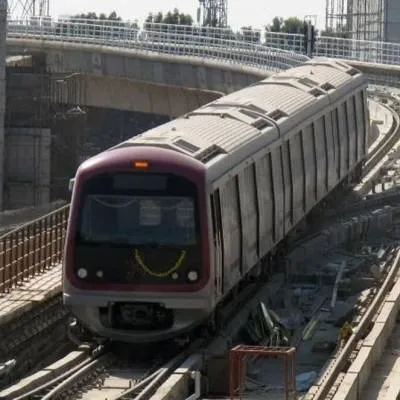
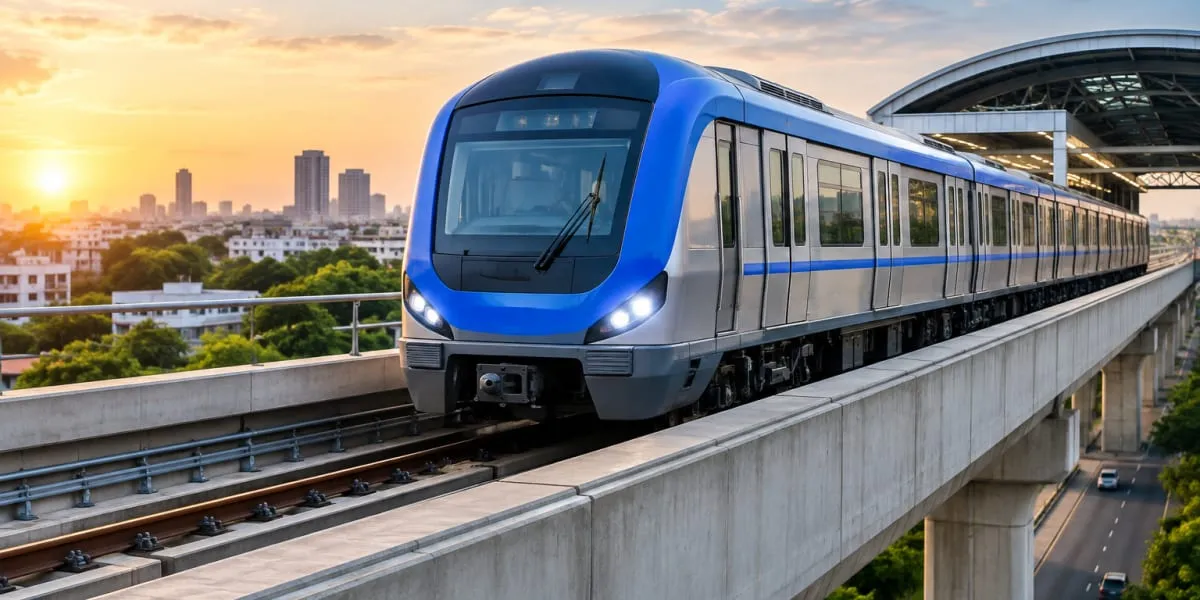
The first operational section of Chennai Metro Phase II has entered passenger service, with Hitachi Rail’s Communication-Based Train Control (CBTC) technology supporting the line’s signalling and train control systems. The opening took place on 11 October and was led by Prime Minister Narendra Modi, accompanied by Tamil Nadu Chief Minister Joseph Vijay.

The approximately 15 km Poonamallee-Vadapalani corridor includes 11 elevated stations and is the first section of the Phase II network to become operational. The corridor is intended to improve connectivity between Chennai’s western suburbs and the city centre while supporting more sustainable urban transport.

Hitachi Rail’s CBTC system has been designed to enable Grade of Automation 4 (GoA4) driverless operations. It automatically manages train traction and braking, continuously calculates optimum operating speeds and supports high-frequency services at intervals of up to 90 seconds. Combined with Automatic Train Operation, the technology is intended to improve safety, capacity, reliability and maintenance efficiency.

Hitachi Rail was awarded the signalling contract in 2023 by Chennai Metro Rail for the design, manufacture, supply, installation, testing and commissioning of signalling, train control and video management systems for Phase II. The contract, valued at Rs. 16.2 bn, covers 119 km of metro lines and is among the largest signalling contracts awarded for an Indian metro system.

The newly opened corridor includes a 3.7 km double-decker structure. Hitachi Rail said the project would help reduce travel times, strengthen regional connectivity and encourage greener mobility across Chennai. The company is also supporting the wider expansion of the city’s urban rail network through digital signalling and autonomous metro technology. Phase II is part of a broader programme aimed at transforming mobility across one of India’s largest metropolitan regions, with improved connections expected to support commuters and economic activity.

The first operational section of Chennai Metro Phase II has entered passenger service, with Hitachi Rail’s Communication-Based Train Control (CBTC) technology supporting the line’s signalling and train control systems. The opening took place on 11 October and was led by Prime Minister Narendra Modi, accompanied by Tamil Nadu Chief Minister Joseph Vijay. The approximately 15 km Poonamallee-Vadapalani corridor includes 11 elevated stations and is the first section of the Phase II network to become operational. The corridor is intended to improve connectivity between Chennai’s western suburbs and the city centre while supporting more sustainable urban transport. Hitachi Rail’s CBTC system has been designed to enable Grade of Automation 4 (GoA4) driverless operations. It automatically manages train traction and braking, continuously calculates optimum operating speeds and supports high-frequency services at intervals of up to 90 seconds. Combined with Automatic Train Operation, the technology is intended to improve safety, capacity, reliability and maintenance efficiency. Hitachi Rail was awarded the signalling contract in 2023 by Chennai Metro Rail for the design, manufacture, supply, installation, testing and commissioning of signalling, train control and video management systems for Phase II. The contract, valued at Rs. 16.2 bn, covers 119 km of metro lines and is among the largest signalling contracts awarded for an Indian metro system. The newly opened corridor includes a 3.7 km double-decker structure. Hitachi Rail said the project would help reduce travel times, strengthen regional connectivity and encourage greener mobility across Chennai. The company is also supporting the wider expansion of the city’s urban rail network through digital signalling and autonomous metro technology. Phase II is part of a broader programme aimed at transforming mobility across one of India’s largest metropolitan regions, with improved connections expected to support commuters and economic activity.

Related Stories

Gold Stories

Next Story
Infrastructure Urban

Bajaj Auto to Raise Monthly Electric 2W Capacity to 80,000 by March

Bajaj Auto plans to raise monthly production capacity for electric two-wheelers to around 80,000 units by the end of March, as demand for its Chetak electric scooter continues to exceed available output. The company currently has capacity for around 60,000 electric two-wheelers a month. Joint Managing Director Rakesh Sharma said production had returned to the existing full capacity after a supply chain disruption affected output. The issue had reduced recent production to around 40,000 units, resulting in a shortfall of 20,000 vehicles despite strong demand. The company expects to remove produ..

Next Story
Infrastructure Transport

India’s Domestic Air Passenger Traffic Falls 6.5% in September

India’s domestic air passenger traffic declined 6.49 per cent month on month to 11.8 mn in September, according to data released by the Directorate General of Civil Aviation (DGCA). IndiGo retained its leading position, carrying nearly two-thirds of domestic passengers, while the Air India Group remained the second-largest operator. IndiGo held a 65.4 per cent market share and transported 7.73 mn passengers during the month. The Air India Group accounted for 26.8 per cent of the market, carrying 3.165 mn passengers, based on data from the aviation regulator. Akasa Air ranked third with a 5.6..

Next Story
Infrastructure Urban

DPIIT Advances Trust-Based Governance Across India

The Department for Promotion of Industry and Internal Trade (DPIIT), under the Ministry of Commerce and Industry, is shifting India’s regulatory approach from permission-based administration to trust-based governance. The reforms seek to reduce business compliance, support startups, attract investment and simplify approvals across the country. According to an official statement, 47,957 compliance requirements have been reduced across Central Ministries and States and Union Territories. Of these, 22,290 have been digitised, 16,141 simplified, 5,255 decriminalised and 4,271 eliminated. The Jan..

Advertisement

Subscribe to Our Newsletter

Get daily newsletters around different themes from Construction world.

STAY CONNECTED

Advertisement

SPECIAL OFFER
QR Code