Indian Railways Sanctions Adra Bridge Reconstruction Project
RAILWAYS & METRO RAIL

Indian Railways Sanctions Adra Bridge Reconstruction Project

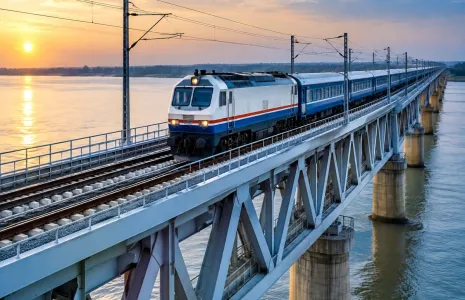
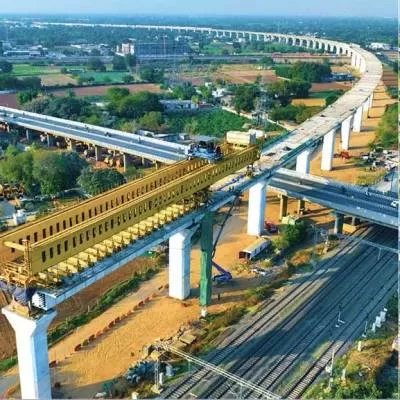
Indian Railways has approved an infrastructure project worth Rs 2235.8 million (Rs 2235.8 mn) for the reconstruction and strengthening of Bridge No 520 (UP and DN) on the Madhukunda–Damodar section under the South Eastern Railway’s Adra Division. The sanction covers rebuilding the bridge substructure together with associated yard remodelling and track improvement works in the approach areas. The project was sanctioned by central railway authorities to address long standing structural concerns. The funding forms part of routine capital works for the division.

The existing Damodar bridge was constructed in 1965 for the UP line and in 1903 for the DN line and has significantly deteriorated over time. Inspections identified signs of structural distress and degradation that have prompted the need for comprehensive reconstruction. Works are intended to enhance safety and ensure long term operational reliability on this section. Routine monitoring will continue during works.

The Madhukunda–Damodar section forms a crucial link between Asansol and Tatanagar and serves as a feeder route to the Dedicated Freight Corridor, forming part of the Sini–Purulia–Asansol coal corridor. The route handles a high traffic density of 67 Gross million tonnes (GMT; t), equal to 67 mn t, and supports heavy freight movements. The bridge works therefore carry strategic importance for freight logistics in the region. Rail operations teams will plan traffic blocks and diversions during critical phases.

Once completed the project is expected to improve freight movement efficiency and strengthen connectivity for major industries in the Durgapur–Asansol belt including the IISCO steel plant, ACC cement operations and several thermal power units. Project delivery will also involve signalling and track realignments in the approaches to optimise yard operations. The Adra Division will oversee implementation and coordinate with stakeholders to minimise disruption during construction. Timelines will be set to align with broader freight corridor schedules and maintenance windows.

Indian Railways has approved an infrastructure project worth Rs 2235.8 million (Rs 2235.8 mn) for the reconstruction and strengthening of Bridge No 520 (UP and DN) on the Madhukunda–Damodar section under the South Eastern Railway’s Adra Division. The sanction covers rebuilding the bridge substructure together with associated yard remodelling and track improvement works in the approach areas. The project was sanctioned by central railway authorities to address long standing structural concerns. The funding forms part of routine capital works for the division. The existing Damodar bridge was constructed in 1965 for the UP line and in 1903 for the DN line and has significantly deteriorated over time. Inspections identified signs of structural distress and degradation that have prompted the need for comprehensive reconstruction. Works are intended to enhance safety and ensure long term operational reliability on this section. Routine monitoring will continue during works. The Madhukunda–Damodar section forms a crucial link between Asansol and Tatanagar and serves as a feeder route to the Dedicated Freight Corridor, forming part of the Sini–Purulia–Asansol coal corridor. The route handles a high traffic density of 67 Gross million tonnes (GMT; t), equal to 67 mn t, and supports heavy freight movements. The bridge works therefore carry strategic importance for freight logistics in the region. Rail operations teams will plan traffic blocks and diversions during critical phases. Once completed the project is expected to improve freight movement efficiency and strengthen connectivity for major industries in the Durgapur–Asansol belt including the IISCO steel plant, ACC cement operations and several thermal power units. Project delivery will also involve signalling and track realignments in the approaches to optimise yard operations. The Adra Division will oversee implementation and coordinate with stakeholders to minimise disruption during construction. Timelines will be set to align with broader freight corridor schedules and maintenance windows.

Related Stories

Gold Stories

Next Story
Infrastructure Urban

KONE Opens India's First Digital Experience Centre in Pune

KONE, a global elevator and escalator manufacturer, has inaugurated its first Digital Experience Centre (DEC) in India, located in Pune. The facility aims to showcase how artificial intelligence (AI), connectivity and data-driven technologies can enhance customer experiences and improve building operations.The centre was inaugurated by Jussi Herlin, Executive Vice Chair, KONE Corporation; Philippe Delorme, President and CEO, KONE; and Nandan Nilekani, Co-founder and Chairman of the Board, Infosys.Designed as an interactive customer environment, the facility demonstrates digital solutions cover..

Next Story
Infrastructure Urban

CII GreenCo Launches Circularity Guidelines for Indian Industry

The Confederation of Indian Industry (CII) GreenCo Council has launched the CII GreenCo Circularity Guidelines – Pilot Version at the 17th CII GreenCo Waste & Resource Management Summit 2026 in Chennai. The initiative aims to strengthen resource efficiency, waste reduction and circular economy practices across Indian manufacturing and process industries.The guidelines introduce a structured framework with circularity indices covering raw materials, consumables, packaging and other resource inputs. These indicators will help industries assess existing practices, identify opportunities to ..

Next Story
Infrastructure Energy

Global Electronics Association Launches IPC-1783-CO2E Standard

The Global Electronics Association has introduced IPC-1783-CO2E, a new international standard aimed at improving consistency, transparency and comparability in product carbon footprint reporting across the electronics manufacturing industry.The standard, titled International Standard for Data Collection and Reporting of CO2 Equivalent (CO2e) Emissions for the Electronics Manufacturing Supply Chain, provides industry-specific guidance for collecting, estimating and reporting carbon emissions data.With increasing regulatory requirements and customer expectations, electronics manufacturers face c..

Advertisement

Subscribe to Our Newsletter

Get daily newsletters around different themes from Construction world.

STAY CONNECTED

Advertisement

SPECIAL OFFER
QR Code