Maharashtra cities top ease of moving index
RAILWAYS & METRO RAIL

Maharashtra cities top ease of moving index

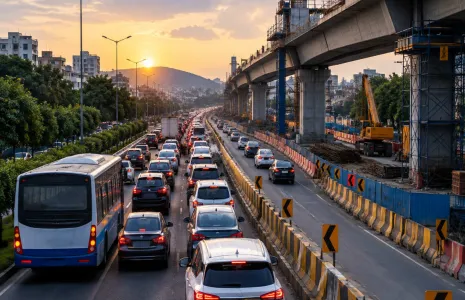
According to a non-profit study, Pune and Pimpri Chinchwad in Maharashtra topped the list of 40 prominent cities in terms of ease of movement and ease of reaching destination in 2022. Mumbai was ranked second, with Coimbatore coming in third, followed by Hyderabad, Bengaluru, and Indore.

The Ola Mobility Institute (OMI) Foundation released the second edition of the 'Ease of Moving Index' based on a survey of over 50,000 citizens, focus group discussions, and government data. According to the report, Aizawl, Mizoram, was a top performer in clean mobility, while almost everyone in Nagaland's capital, Kohima, had a bicycle. Among the cities, mobility spend was the lowest in Jabalpur and Kanpur emerged as the safest city to travel on public transport.

According to the study, Pune had the most inclusive mobility ecosystem, and public transport usage among women and trans or non-binary people was highest in Ludhiana. According to the report, almost everyone in Raipur-Nava Raipur used public transport on a daily basis.

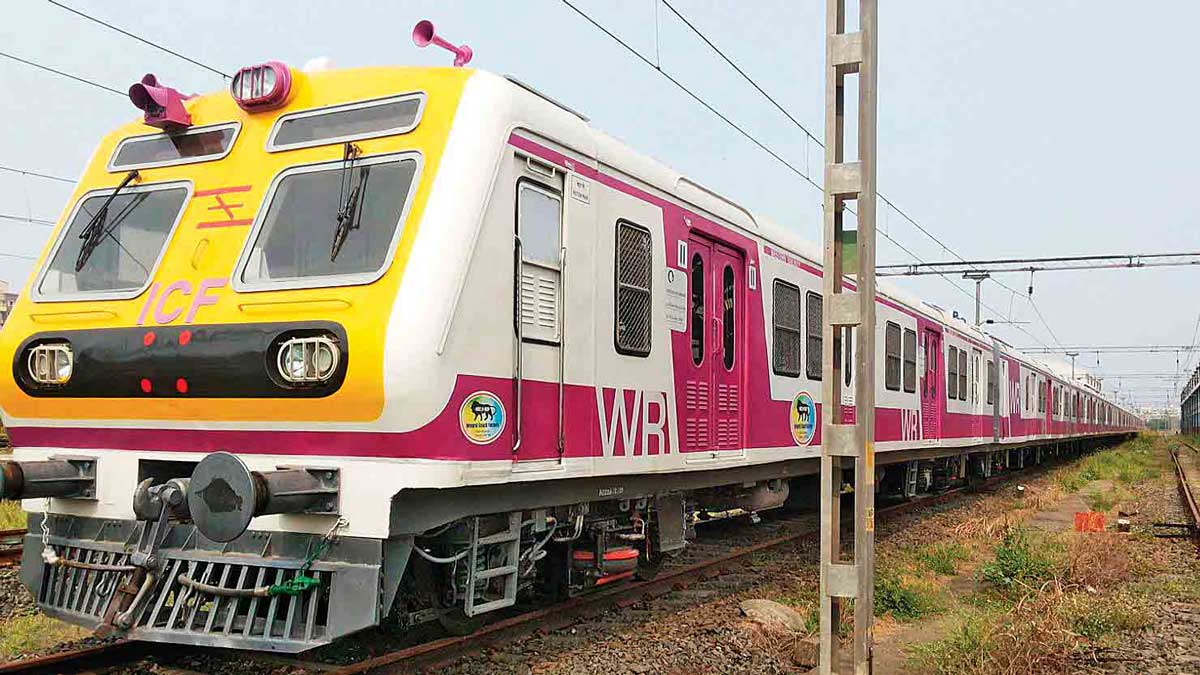
In 2018, the first edition of the 'Ease of Moving Index' covered only 20 cities. A comparison of the same set of 20 common cities in the two reports shows that, with the exception of Bhubaneswar and Jammu, the share of people using personal vehicles for movement has increased in all cities over the last four years. In terms of the proportion of people who use public transport in these cities, Mumbai saw the greatest increase of 28%, followed by Kochi (25%) between 2018 and 2022. Barring Surat and Kolkata, all other mega cities covered in the study saw an increase in the share of people using public transport.

Among the mega cities, the reliability of public transport also increased during this period, except for Delhi, Kolkata and Hyderabad. The study shows that the maximum decline in reliability was in Delhi at 10%, followed by Kolkata (13%). Ahmedabad and Surat registered a big jump of 11% each on this parameter.

Also Read
No plans to maintain ALMM for players in renewable energy
Mumbai to have its first road with Special Underground Utility Corridor

According to a non-profit study, Pune and Pimpri Chinchwad in Maharashtra topped the list of 40 prominent cities in terms of ease of movement and ease of reaching destination in 2022. Mumbai was ranked second, with Coimbatore coming in third, followed by Hyderabad, Bengaluru, and Indore. The Ola Mobility Institute (OMI) Foundation released the second edition of the 'Ease of Moving Index' based on a survey of over 50,000 citizens, focus group discussions, and government data. According to the report, Aizawl, Mizoram, was a top performer in clean mobility, while almost everyone in Nagaland's capital, Kohima, had a bicycle. Among the cities, mobility spend was the lowest in Jabalpur and Kanpur emerged as the safest city to travel on public transport. According to the study, Pune had the most inclusive mobility ecosystem, and public transport usage among women and trans or non-binary people was highest in Ludhiana. According to the report, almost everyone in Raipur-Nava Raipur used public transport on a daily basis. In 2018, the first edition of the 'Ease of Moving Index' covered only 20 cities. A comparison of the same set of 20 common cities in the two reports shows that, with the exception of Bhubaneswar and Jammu, the share of people using personal vehicles for movement has increased in all cities over the last four years. In terms of the proportion of people who use public transport in these cities, Mumbai saw the greatest increase of 28%, followed by Kochi (25%) between 2018 and 2022. Barring Surat and Kolkata, all other mega cities covered in the study saw an increase in the share of people using public transport. Among the mega cities, the reliability of public transport also increased during this period, except for Delhi, Kolkata and Hyderabad. The study shows that the maximum decline in reliability was in Delhi at 10%, followed by Kolkata (13%). Ahmedabad and Surat registered a big jump of 11% each on this parameter. Also Read No plans to maintain ALMM for players in renewable energy Mumbai to have its first road with Special Underground Utility Corridor

Next Story
Infrastructure Urban

Implementation Status of Jal Jeevan Mission

Since August 2019 the Government has implemented Jal Jeevan Mission to provide assured potable water through household tap connections in rural India. At the start of the mission only 32.3 million (mn) rural households, representing 16.7 per cent, were reported to have tap water connections. States and union territories have reported that 125.8 mn additional rural households have since been provided with tap connections. As a result, of about 193.6 mn rural households roughly 158.2 mn, or 81.71 per cent, are reported to have tap water supply at home.\n\nThe State, district and village level st..

Next Story
Infrastructure Urban

Jal Jeevan Mission Reaches Eighty One Per Cent Rural Coverage

The Government reported substantial progress under the Jal Jeevan Mission, launched in August 2019 to provide tap water to every rural household. At launch only 32.3 million (mn) rural households had tap connections and states and Union territories reported provision of 125.8 mn additional households by March 2026. Consequently, out of about 193.6 mn rural households around 158.2 mn, or 81.71 per cent, are reported to have tap water at home. The Finance Minister announced extension of the mission until 2028 in the 2025-26 budget speech. The Swachh Bharat Mission Grameen, launched in October 20..

Next Story
Infrastructure Urban

Empowering Local Governance for Sustainable Rural Water Supply

The Ministry of Jal Shakti has aligned the Jal Jeevan Mission (JJM) with the 73rd Amendment to strengthen village level planning and community ownership of water supply. Gram Panchayats, village water and sanitation committees and Pani Samitis are to plan, implement, manage and maintain piped water systems, with gram sabha processes formalising handover and oversight. Implementation support agencies including non government organisations, community based organisations and self help groups have been empanelled to train local committees and promote women participation. Under JJM, the department ..

Advertisement

Subscribe to Our Newsletter

Get daily newsletters around different themes from Construction world.

STAY CONNECTED

Advertisement

Advertisement

Advertisement