Mumbai-Ahmedabad Bullet Train: Narmada River Bridge nears completion
RAILWAYS & METRO RAIL

Mumbai-Ahmedabad Bullet Train: Narmada River Bridge nears completion

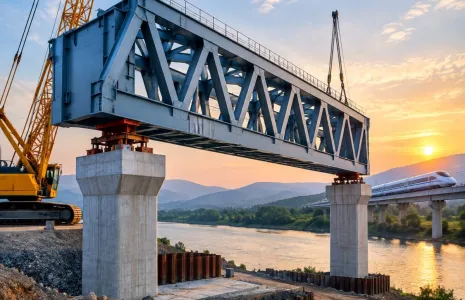
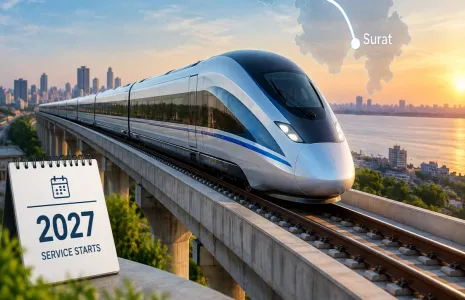
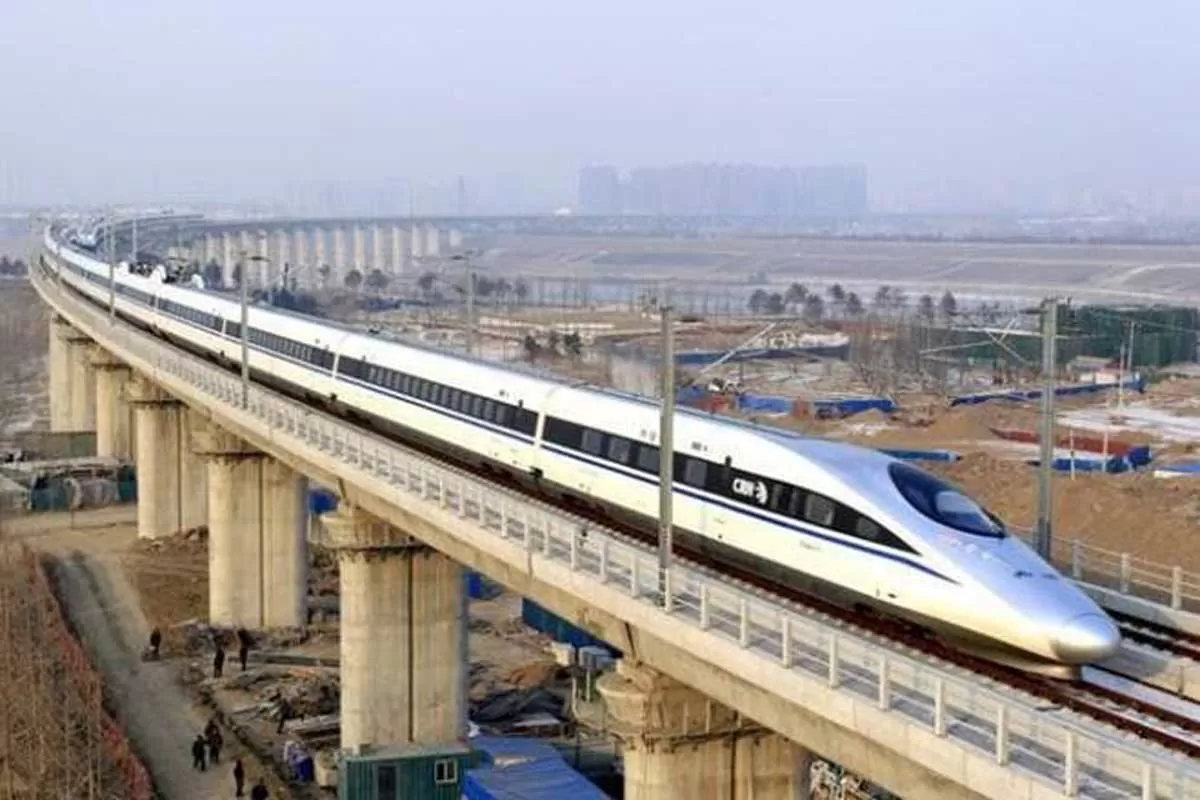
The Mumbai-Ahmedabad Bullet Train project has made significant progress with the near completion of a 1.4 km long bridge over the Narmada River in Gujarat's Bharuch district. This bridge, the longest river crossing in the Gujarat section of the project, is a vital link in the high-speed rail corridor connecting Surat and Bharuch Bullet Train stations. The Narmada River, known as the "Life Line of Madhya Pradesh and Gujarat," is crucial for water supply, agriculture, drinking needs, and hydropower in central India. It is also home to the Sardar Sarovar Dam, one of India's highest concrete dams, which spans 1,210 meters and rises 163 meters above its deepest foundation. The bridge's construction employs well foundations?cylindrical structures embedded in the riverbed to support heavy infrastructure. A total of 25 well foundations are being used, with five reaching depths of over 70 meters. The deepest well foundation extends to 77.11 meters, surpassing the height of the Qutub Minar, one of India's tallest monuments. The project has faced challenges, particularly during the monsoon season and floods in September 2023. The release of approximately 18 lakh cusecs of water from the Sardar Sarovar Dam caused significant disruptions, damaging temporary steel bridges and submerging heavy-duty cranes, which impacted construction progress and electrical connectivity.

Despite these obstacles, site engineers have shown resilience, working around the clock to resolve issues with well sinking. Using the Jack-Down method, they successfully addressed tilt and shift problems, leading to the completion of 19 out of 25 well foundations. The erection of the superstructure is now underway.

The bridge features 24 spans, including 21 spans of 60 meters each, along with additional spans of 36 meters and 35 meters. The well foundations, each 10 meters in diameter and exceeding 60 meters in depth, support 25 circular piers ranging from 14 to 18 meters in height. The superstructure will consist of Post-Tensioned Box Girders (SBS type).

This bridge is one of 24 river bridges planned for the Mumbai-Ahmedabad Bullet Train project. Of the 20 bridges in Gujarat, ten have already been completed, spanning rivers such as Par, Purna, Mindhola, and others. The successful completion of this Narmada River bridge marks a significant milestone in advancing the high-speed rail project. (financial express)

The Mumbai-Ahmedabad Bullet Train project has made significant progress with the near completion of a 1.4 km long bridge over the Narmada River in Gujarat's Bharuch district. This bridge, the longest river crossing in the Gujarat section of the project, is a vital link in the high-speed rail corridor connecting Surat and Bharuch Bullet Train stations. The Narmada River, known as the Life Line of Madhya Pradesh and Gujarat, is crucial for water supply, agriculture, drinking needs, and hydropower in central India. It is also home to the Sardar Sarovar Dam, one of India's highest concrete dams, which spans 1,210 meters and rises 163 meters above its deepest foundation. The bridge's construction employs well foundations?cylindrical structures embedded in the riverbed to support heavy infrastructure. A total of 25 well foundations are being used, with five reaching depths of over 70 meters. The deepest well foundation extends to 77.11 meters, surpassing the height of the Qutub Minar, one of India's tallest monuments. The project has faced challenges, particularly during the monsoon season and floods in September 2023. The release of approximately 18 lakh cusecs of water from the Sardar Sarovar Dam caused significant disruptions, damaging temporary steel bridges and submerging heavy-duty cranes, which impacted construction progress and electrical connectivity. Despite these obstacles, site engineers have shown resilience, working around the clock to resolve issues with well sinking. Using the Jack-Down method, they successfully addressed tilt and shift problems, leading to the completion of 19 out of 25 well foundations. The erection of the superstructure is now underway. The bridge features 24 spans, including 21 spans of 60 meters each, along with additional spans of 36 meters and 35 meters. The well foundations, each 10 meters in diameter and exceeding 60 meters in depth, support 25 circular piers ranging from 14 to 18 meters in height. The superstructure will consist of Post-Tensioned Box Girders (SBS type). This bridge is one of 24 river bridges planned for the Mumbai-Ahmedabad Bullet Train project. Of the 20 bridges in Gujarat, ten have already been completed, spanning rivers such as Par, Purna, Mindhola, and others. The successful completion of this Narmada River bridge marks a significant milestone in advancing the high-speed rail project. (financial express)

Next Story
Infrastructure Transport

India Becomes First to Produce Bio-Bitumen for Roads

India has become the first country in the world to commercially produce bio-bitumen for use in road construction, according to Road, Transport and Highways Minister Nitin Gadkari. Bitumen, a black and viscous hydrocarbon derived from crude oil, is a key binding material in road building, and the bio-based alternative is expected to significantly improve the sector’s environmental footprint.Addressing the CSIR Technology Transfer Ceremony in New Delhi, Mr Gadkari congratulated Council of Scientific and Industrial Research on achieving the milestone, noting that the initiative would help curb ..

Next Story
Infrastructure Urban

HILT Policy Seen Boosting Telangana Revenue Sharply

The Hyderabad Industrial Land Transformation (HILT) Policy is expected to generate around Rs 1.08 billion in revenue for the Telangana state exchequer, according to Deputy Chief Minister Bhatti Vikramarka Mallu. Speaking in the Telangana Legislative Assembly, he said the policy would be implemented within a six-month timeframe in a transparent manner, with uniform rules applicable to all stakeholders. Mr Vikramarka noted that without the HILT Policy, the state would have earned only about Rs 1.2 million per acre. Under the new framework, however, revenue is projected to rise sharply to Rs 70 ..

Next Story
Infrastructure Urban

India Post, MoRD Tie Up to Boost Rural Inclusion

The Department of Posts and the Ministry of Rural Development have signed a Memorandum of Understanding to accelerate rural transformation and expand financial, digital and logistics services for Self-Help Groups (SHGs) and rural households across India. The agreement was signed in the presence of Union Minister of Communications and Development of North Eastern Region Jyotiraditya M. Scindia and Union Minister of Rural Development and Agriculture and Farmers’ Welfare Shivraj Singh Chouhan. The collaboration aligns with the government’s “Dak Sewa, Jan Sewa” vision and seeks to repositi..

Advertisement

Subscribe to Our Newsletter

Get daily newsletters around different themes from Construction world.

STAY CONNECTED

Advertisement

Advertisement

Advertisement

Advertisement

Open In App