+
NEFR and RailTel signs agreement to install intrusion detection system
RAILWAYS & METRO RAIL

NEFR and RailTel signs agreement to install intrusion detection system

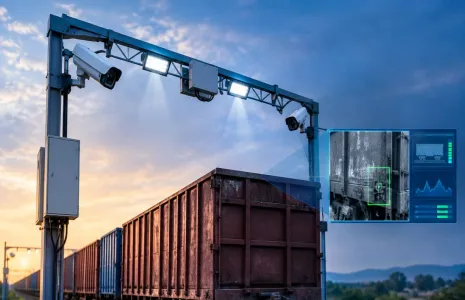
In order to prevent train-elephant collisions and implement disaster mitigation strategies, Northeast Frontier Railway (NFR) and RailTel Corporation of India inked a Memorandum of Understanding (MoU) for the installation of an intrusion detection system (IDS).

In the presence of Anshul Gupta, General Manager NFR, and Sanjay Kumar, Chief Managing Director/RailTel Corporation of India. The MoU was signed by G R Das, Chief Communication Engineer, NFR, and Zakir Siddiqui, Executive Director/Eastern Region/Railtel.

It has been decided to gradually install the system in all other elephant corridors spread across N F Railway after the pilot project on IDS that was undertaken by N F Railway in the Chalsa - Hasimara section of the Dooars area under Alipurduar Division in West Bengal and Lanka - Hawaipur section under Lumding Division in Assam was 100% successful.

The technology, which is based on artificial intelligence (AI), would employ existing optical fibres as sensors to find where wild animals are moving and notify control offices, station masters, gatemen, and loco pilots of their whereabouts. To detect the presence of elephants on the track in real time, it uses an acoustic system based on fibre optic technology that operates on the theory of dialysis scattering phenomenon. The AI-based software can track unusual movements over a 60 kilometre stretch. Also, the IDS will aid in spotting rail fractures, trespassing on railroad tracks, and alerting people to the need to mitigate disasters brought on by unauthorised digging next to railroad tracks, landslides next to tracks, etc.

Several elephants whose lives were in danger of being run over by trains as they approached a railroad track have already been saved because to the trial operation.

Also read:
Bullet train by August 2026, hyperloop 7-8 years away
Only four firms submit bids for redevelopment of Mumbai's CSMT station


In order to prevent train-elephant collisions and implement disaster mitigation strategies, Northeast Frontier Railway (NFR) and RailTel Corporation of India inked a Memorandum of Understanding (MoU) for the installation of an intrusion detection system (IDS). In the presence of Anshul Gupta, General Manager NFR, and Sanjay Kumar, Chief Managing Director/RailTel Corporation of India. The MoU was signed by G R Das, Chief Communication Engineer, NFR, and Zakir Siddiqui, Executive Director/Eastern Region/Railtel. It has been decided to gradually install the system in all other elephant corridors spread across N F Railway after the pilot project on IDS that was undertaken by N F Railway in the Chalsa - Hasimara section of the Dooars area under Alipurduar Division in West Bengal and Lanka - Hawaipur section under Lumding Division in Assam was 100% successful. The technology, which is based on artificial intelligence (AI), would employ existing optical fibres as sensors to find where wild animals are moving and notify control offices, station masters, gatemen, and loco pilots of their whereabouts. To detect the presence of elephants on the track in real time, it uses an acoustic system based on fibre optic technology that operates on the theory of dialysis scattering phenomenon. The AI-based software can track unusual movements over a 60 kilometre stretch. Also, the IDS will aid in spotting rail fractures, trespassing on railroad tracks, and alerting people to the need to mitigate disasters brought on by unauthorised digging next to railroad tracks, landslides next to tracks, etc. Several elephants whose lives were in danger of being run over by trains as they approached a railroad track have already been saved because to the trial operation. Also read: Bullet train by August 2026, hyperloop 7-8 years away Only four firms submit bids for redevelopment of Mumbai's CSMT station

Related Stories

Gold Stories

Next Story
Infrastructure Transport

NHAI Tightens AI-Machine Construction Norms

New Delhi: The National Highways Authority of India (NHAI) has significantly tightened its framework for Automated and Intelligent Machine-Aided Construction (AI-MC), introducing provisions that could directly affect contractor payments, equipment deployment and digital ownership of highway project data.Under Policy Circular No. 11.109/2026 dated August 28, 2026, mandatory AI-MC deployment has been rationalised to highway projects with a continuous length exceeding 20 km and an EPC/civil construction cost above Rs 5 billion. Standalone bridges, ROBs, tunnels, short bypasses below 10 km and str..

Next Story
Infrastructure Urban

Infrastructure Opportunity Outlook by IMPACCT.Info

India’s infrastructure pipeline is witnessing dynamic activity across stages — from immediate bidding to future planning. IMPACCT segments these into three categories: Immediate, 3–6 Month, and Future Opportunities, enabling businesses to identify, prepare, and participate in high-value tenders and projects across sectors.To read full article Click Here ..

Next Story
Real Estate

Glass, Reframed!

Glass façades, quintessential aesthetic building envelopes globally, have been widely adopted in India as well. But when the focus is high-performance building systems that deliver energy efficiency, comfort and architectural identity, glass isn’t the only preference. Combination solutions, involving glass and some other material, improve façade outcomes. Some combinations come at comparable prices, some at a higher price. Here is a selection of performance-oriented solutions...To read the full story Click Here ..

Advertisement

Subscribe to Our Newsletter

Get daily newsletters around different themes from Construction world.

STAY CONNECTED

Advertisement

SPECIAL OFFER
QR Code