New building at Ayodhya railway station to be built by December
RAILWAYS & METRO RAIL

New building at Ayodhya railway station to be built by December

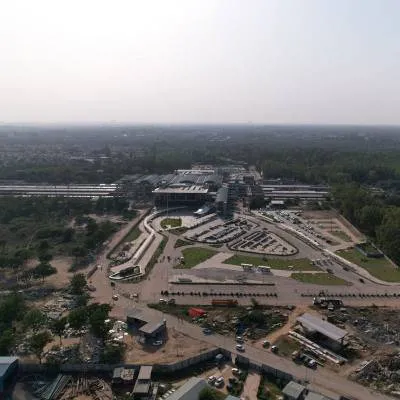
The Indian Railways has announced that as part of the remodelling and upgradation project of the Ayodhya railway station, a new two-storey building of the station will be constructed by December.

The station, being formed in two phases, is likely to help one lakh passengers every day. But, in the first phase, the two-storey structure at platform one could manage 15,000 passengers on an average on normal days and 25,000 on peak days like Dussehra, Ramnavmi, Diwali, Chauda Kosi and Chaurasi Kosi, but after the second phase completion, the station could control four times more passengers.

The divisional railway manager Lucknow (NR), Suresh Kumar Sapra, told the media that the new structure of the Ayodhya railway station would be completed by December. It will help render all the requirements of pilgrims like cloakrooms, dormitories, shops, food court, sick rooms, air conditioning retiring room, circulating area, escalators, the new access road to the station, LED billboards, mela shed, parking, and other facilities. But, the two-foot over bridge joining the new building will be made by March 2022.

The first phase was likely to be made by June. The last date to complete the work was shifted to September later. With the delay of the project, the construction cost has surged following the amendments in the structure. The estimated cost was Rs 104.77 crore initially, now it has touched Rs 131.97 crore for the first phase.

The second phase, which is considered to have incurred the exchequer whopping Rs 307 crore, will have a new platform, approach road, a large waiting area, parking area for pilgrims in the southern part (second entry) of the railway station after procuring land from the state government.

Additionally, as Ayodhya has a double electrified rail track, the Indian railways is working to form a single circuit by collaborating with Acharya Narendra Dev Nagar station, Faizabad station, Ayodhya station and Ramghat Halt station. The purpose of creating one circuit is to control a large fleet of trains coming from the southern and western parts of India.

The majority of pilgrims are likely to visit Ayodhya via train, although the city will also have a grand international airport nearby the railway station. It will be the largest station devoted to pilgrims in UP. The station entrance dome will have structures inspired by the Shree Janmabhoomi temple.

Image Source

Also read: Western Railway plans to remodel Bandra Terminus connectivity

The Indian Railways has announced that as part of the remodelling and upgradation project of the Ayodhya railway station, a new two-storey building of the station will be constructed by December. The station, being formed in two phases, is likely to help one lakh passengers every day. But, in the first phase, the two-storey structure at platform one could manage 15,000 passengers on an average on normal days and 25,000 on peak days like Dussehra, Ramnavmi, Diwali, Chauda Kosi and Chaurasi Kosi, but after the second phase completion, the station could control four times more passengers. The divisional railway manager Lucknow (NR), Suresh Kumar Sapra, told the media that the new structure of the Ayodhya railway station would be completed by December. It will help render all the requirements of pilgrims like cloakrooms, dormitories, shops, food court, sick rooms, air conditioning retiring room, circulating area, escalators, the new access road to the station, LED billboards, mela shed, parking, and other facilities. But, the two-foot over bridge joining the new building will be made by March 2022. The first phase was likely to be made by June. The last date to complete the work was shifted to September later. With the delay of the project, the construction cost has surged following the amendments in the structure. The estimated cost was Rs 104.77 crore initially, now it has touched Rs 131.97 crore for the first phase. The second phase, which is considered to have incurred the exchequer whopping Rs 307 crore, will have a new platform, approach road, a large waiting area, parking area for pilgrims in the southern part (second entry) of the railway station after procuring land from the state government. Additionally, as Ayodhya has a double electrified rail track, the Indian railways is working to form a single circuit by collaborating with Acharya Narendra Dev Nagar station, Faizabad station, Ayodhya station and Ramghat Halt station. The purpose of creating one circuit is to control a large fleet of trains coming from the southern and western parts of India. The majority of pilgrims are likely to visit Ayodhya via train, although the city will also have a grand international airport nearby the railway station. It will be the largest station devoted to pilgrims in UP. The station entrance dome will have structures inspired by the Shree Janmabhoomi temple. Image Source Also read: Western Railway plans to remodel Bandra Terminus connectivity

Related Stories

Gold Stories

Next Story
Infrastructure Urban

KONE Opens India's First Digital Experience Centre in Pune

KONE, a global elevator and escalator manufacturer, has inaugurated its first Digital Experience Centre (DEC) in India, located in Pune. The facility aims to showcase how artificial intelligence (AI), connectivity and data-driven technologies can enhance customer experiences and improve building operations.The centre was inaugurated by Jussi Herlin, Executive Vice Chair, KONE Corporation; Philippe Delorme, President and CEO, KONE; and Nandan Nilekani, Co-founder and Chairman of the Board, Infosys.Designed as an interactive customer environment, the facility demonstrates digital solutions cover..

Next Story
Infrastructure Urban

CII GreenCo Launches Circularity Guidelines for Indian Industry

The Confederation of Indian Industry (CII) GreenCo Council has launched the CII GreenCo Circularity Guidelines – Pilot Version at the 17th CII GreenCo Waste & Resource Management Summit 2026 in Chennai. The initiative aims to strengthen resource efficiency, waste reduction and circular economy practices across Indian manufacturing and process industries.The guidelines introduce a structured framework with circularity indices covering raw materials, consumables, packaging and other resource inputs. These indicators will help industries assess existing practices, identify opportunities to ..

Next Story
Infrastructure Energy

Global Electronics Association Launches IPC-1783-CO2E Standard

The Global Electronics Association has introduced IPC-1783-CO2E, a new international standard aimed at improving consistency, transparency and comparability in product carbon footprint reporting across the electronics manufacturing industry.The standard, titled International Standard for Data Collection and Reporting of CO2 Equivalent (CO2e) Emissions for the Electronics Manufacturing Supply Chain, provides industry-specific guidance for collecting, estimating and reporting carbon emissions data.With increasing regulatory requirements and customer expectations, electronics manufacturers face c..

Advertisement

Subscribe to Our Newsletter

Get daily newsletters around different themes from Construction world.

STAY CONNECTED

Advertisement

SPECIAL OFFER
QR Code