NFR Deploys Underwater Robotic Tech to Boost Bridge Safety
RAILWAYS & METRO RAIL

NFR Deploys Underwater Robotic Tech to Boost Bridge Safety

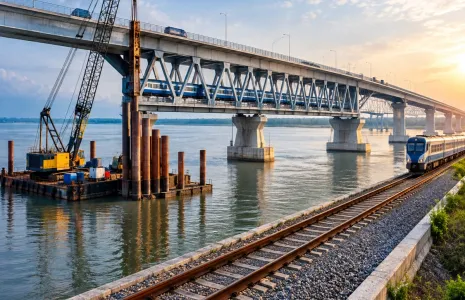
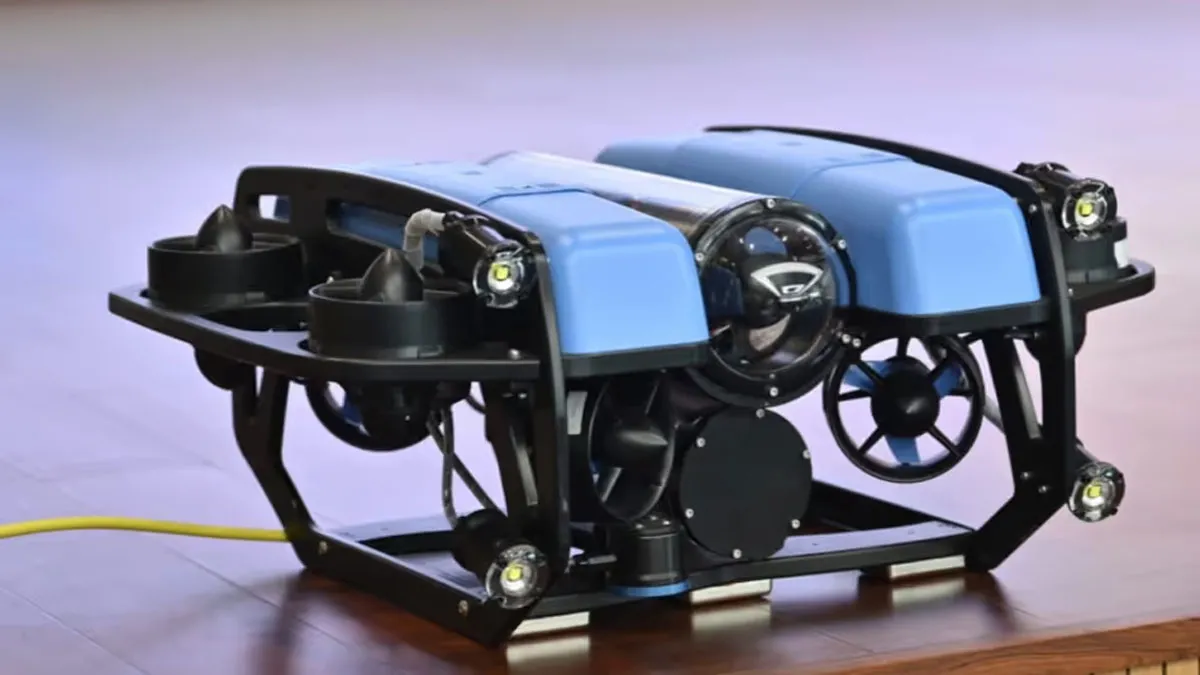
The Northeast Frontier Railway has expanded the use of Remotely Operated Robotic Vehicles (RORV) to carry out detailed underwater and structural inspections of major bridges across the region. Kapinjal Kishore Sharma, CPRO, Northeast Frontier Railway, said the latest assessment cycle covered critical structures including the 1.45-km Saraighat Bridge over the Brahmaputra and several key bridges under the Alipurduar (APDJ) Division.

“These bridges have substructures that remain submerged throughout the year, making underwater inspection essential for evaluating the condition of foundations, wells and piers,” Kapinjal Kishore Sharma, CPRO, Northeast Frontier Railway, said. The historic Saraighat Bridge—India’s first rail-cum-road bridge over the Brahmaputra—was examined using a mix of RORV surveys, LiDAR, thermal imaging, Ground Penetrating Radar (GPR) and Ultrasonic Pulse Velocity (UPV) tests to map scour zones, stress points and deck components with precision.

In the APDJ Division, 18 major bridges underwent comprehensive checks, with robotic systems capturing high-resolution visuals of submerged piers, riverbeds and potential vulnerabilities. Across all structures inspected, no significant underwater defects were found.

During 2024–25, NFR completed underwater surveys of 13 bridges using RORV. In 2025–26, 34 additional bridges have already been inspected. Sharma said these insights significantly strengthen NFR’s structural health monitoring efforts and enable timely planning for preventive maintenance.

He added that adopting RORV, combined with advanced digital tools, represents a major leap in scientific bridge assessment. NFR will continue upgrading its inspection systems to ensure the safety and longevity of critical connectivity routes, particularly strategic structures such as the Saraighat Bridge and other key bridges across the Northeast.

News source: ANI

The Northeast Frontier Railway has expanded the use of Remotely Operated Robotic Vehicles (RORV) to carry out detailed underwater and structural inspections of major bridges across the region. Kapinjal Kishore Sharma, CPRO, Northeast Frontier Railway, said the latest assessment cycle covered critical structures including the 1.45-km Saraighat Bridge over the Brahmaputra and several key bridges under the Alipurduar (APDJ) Division.“These bridges have substructures that remain submerged throughout the year, making underwater inspection essential for evaluating the condition of foundations, wells and piers,” Kapinjal Kishore Sharma, CPRO, Northeast Frontier Railway, said. The historic Saraighat Bridge—India’s first rail-cum-road bridge over the Brahmaputra—was examined using a mix of RORV surveys, LiDAR, thermal imaging, Ground Penetrating Radar (GPR) and Ultrasonic Pulse Velocity (UPV) tests to map scour zones, stress points and deck components with precision.In the APDJ Division, 18 major bridges underwent comprehensive checks, with robotic systems capturing high-resolution visuals of submerged piers, riverbeds and potential vulnerabilities. Across all structures inspected, no significant underwater defects were found.During 2024–25, NFR completed underwater surveys of 13 bridges using RORV. In 2025–26, 34 additional bridges have already been inspected. Sharma said these insights significantly strengthen NFR’s structural health monitoring efforts and enable timely planning for preventive maintenance.He added that adopting RORV, combined with advanced digital tools, represents a major leap in scientific bridge assessment. NFR will continue upgrading its inspection systems to ensure the safety and longevity of critical connectivity routes, particularly strategic structures such as the Saraighat Bridge and other key bridges across the Northeast.News source: ANI

Next Story
Real Estate

A Paradigm Shift

The Indian real-estate and construction sector, which employs a significant number of organised and unorganised workers in the country, has embarked on a paradigm shift in its regulatory framework from an employment law perspective. With the four Labour Codes – the Code on Wages, 2019 (Wage Code); the Industrial Relations Code, 2020 (IR Code); the Code on Social Security, 2020 (SS Code) and the Occupational Safety, Health and Working Conditions Code, 2020 (OSH Code) – coming into effect in India from November 21, 2025, the industry is shifting away from a fragmented, contractor- driven com..

Next Story
Technology

We offer end-to-end traceability at scale

mjunction has evolved from an e-auction pioneer into a multi-vertical digital commerce platform with deep expertise in complex steel and coal supply chains. Its end-to-end, AI-led architecture focuses on price discovery, traceability, compliance and scalability, enabling transparent procurement, efficient logistics and data-driven decision-making across geographies. Vinaya Varma, MD, shares more about the company in conversation with CW.From a technology standpoint, what are the core USPs of mjunction today that differentiate it in steel and coal supply chains?mjunction has evolved b..

Next Story
Infrastructure Urban

Henkel, Rotary Recycle PoP Ganesha Idols Under Project HARMONY

Henkel India, in partnership with the Rotary Club of Navi Mumbai – Joy of Giving and with support from the Navi Mumbai Municipal Corporation (NMMC), has advanced circular sustainability through Project HARMONY by recycling Plaster of Paris (PoP) Ganesha idols into community learning assets. The initiative highlights an integrated approach to environmental restoration and social impact.As part of the project, materials collected after Ganesh Visarjan 2025 at Nerul were responsibly diverted from land and water bodies and processed at an authorised recycling facility, with on-ground execution s..

Advertisement

Subscribe to Our Newsletter

Get daily newsletters around different themes from Construction world.

STAY CONNECTED

Advertisement

Advertisement

Advertisement

Advertisement

Open In App