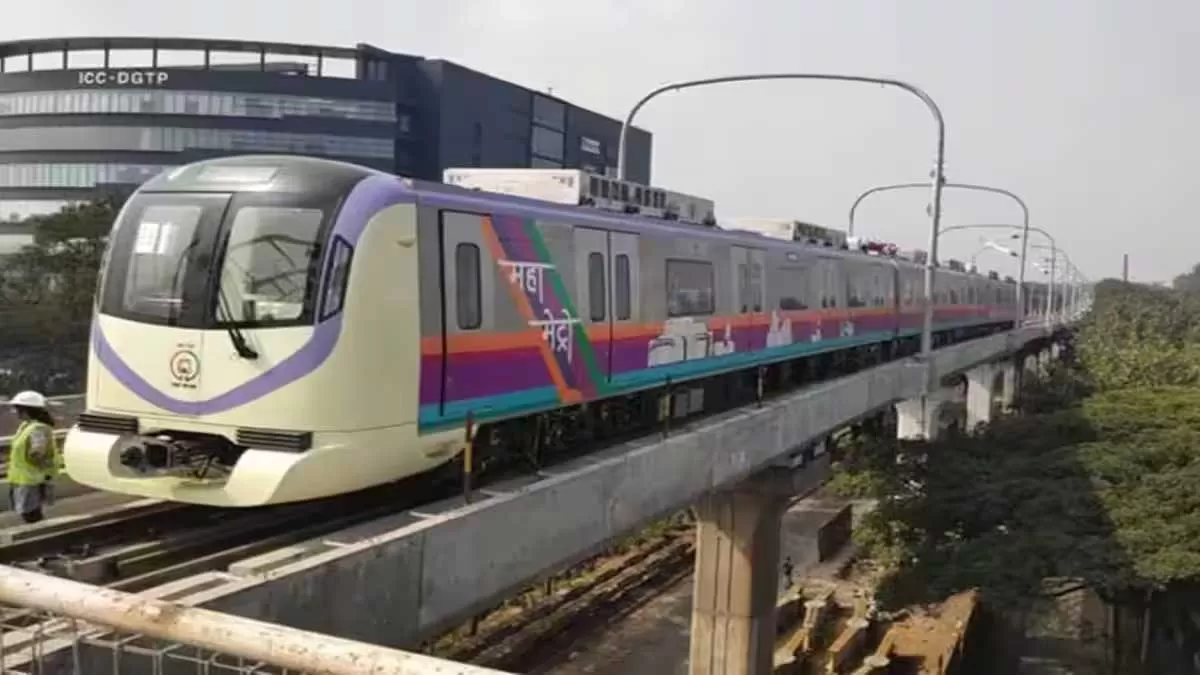
Parking plan for 8 metro stations excludes key stops
RAILWAYS & METRO RAIL

Parking plan for 8 metro stations excludes key stops

The Maha Metro has ensured the provision of dedicated parking spaces for two-wheelers and four-wheelers at eight out of the 30 operational Metro stations. However, concerns have been expressed by regular commuters regarding the absence of parking facilities at crucial stations such as Vanaz, Garware College, Nal Stop, Deccan Gymkhana, and Ruby Hall, causing inconvenience.

According to Saurav Patke, a frequent traveler from Vanaz Metro station, commuters find themselves compelled to park their two-wheelers along the roadside or on footpaths due to the absence of parking facilities at Vanaz, which serves as the originating station on the Vanaz-Ramwadi route.

The eight Metro stations equipped with parking facilities include PCMC, Sant Tukaramnagar, Phugewadi, Bopodi, Shivajinagar, Civil Court, RTO, and Ideal Colony.

Garware College and Ruby Hall Clinic Metro stations, witnessing significant student footfall, face a similar situation. Prasad Gopal, a regular Metro traveller, emphasized that commuters are not demanding extensive parking lots but urged authorities to allocate space for parking at least 50 two-wheelers at each Metro station. This, he believes, would not only address the parking issue but also contribute to an increase in Metro ridership. Gopal also suggested the need for a parking lot near Nal Stop station to assist commuters from Kothrud, Karvenagar, and surrounding areas.

Maha Metro officials acknowledged the concerns and stated that they are actively working on proposals to develop parking lots at additional stations. However, acquiring land for parking is deemed challenging as the two Metro corridors traverse through already developed areas, leaving limited space for additional facilities like parking, explained a Maha Metro official.

In addition to parking lots, Maha Metro is focusing on enhancing last-mile connectivity by introducing feeder services such as buses and autorickshaws. The aim is to reduce reliance on private vehicles, according to another official.

As part of the plan, the Pune Municipal Corporation (PMC) is expected to allocate a plot in the Karve Road area for the development of a multi-story parking space. Furthermore, Maha Metro has outlined plans to establish a parking lot at the Vanaz depot.

The Maha Metro has ensured the provision of dedicated parking spaces for two-wheelers and four-wheelers at eight out of the 30 operational Metro stations. However, concerns have been expressed by regular commuters regarding the absence of parking facilities at crucial stations such as Vanaz, Garware College, Nal Stop, Deccan Gymkhana, and Ruby Hall, causing inconvenience. According to Saurav Patke, a frequent traveler from Vanaz Metro station, commuters find themselves compelled to park their two-wheelers along the roadside or on footpaths due to the absence of parking facilities at Vanaz, which serves as the originating station on the Vanaz-Ramwadi route. The eight Metro stations equipped with parking facilities include PCMC, Sant Tukaramnagar, Phugewadi, Bopodi, Shivajinagar, Civil Court, RTO, and Ideal Colony. Garware College and Ruby Hall Clinic Metro stations, witnessing significant student footfall, face a similar situation. Prasad Gopal, a regular Metro traveller, emphasized that commuters are not demanding extensive parking lots but urged authorities to allocate space for parking at least 50 two-wheelers at each Metro station. This, he believes, would not only address the parking issue but also contribute to an increase in Metro ridership. Gopal also suggested the need for a parking lot near Nal Stop station to assist commuters from Kothrud, Karvenagar, and surrounding areas. Maha Metro officials acknowledged the concerns and stated that they are actively working on proposals to develop parking lots at additional stations. However, acquiring land for parking is deemed challenging as the two Metro corridors traverse through already developed areas, leaving limited space for additional facilities like parking, explained a Maha Metro official. In addition to parking lots, Maha Metro is focusing on enhancing last-mile connectivity by introducing feeder services such as buses and autorickshaws. The aim is to reduce reliance on private vehicles, according to another official. As part of the plan, the Pune Municipal Corporation (PMC) is expected to allocate a plot in the Karve Road area for the development of a multi-story parking space. Furthermore, Maha Metro has outlined plans to establish a parking lot at the Vanaz depot.

Related Stories

Gold Stories
Next Story
Infrastructure Urban

KONE Opens India's First Digital Experience Centre in Pune

KONE, a global elevator and escalator manufacturer, has inaugurated its first Digital Experience Centre (DEC) in India, located in Pune. The facility aims to showcase how artificial intelligence (AI), connectivity and data-driven technologies can enhance customer experiences and improve building operations.The centre was inaugurated by Jussi Herlin, Executive Vice Chair, KONE Corporation; Philippe Delorme, President and CEO, KONE; and Nandan Nilekani, Co-founder and Chairman of the Board, Infosys.Designed as an interactive customer environment, the facility demonstrates digital solutions cover..

Next Story
Infrastructure Urban

CII GreenCo Launches Circularity Guidelines for Indian Industry

The Confederation of Indian Industry (CII) GreenCo Council has launched the CII GreenCo Circularity Guidelines – Pilot Version at the 17th CII GreenCo Waste & Resource Management Summit 2026 in Chennai. The initiative aims to strengthen resource efficiency, waste reduction and circular economy practices across Indian manufacturing and process industries.The guidelines introduce a structured framework with circularity indices covering raw materials, consumables, packaging and other resource inputs. These indicators will help industries assess existing practices, identify opportunities to ..

Next Story
Infrastructure Energy

Global Electronics Association Launches IPC-1783-CO2E Standard

The Global Electronics Association has introduced IPC-1783-CO2E, a new international standard aimed at improving consistency, transparency and comparability in product carbon footprint reporting across the electronics manufacturing industry.The standard, titled International Standard for Data Collection and Reporting of CO2 Equivalent (CO2e) Emissions for the Electronics Manufacturing Supply Chain, provides industry-specific guidance for collecting, estimating and reporting carbon emissions data.With increasing regulatory requirements and customer expectations, electronics manufacturers face c..

Advertisement

Subscribe to Our Newsletter

Get daily newsletters around different themes from Construction world.

STAY CONNECTED

Advertisement

SPECIAL OFFER
QR Code