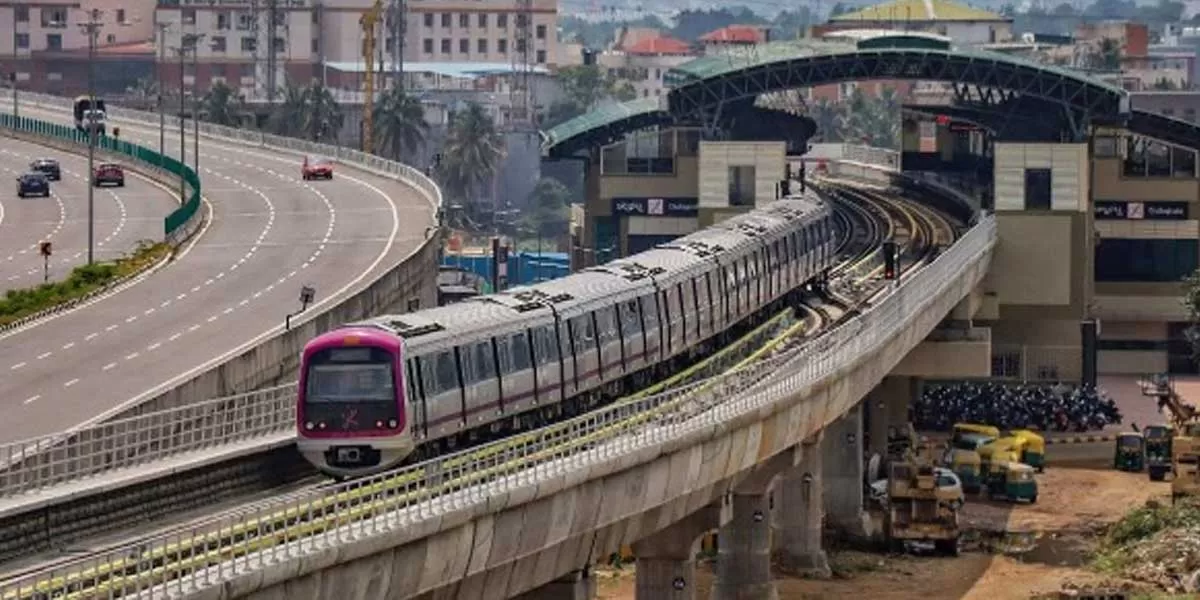
PM Modi Unveils Rs.106 Billion Railway Projects
RAILWAYS & METRO RAIL

PM Modi Unveils Rs.106 Billion Railway Projects

India's Prime Minister, Narendra Modi, virtually inaugurated a series of transformative railway projects valued at ?106,000 crore in Mysuru. These initiatives mark a significant milestone in India's infrastructure development, showcasing the government's commitment to modernizing the country's transportation network.

The projects include the unveiling of a multi-modal logistics park in Mysuru, which is poised to revolutionize freight movement across the region. With state-of-the-art facilities and strategic location, the logistics park is set to bolster trade and commerce while reducing transportation costs and enhancing efficiency.

In addition to the logistics park, PM Modi launched various railway projects aimed at enhancing connectivity and facilitating smoother travel experiences for millions of passengers. These projects encompass the expansion and modernization of railway infrastructure, including the introduction of high-speed trains and the development of new railway corridors.

The inauguration of these projects underscores the government's focus on fostering economic growth and creating employment opportunities. By investing in critical infrastructure, such as railways and logistics, India aims to strengthen its position as a global economic powerhouse and attract foreign investment.

Furthermore, the initiatives unveiled by PM Modi align with the vision of 'Make in India' and 'Atmanirbhar Bharat', promoting self-reliance and indigenous manufacturing. The development of robust transportation networks is crucial for accelerating the movement of goods and services, driving industrial growth, and realising the country's economic potential.

These initiatives are not only significant for Mysuru but also have far-reaching implications for the entire nation. Improved connectivity and efficient logistics networks are essential for fostering regional development, bridging urban-rural divides, and unlocking opportunities in remote areas.

Overall, the inauguration of ?106 billion railway projects and the unveiling of a multi-modal logistics park in Mysuru signal a new era of progress and prosperity for India. As the nation continues to prioritise infrastructure development, such initiatives will play a pivotal role in driving inclusive growth, enhancing competitiveness, and positioning India as a global leader in the transportation sector.

India's Prime Minister, Narendra Modi, virtually inaugurated a series of transformative railway projects valued at ?106,000 crore in Mysuru. These initiatives mark a significant milestone in India's infrastructure development, showcasing the government's commitment to modernizing the country's transportation network. The projects include the unveiling of a multi-modal logistics park in Mysuru, which is poised to revolutionize freight movement across the region. With state-of-the-art facilities and strategic location, the logistics park is set to bolster trade and commerce while reducing transportation costs and enhancing efficiency. In addition to the logistics park, PM Modi launched various railway projects aimed at enhancing connectivity and facilitating smoother travel experiences for millions of passengers. These projects encompass the expansion and modernization of railway infrastructure, including the introduction of high-speed trains and the development of new railway corridors. The inauguration of these projects underscores the government's focus on fostering economic growth and creating employment opportunities. By investing in critical infrastructure, such as railways and logistics, India aims to strengthen its position as a global economic powerhouse and attract foreign investment. Furthermore, the initiatives unveiled by PM Modi align with the vision of 'Make in India' and 'Atmanirbhar Bharat', promoting self-reliance and indigenous manufacturing. The development of robust transportation networks is crucial for accelerating the movement of goods and services, driving industrial growth, and realising the country's economic potential. These initiatives are not only significant for Mysuru but also have far-reaching implications for the entire nation. Improved connectivity and efficient logistics networks are essential for fostering regional development, bridging urban-rural divides, and unlocking opportunities in remote areas. Overall, the inauguration of ?106 billion railway projects and the unveiling of a multi-modal logistics park in Mysuru signal a new era of progress and prosperity for India. As the nation continues to prioritise infrastructure development, such initiatives will play a pivotal role in driving inclusive growth, enhancing competitiveness, and positioning India as a global leader in the transportation sector.

Related Stories

Gold Stories
Next Story
Infrastructure Urban

KONE Opens India's First Digital Experience Centre in Pune

KONE, a global elevator and escalator manufacturer, has inaugurated its first Digital Experience Centre (DEC) in India, located in Pune. The facility aims to showcase how artificial intelligence (AI), connectivity and data-driven technologies can enhance customer experiences and improve building operations.The centre was inaugurated by Jussi Herlin, Executive Vice Chair, KONE Corporation; Philippe Delorme, President and CEO, KONE; and Nandan Nilekani, Co-founder and Chairman of the Board, Infosys.Designed as an interactive customer environment, the facility demonstrates digital solutions cover..

Next Story
Infrastructure Urban

CII GreenCo Launches Circularity Guidelines for Indian Industry

The Confederation of Indian Industry (CII) GreenCo Council has launched the CII GreenCo Circularity Guidelines – Pilot Version at the 17th CII GreenCo Waste & Resource Management Summit 2026 in Chennai. The initiative aims to strengthen resource efficiency, waste reduction and circular economy practices across Indian manufacturing and process industries.The guidelines introduce a structured framework with circularity indices covering raw materials, consumables, packaging and other resource inputs. These indicators will help industries assess existing practices, identify opportunities to ..

Next Story
Infrastructure Energy

Global Electronics Association Launches IPC-1783-CO2E Standard

The Global Electronics Association has introduced IPC-1783-CO2E, a new international standard aimed at improving consistency, transparency and comparability in product carbon footprint reporting across the electronics manufacturing industry.The standard, titled International Standard for Data Collection and Reporting of CO2 Equivalent (CO2e) Emissions for the Electronics Manufacturing Supply Chain, provides industry-specific guidance for collecting, estimating and reporting carbon emissions data.With increasing regulatory requirements and customer expectations, electronics manufacturers face c..

Advertisement

Subscribe to Our Newsletter

Get daily newsletters around different themes from Construction world.

STAY CONNECTED

Advertisement

SPECIAL OFFER
QR Code