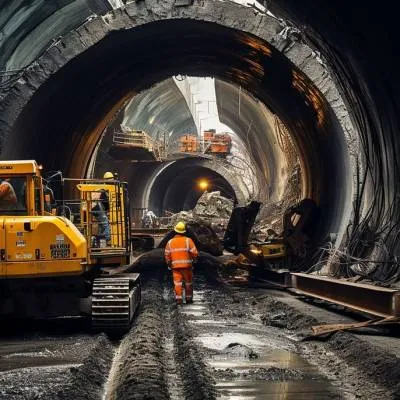
Pune Metro Line 3 gets parking space at 3 stations
RAILWAYS & METRO RAIL

Pune Metro Line 3 gets parking space at 3 stations

The Pune metro line 3 is struggling to acquire land for parking at the metro stations on the Hinjewadi to Shivajinagar route. So far, it has managed to acquire land for parking at only three out of the total 23 metro stations on this route.

Rinaj Pathan, chief engineer of the Pune Metropolitan Region Development Authority (PMRDA), said, ?The Pune metro line 3 is passing through congested urban areas. We will try to provide small, on-street parking lots at the metro stations like the Hyderabad Metro. We are also planning to provide parking at three stations.?

?At the first metro station (Maan), we have enough space to provide car parking near the Megapolis circle. We are also discussing with the Pune Municipal Corporation (PMC) to provide amenity spaces for parking purposes. We need major parking space at the Shivajinagar metro station. We will get some space for parking but it will not be enough. There is no space on Ganeshkhind Road for parking purposes as it is the busiest road,? Pathan said.

?Actually, we were trying to acquire a mall located on Ganeshkhind Road that was lying idle. However, one of the private companies owning the mall started renovation. In Balewadi area, we are hoping for space for parking as the PMC has decided to build a multimodal hub. Besides that, we are working to provide the best last mile connectivity to passengers to avoid parking problems,? Pathan said.

The PMRDA Pune metro line 3 is being jointly executed by Tata Group?s Trill Urban Transport Private Limited (TUTPL) and Siemens. The 23 km metro line 3 is expected to be completed by March 2025 due to delays in land acquisition. According to officials however, nearly 45% of the work has been completed. Still, it has been a struggle acquiring land for parking at all the metro stations on metro line 3. While the aim is to provide last mile connectivity to the passengers, the PMRDA has acquired land for parking at only three (Maan, Balewadi and Shivajinagar) out of the total 23 metro stations on this route.

Civic activist Qaneez Sukhrani said, ?The metro can?t make people stop using their own cars. Some folks will still use their cars to get to the metro stations and back home. It?s normal for people getting off the metro to need a way to reach their final destinations. It is natural that commuters disembarking will require transportation to their end destinations. So where will the feeder autos stand? Therefore, the metro should provide adequate parking space to passengers.?

The Pune metro line 3 is struggling to acquire land for parking at the metro stations on the Hinjewadi to Shivajinagar route. So far, it has managed to acquire land for parking at only three out of the total 23 metro stations on this route. Rinaj Pathan, chief engineer of the Pune Metropolitan Region Development Authority (PMRDA), said, ?The Pune metro line 3 is passing through congested urban areas. We will try to provide small, on-street parking lots at the metro stations like the Hyderabad Metro. We are also planning to provide parking at three stations.? ?At the first metro station (Maan), we have enough space to provide car parking near the Megapolis circle. We are also discussing with the Pune Municipal Corporation (PMC) to provide amenity spaces for parking purposes. We need major parking space at the Shivajinagar metro station. We will get some space for parking but it will not be enough. There is no space on Ganeshkhind Road for parking purposes as it is the busiest road,? Pathan said. ?Actually, we were trying to acquire a mall located on Ganeshkhind Road that was lying idle. However, one of the private companies owning the mall started renovation. In Balewadi area, we are hoping for space for parking as the PMC has decided to build a multimodal hub. Besides that, we are working to provide the best last mile connectivity to passengers to avoid parking problems,? Pathan said. The PMRDA Pune metro line 3 is being jointly executed by Tata Group?s Trill Urban Transport Private Limited (TUTPL) and Siemens. The 23 km metro line 3 is expected to be completed by March 2025 due to delays in land acquisition. According to officials however, nearly 45% of the work has been completed. Still, it has been a struggle acquiring land for parking at all the metro stations on metro line 3. While the aim is to provide last mile connectivity to the passengers, the PMRDA has acquired land for parking at only three (Maan, Balewadi and Shivajinagar) out of the total 23 metro stations on this route. Civic activist Qaneez Sukhrani said, ?The metro can?t make people stop using their own cars. Some folks will still use their cars to get to the metro stations and back home. It?s normal for people getting off the metro to need a way to reach their final destinations. It is natural that commuters disembarking will require transportation to their end destinations. So where will the feeder autos stand? Therefore, the metro should provide adequate parking space to passengers.?

Related Stories

Gold Stories

Next Story
Infrastructure Urban

KONE Opens India's First Digital Experience Centre in Pune

KONE, a global elevator and escalator manufacturer, has inaugurated its first Digital Experience Centre (DEC) in India, located in Pune. The facility aims to showcase how artificial intelligence (AI), connectivity and data-driven technologies can enhance customer experiences and improve building operations.The centre was inaugurated by Jussi Herlin, Executive Vice Chair, KONE Corporation; Philippe Delorme, President and CEO, KONE; and Nandan Nilekani, Co-founder and Chairman of the Board, Infosys.Designed as an interactive customer environment, the facility demonstrates digital solutions cover..

Next Story
Infrastructure Urban

CII GreenCo Launches Circularity Guidelines for Indian Industry

The Confederation of Indian Industry (CII) GreenCo Council has launched the CII GreenCo Circularity Guidelines – Pilot Version at the 17th CII GreenCo Waste & Resource Management Summit 2026 in Chennai. The initiative aims to strengthen resource efficiency, waste reduction and circular economy practices across Indian manufacturing and process industries.The guidelines introduce a structured framework with circularity indices covering raw materials, consumables, packaging and other resource inputs. These indicators will help industries assess existing practices, identify opportunities to ..

Next Story
Infrastructure Energy

Global Electronics Association Launches IPC-1783-CO2E Standard

The Global Electronics Association has introduced IPC-1783-CO2E, a new international standard aimed at improving consistency, transparency and comparability in product carbon footprint reporting across the electronics manufacturing industry.The standard, titled International Standard for Data Collection and Reporting of CO2 Equivalent (CO2e) Emissions for the Electronics Manufacturing Supply Chain, provides industry-specific guidance for collecting, estimating and reporting carbon emissions data.With increasing regulatory requirements and customer expectations, electronics manufacturers face c..

Advertisement

Subscribe to Our Newsletter

Get daily newsletters around different themes from Construction world.

STAY CONNECTED

Advertisement

SPECIAL OFFER
QR Code