Pune Metro Line 3 to Begin Services on November 4
RAILWAYS & METRO RAIL

Pune Metro Line 3 to Begin Services on November 4

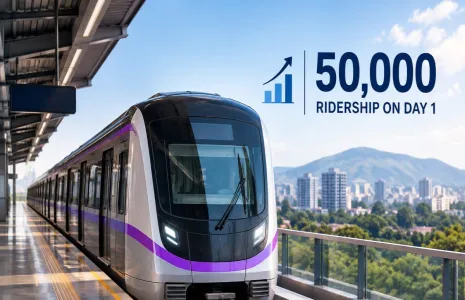
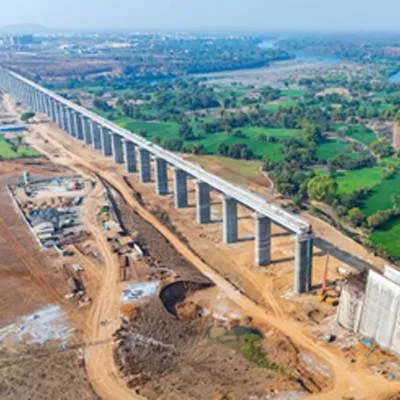
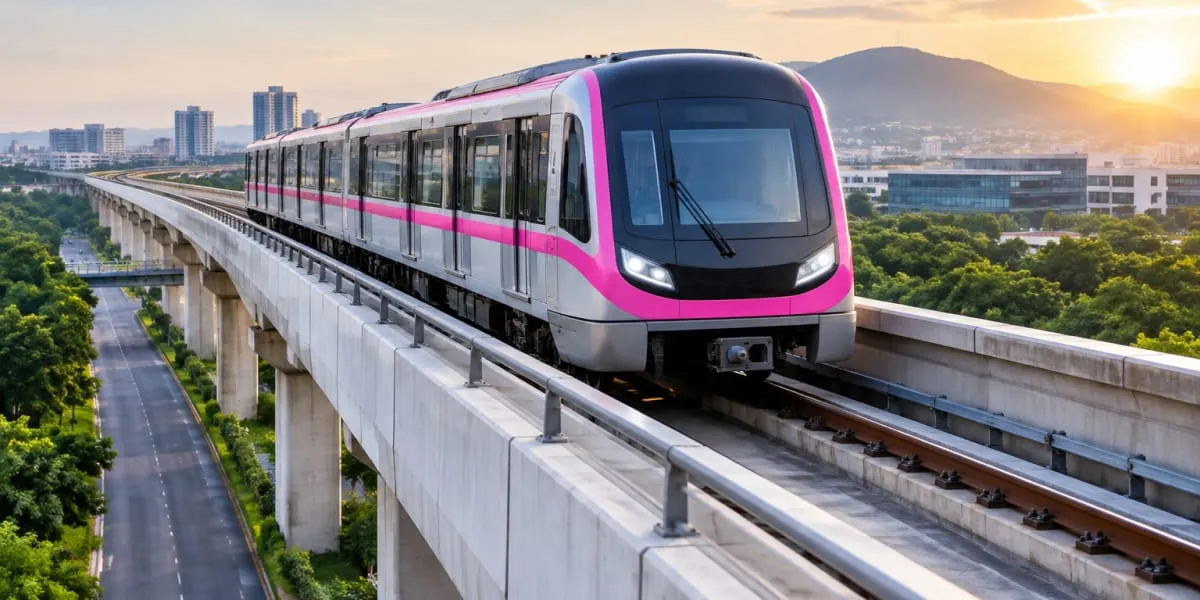
Pune Metro Line 3, connecting Maan and the Hinjewadi IT Park with Shivajinagar, will be inaugurated by Prime Minister Narendra Modi on November 3. Passenger services on the 23.2-km elevated corridor, also known as the Pink Line, are scheduled to begin at 6 am on November 4. The inauguration will take place at the Shri Shiv Chhatrapati Sports Complex in Mahalunge-Balewadi.

The corridor has an estimated cost of Rs. 83.13 bn, including land acquisition and utility relocation. It is being implemented through a public-private partnership under the design, build, finance, operate and transfer framework by Pune IT City Metro Rail, a special purpose vehicle formed by TRIL Urban Transport and Siemens Project Ventures under an agreement with the Pune Metropolitan Region Development Authority.

Of the 23 stations on the route, 17 will open initially. Ten stations will have both staircases operational, while seven will initially have one staircase. Work on stations 13 and 14 is in its final stage, while stations 15, 16, 20 and 22 are scheduled for phased completion by January 2027. The Pune Municipal Corporation has also developed parking facilities covering about 30,000 square feet near Balewadi and 21,000 square feet near Baner.

Trains will operate every six minutes during peak hours and every 12 minutes during non-peak periods. The last service towards the District Court will leave Maan at 10.30 pm, while the final train towards Maan will depart at 11.40 pm. At Shivajinagar, Line 3 will connect with MahaMetro’s Lines 1 and 2, and a common mobile application will support ticketing across the network.

The project is designed to improve last-mile connectivity through buses, auto-rickshaws, app-based taxis and e-bikes, with dedicated pick-up zones, cycle tracks and wider footpaths. Its 7.60 MW solar capacity is intended to meet about 30 per cent of electricity needs. The corridor is projected to serve 200,000 to 250,000 commuters daily, while around 100 women train pilots are expected to operate services. Environmental measures include planting 5,500 trees, transplanting 750 trees and saving 600 mn litres of water.

Pune Metro Line 3, connecting Maan and the Hinjewadi IT Park with Shivajinagar, will be inaugurated by Prime Minister Narendra Modi on November 3. Passenger services on the 23.2-km elevated corridor, also known as the Pink Line, are scheduled to begin at 6 am on November 4. The inauguration will take place at the Shri Shiv Chhatrapati Sports Complex in Mahalunge-Balewadi. The corridor has an estimated cost of Rs. 83.13 bn, including land acquisition and utility relocation. It is being implemented through a public-private partnership under the design, build, finance, operate and transfer framework by Pune IT City Metro Rail, a special purpose vehicle formed by TRIL Urban Transport and Siemens Project Ventures under an agreement with the Pune Metropolitan Region Development Authority. Of the 23 stations on the route, 17 will open initially. Ten stations will have both staircases operational, while seven will initially have one staircase. Work on stations 13 and 14 is in its final stage, while stations 15, 16, 20 and 22 are scheduled for phased completion by January 2027. The Pune Municipal Corporation has also developed parking facilities covering about 30,000 square feet near Balewadi and 21,000 square feet near Baner. Trains will operate every six minutes during peak hours and every 12 minutes during non-peak periods. The last service towards the District Court will leave Maan at 10.30 pm, while the final train towards Maan will depart at 11.40 pm. At Shivajinagar, Line 3 will connect with MahaMetro’s Lines 1 and 2, and a common mobile application will support ticketing across the network. The project is designed to improve last-mile connectivity through buses, auto-rickshaws, app-based taxis and e-bikes, with dedicated pick-up zones, cycle tracks and wider footpaths. Its 7.60 MW solar capacity is intended to meet about 30 per cent of electricity needs. The corridor is projected to serve 200,000 to 250,000 commuters daily, while around 100 women train pilots are expected to operate services. Environmental measures include planting 5,500 trees, transplanting 750 trees and saving 600 mn litres of water.

Related Stories

Gold Stories

Next Story
Real Estate

WSB Real Estate Partners Exits Six Housing Investments

WSB Real Estate Partners recently announced the successful exit of six residential investments across Bengaluru, Mumbai Metropolitan Region (MMR) and National Capital Region (NCR), delivering an average internal rate of return (IRR) of 19–21 per cent and an overall investment return of 1.4 times.The real estate-focused investment firm invested approximately Rs 7 billion across six mid-affordable housing projects over the past four years. All six investments were fully repaid between April and November 2026, several months ahead of their original investment tenures.WSB collaborated with sever..

Next Story
Infrastructure Transport

Aluminium Industry Seeks Policy Support for Rs 4 Trillion Investment

The Aluminium Association of India (AAI) has recently urged the government to introduce supportive policy measures to safeguard the sector’s proposed Rs 4 trillion investment pipeline. The association highlighted the need for a predictable policy framework to strengthen domestic manufacturing, expand production capacity and reduce import dependence.AAI submitted its recommendations for the Union Budget 2027-28 to the Ministries of Finance, Commerce and Industry, and Mines, along with the Department for Promotion of Industry and Internal Trade (DPIIT).India’s aluminium demand is projected t..
Next Story
Technology

ABB Unveils Intelligent Motor to Accelerate Industrial AI Adoption

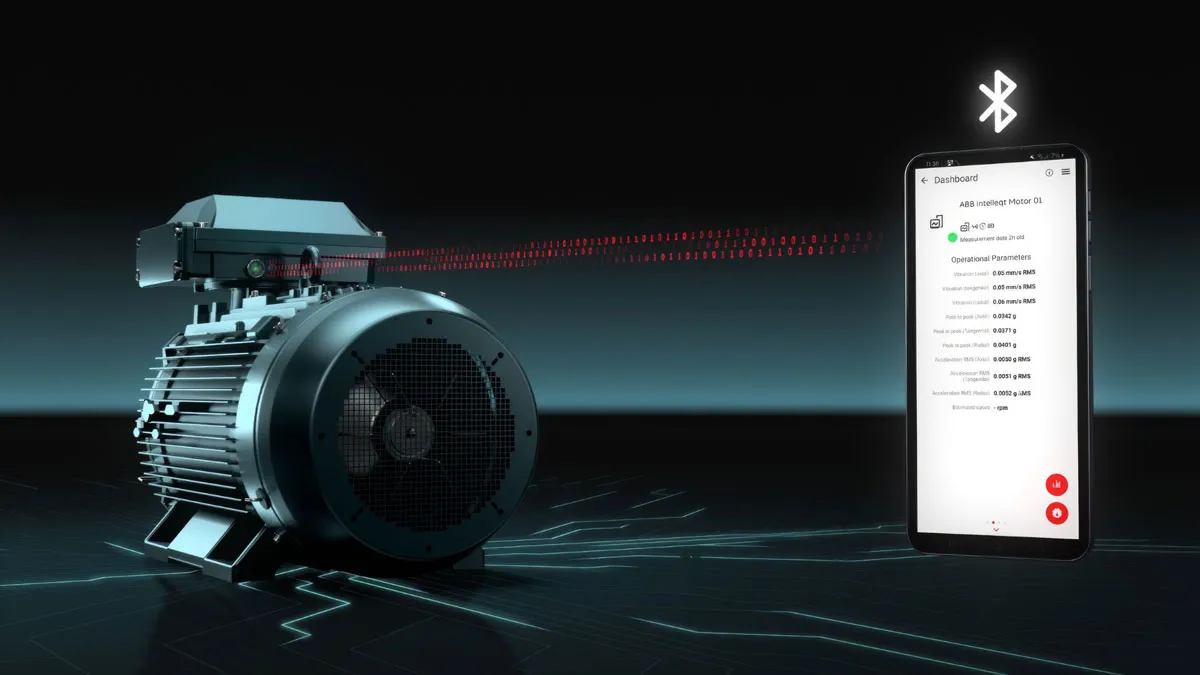
ABB recently launched Intelleqt, which it describes as the world’s first low-voltage motor with factory-integrated intelligence, at the SPS trade fair in Germany. Designed to deliver real-time operational insights from its first rotation, the motor enables industrial operators to integrate equipment-level data into existing digital platforms while retaining full ownership of their data.The launch addresses growing challenges in scaling artificial intelligence (AI) across industrial operations, particularly data quality and availability. According to Deloitte, while 84 per cent of manufacture..

Advertisement

Subscribe to Our Newsletter

Get daily newsletters around different themes from Construction world.

STAY CONNECTED

Advertisement

SPECIAL OFFER
QR Code