Rail Budget for Maharashtra Sees Major Expansion Push
RAILWAYS & METRO RAIL

Rail Budget for Maharashtra Sees Major Expansion Push

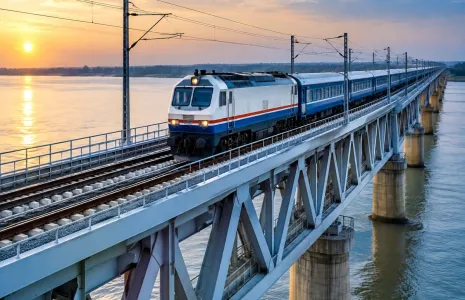
India has sharply accelerated railway development in Maharashtra, with budgetary support rising more than twenty times over the past decade, according to details shared in the Rajya Sabha. The Ministry of Railways confirmed that investment has increased from an annual average of Rs 1.17 billion in 2009–14 to Rs 237.78 billion in 2025–26, enabling extensive expansion and modernisation of the network.

New track commissioning has also seen a dramatic rise. Between 2009–14, the state added 292 kilometres of new lines, averaging 58.4 km per year. This figure has grown to 2,292 kilometres during 2014–25, marking a more than threefold increase in annual commissioning rates.

As of April 2025, 38 projects—including 11 new lines, two gauge-conversion schemes and 25 doubling projects—covering 5,098 kilometres and costing Rs 897.8 billion are sanctioned for Maharashtra. Key projects listed in the ministry’s document include the Indore–Manmad line (Rs 185.29 billion), the Ahilyanagar–Beed–Parli Vaijnath line (Rs 49.57 billion), the Jalna–Jalgaon line (Rs 58.04 billion), and multiple third and fourth-line corridors to expand capacity.

Surveys for 98 additional projects covering 8,603 kilometres have also been sanctioned in the past three years, signalling continued expansion. Track renewal remains a priority, with 5,100 kilometres renewed nationwide in 2025–26 up to November, and 52,000 kilometres renewed since 2014.

A total of 1,337 stations have been identified for redevelopment under the Amrit Bharat Station Scheme, including 132 stations in Maharashtra. Seventeen stations—such as Baramati, Dhule, Devlali, Parel and Murtizapur—have already completed upgrade works, while others including Wathar, Nandgaon and Hadapsar have seen major improvements and are nearing completion.

These upgrades include new station buildings, modern foot overbridges, improved circulation areas, enhanced lighting, platform shelters, landscaping, signage and accessibility provisions such as escalators and lifts.

Track renewal in Maharashtra spans several railway zones, with Central Railway replacing 271 km of track in 2025–26 (up to November), South Central Railway 505 km, South East Central Railway 196 km, Western Railway 345 km and South Western Railway 155 km.

The Ministry emphasised that these investments reflect the Union Government’s commitment to building a modern, efficient and high-capacity rail network to support Maharashtra’s economic growth.

India has sharply accelerated railway development in Maharashtra, with budgetary support rising more than twenty times over the past decade, according to details shared in the Rajya Sabha. The Ministry of Railways confirmed that investment has increased from an annual average of Rs 1.17 billion in 2009–14 to Rs 237.78 billion in 2025–26, enabling extensive expansion and modernisation of the network. New track commissioning has also seen a dramatic rise. Between 2009–14, the state added 292 kilometres of new lines, averaging 58.4 km per year. This figure has grown to 2,292 kilometres during 2014–25, marking a more than threefold increase in annual commissioning rates. As of April 2025, 38 projects—including 11 new lines, two gauge-conversion schemes and 25 doubling projects—covering 5,098 kilometres and costing Rs 897.8 billion are sanctioned for Maharashtra. Key projects listed in the ministry’s document include the Indore–Manmad line (Rs 185.29 billion), the Ahilyanagar–Beed–Parli Vaijnath line (Rs 49.57 billion), the Jalna–Jalgaon line (Rs 58.04 billion), and multiple third and fourth-line corridors to expand capacity. Surveys for 98 additional projects covering 8,603 kilometres have also been sanctioned in the past three years, signalling continued expansion. Track renewal remains a priority, with 5,100 kilometres renewed nationwide in 2025–26 up to November, and 52,000 kilometres renewed since 2014. A total of 1,337 stations have been identified for redevelopment under the Amrit Bharat Station Scheme, including 132 stations in Maharashtra. Seventeen stations—such as Baramati, Dhule, Devlali, Parel and Murtizapur—have already completed upgrade works, while others including Wathar, Nandgaon and Hadapsar have seen major improvements and are nearing completion. These upgrades include new station buildings, modern foot overbridges, improved circulation areas, enhanced lighting, platform shelters, landscaping, signage and accessibility provisions such as escalators and lifts. Track renewal in Maharashtra spans several railway zones, with Central Railway replacing 271 km of track in 2025–26 (up to November), South Central Railway 505 km, South East Central Railway 196 km, Western Railway 345 km and South Western Railway 155 km. The Ministry emphasised that these investments reflect the Union Government’s commitment to building a modern, efficient and high-capacity rail network to support Maharashtra’s economic growth.

Next Story
Infrastructure Urban

Centre Boosts FPO Growth With New Credit And Market Support

The Government is implementing the Central Sector Scheme on the formation and promotion of 10,000 Farmer Producer Organisations (FPOs), under which all 10,000 FPOs have now been registered. The scheme provides Rs 1.8 million per FPO for three years as management support, a matching equity grant of up to Rs 1.5 million, and a credit guarantee of up to Rs 0.02 billion through eligible lending institutions. It also offers assistance for training, market linkages and alignment with other schemes. FPOs receive support to obtain input licences for seed, fertiliser and pesticide supplies, as well as..

Next Story
Infrastructure Urban

PM-KISAN Drives Farm Income Gains And Rural Stability

The PM-KISAN scheme, a central sector initiative launched in February 2019, aims to support the financial needs of farmers holding cultivable land. Under the scheme, Rs 6,000 per year is transferred in three equal instalments to Aadhaar-seeded bank accounts through Direct Benefit Transfer. Eligibility is based primarily on cultivable landholding, with certain exclusions for individuals of higher economic status. A farmer-centric digital infrastructure ensures scheme benefits reach farmers across India without intermediaries. With full transparency in registration and verification, the Governm..

Next Story
Infrastructure Urban

Govt Extends Pro Tem Security Certificate To Two Years

In a further push to improve ease of doing business and ensure continuity for the telecom industry, the National Centre for Communication Security (NCCS) under the Department of Telecommunications has extended the validity of the Pro Tem Security Certification from six months to two years. The Pro Tem Certification, initially launched in October 2024 with a six-month validity, was designed to prevent business disruption for IP Router and Wi-Fi CPE products, which became subject to mandatory security certification from 1 October 2024. Under this certification, OEMs submit a declaration confirm..

Advertisement

Subscribe to Our Newsletter

Get daily newsletters around different themes from Construction world.

STAY CONNECTED

Advertisement

Advertisement

Advertisement

Advertisement

Open In App