RTI says railways earned Rs 28 billion more in 7 years
RAILWAYS & METRO RAIL

RTI says railways earned Rs 28 billion more in 7 years

According to an RTI response, it has been revealed that the Indian Railways managed to accumulate extra revenue of over Rs 28 billion from child travellers over the course of the last seven years by modifying the fare regulations for child passengers.
The information, sourced from the Centre for Railway Information Systems (CRIS) through the Right to Information (RTI) Act, also points out that the fiscal year 2022-23 alone witnessed earnings of Rs 5.6 billion due to the updated regulations, marking it as the most profitable year in this regard.
CRIS, which operates under the Ministry of Railways, specialises in offering IT solutions across various vital sectors, including ticketing and passenger services, freight operations, train traffic management, and other related areas.
On March 31, 2016, the ministry declared that children aged 5 years and under 12 years who chose to have separate berths or seats in a reserved coach would be charged the full adult fare. This revised policy came into effect from April 21, 2016.
In contrast, the earlier practice of the railways involved providing separate berths to children between 5 and 12 years of age while charging them only half of the regular travel fare. 

Also read: 

According to an RTI response, it has been revealed that the Indian Railways managed to accumulate extra revenue of over Rs 28 billion from child travellers over the course of the last seven years by modifying the fare regulations for child passengers.The information, sourced from the Centre for Railway Information Systems (CRIS) through the Right to Information (RTI) Act, also points out that the fiscal year 2022-23 alone witnessed earnings of Rs 5.6 billion due to the updated regulations, marking it as the most profitable year in this regard.CRIS, which operates under the Ministry of Railways, specialises in offering IT solutions across various vital sectors, including ticketing and passenger services, freight operations, train traffic management, and other related areas.On March 31, 2016, the ministry declared that children aged 5 years and under 12 years who chose to have separate berths or seats in a reserved coach would be charged the full adult fare. This revised policy came into effect from April 21, 2016.In contrast, the earlier practice of the railways involved providing separate berths to children between 5 and 12 years of age while charging them only half of the regular travel fare. Also read: MMRDA plans 350 sq km Town in Mumbai Harbour           Dwarka comes up with mega convention space, Yashobhoomi

Related Stories

Gold Stories
Next Story
Infrastructure Urban

KONE Opens India's First Digital Experience Centre in Pune

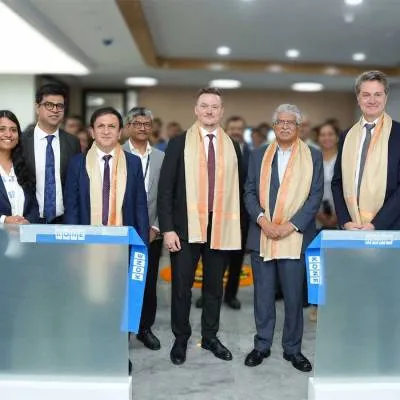
KONE, a global elevator and escalator manufacturer, has inaugurated its first Digital Experience Centre (DEC) in India, located in Pune. The facility aims to showcase how artificial intelligence (AI), connectivity and data-driven technologies can enhance customer experiences and improve building operations.The centre was inaugurated by Jussi Herlin, Executive Vice Chair, KONE Corporation; Philippe Delorme, President and CEO, KONE; and Nandan Nilekani, Co-founder and Chairman of the Board, Infosys.Designed as an interactive customer environment, the facility demonstrates digital solutions cover..

Next Story
Infrastructure Urban

CII GreenCo Launches Circularity Guidelines for Indian Industry

The Confederation of Indian Industry (CII) GreenCo Council has launched the CII GreenCo Circularity Guidelines – Pilot Version at the 17th CII GreenCo Waste & Resource Management Summit 2026 in Chennai. The initiative aims to strengthen resource efficiency, waste reduction and circular economy practices across Indian manufacturing and process industries.The guidelines introduce a structured framework with circularity indices covering raw materials, consumables, packaging and other resource inputs. These indicators will help industries assess existing practices, identify opportunities to ..

Next Story
Infrastructure Energy

Global Electronics Association Launches IPC-1783-CO2E Standard

The Global Electronics Association has introduced IPC-1783-CO2E, a new international standard aimed at improving consistency, transparency and comparability in product carbon footprint reporting across the electronics manufacturing industry.The standard, titled International Standard for Data Collection and Reporting of CO2 Equivalent (CO2e) Emissions for the Electronics Manufacturing Supply Chain, provides industry-specific guidance for collecting, estimating and reporting carbon emissions data.With increasing regulatory requirements and customer expectations, electronics manufacturers face c..

Advertisement

Subscribe to Our Newsletter

Get daily newsletters around different themes from Construction world.

STAY CONNECTED

Advertisement

SPECIAL OFFER
QR Code