Train Speed on Katra-Banihal Section in J&K Raised to 100 km/h
RAILWAYS & METRO RAIL

Train Speed on Katra-Banihal Section in J&K Raised to 100 km/h

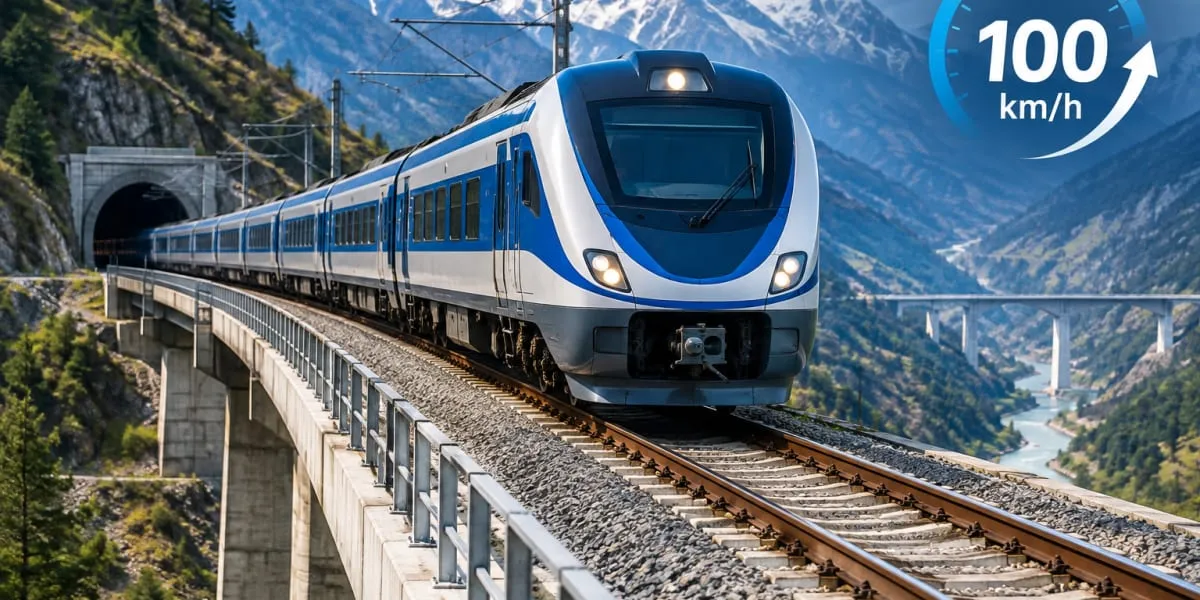
The maximum permissible speed of trains on the 111-km-long Shri Mata Vaishno Devi Katra-Banihal section in Jammu and Kashmir has been raised from 75 km/h to 100 km/h, railway officials said. The change is intended to enable faster train services across a difficult Himalayan route containing major tunnels and bridges.

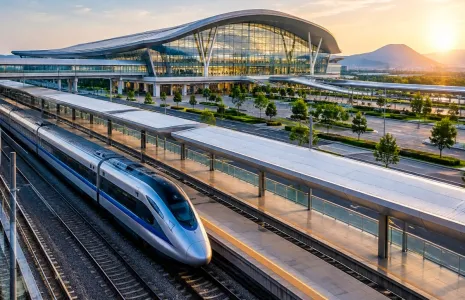
The enhanced speed was successfully tested during operations on the section. Railway officials said the increase would make train movement on the Udhampur-Srinagar-Baramulla Rail Link (USBRL) project smoother, while reducing journey times and providing passengers with faster, safer and more comfortable travel.

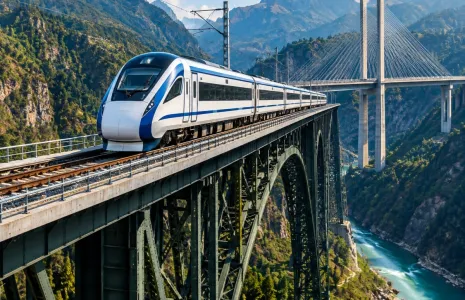
The Vande Bharat Express, operating as Train No. 26401/26404, crossed the Chenab Bridge and the Anji Bridge at 100 km/h during the test. The railway authorities described the achievement as a significant milestone for the Katra-Banihal stretch, which passes through some of the most challenging terrain in the Himalayas.

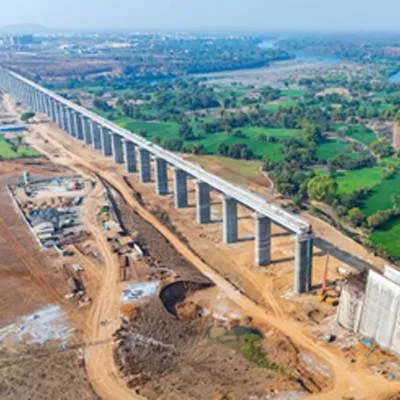
The Chenab Bridge in Reasi district is the world’s highest railway arch bridge and rises about 359 metres above the Chenab River. Its completion formed a major part of the railway infrastructure developed to connect the region through the USBRL project and overcome the area’s steep and difficult terrain.

The Anji Bridge, located in Reasi district, is India’s first cable-stayed railway bridge. It spans the deep Anji Khad and uses a central pylon with a cable-stay system to support the railway deck. Railway Minister Ashwini Vaishnaw also shared a video of the Vande Bharat Express crossing both bridges on his X account. With the permissible speed now increased, passengers travelling between Katra and Banihal are expected to benefit from shorter journey times and more efficient train operations.

The maximum permissible speed of trains on the 111-km-long Shri Mata Vaishno Devi Katra-Banihal section in Jammu and Kashmir has been raised from 75 km/h to 100 km/h, railway officials said. The change is intended to enable faster train services across a difficult Himalayan route containing major tunnels and bridges. The enhanced speed was successfully tested during operations on the section. Railway officials said the increase would make train movement on the Udhampur-Srinagar-Baramulla Rail Link (USBRL) project smoother, while reducing journey times and providing passengers with faster, safer and more comfortable travel. The Vande Bharat Express, operating as Train No. 26401/26404, crossed the Chenab Bridge and the Anji Bridge at 100 km/h during the test. The railway authorities described the achievement as a significant milestone for the Katra-Banihal stretch, which passes through some of the most challenging terrain in the Himalayas. The Chenab Bridge in Reasi district is the world’s highest railway arch bridge and rises about 359 metres above the Chenab River. Its completion formed a major part of the railway infrastructure developed to connect the region through the USBRL project and overcome the area’s steep and difficult terrain. The Anji Bridge, located in Reasi district, is India’s first cable-stayed railway bridge. It spans the deep Anji Khad and uses a central pylon with a cable-stay system to support the railway deck. Railway Minister Ashwini Vaishnaw also shared a video of the Vande Bharat Express crossing both bridges on his X account. With the permissible speed now increased, passengers travelling between Katra and Banihal are expected to benefit from shorter journey times and more efficient train operations.

Related Stories

Gold Stories

Next Story
Building Material

PureSil Paints Develops Mineral Coatings from Industrial Waste

PureSil Paints, a brand of Relic Coatings LLP, has developed an indigenous mineral-based coating technology aimed at reducing dependence on petrochemical-derived raw materials in the paints and coatings industry. Its proprietary Silicification Technology uses agricultural and industrial by-products to manufacture architectural coatings as an alternative to conventional acrylic paints.Developed in-house by Dr Nikhil Dhote, Founder and Chief Technologist, Relic Coatings LLP, the technology uses silicate binders derived from upcycled rice husk ash and industrial coal fly ash. The formulation is d..
Next Story
Infrastructure Energy

Vedanta Eyes AI to Accelerate Mineral Exploration

Vedanta Group is exploring the use of artificial intelligence (AI) to significantly improve efficiency in mineral exploration, geological analysis and resource modelling. The company aims to reduce exploration processes that traditionally take three to four months to just six to seven days through AI-driven technologies.The proposed approach involves AI-led geological analysis and mineral block modelling to accelerate mineral resource assessment and support faster, more cost-efficient development of domestic mineral reserves. The initiative aligns with India's growing focus on critical mineral..

Next Story
Technology

NXP Launches Unified Robotics Platform for Physical AI

NXP Semiconductors has launched a unified robotics platform designed to accelerate the development and deployment of trusted physical artificial intelligence (AI) systems. Built on the company's neural axis architecture, the platform integrates AI processing, connectivity, motor control, security and energy management within a common hardware and software ecosystem.The platform combines an open-source, modular software development kit (SDK) with pre-validated reference designs, enabling developers to build robotic systems more efficiently. It supports development ranging from individual subsys..

Advertisement

Subscribe to Our Newsletter

Get daily newsletters around different themes from Construction world.

STAY CONNECTED

Advertisement

SPECIAL OFFER
QR Code