APSEZ ports' May cargo handling surges 19%, YTD figures rise 16%
PORTS & SHIPPING

APSEZ ports' May cargo handling surges 19%, YTD figures rise 16%

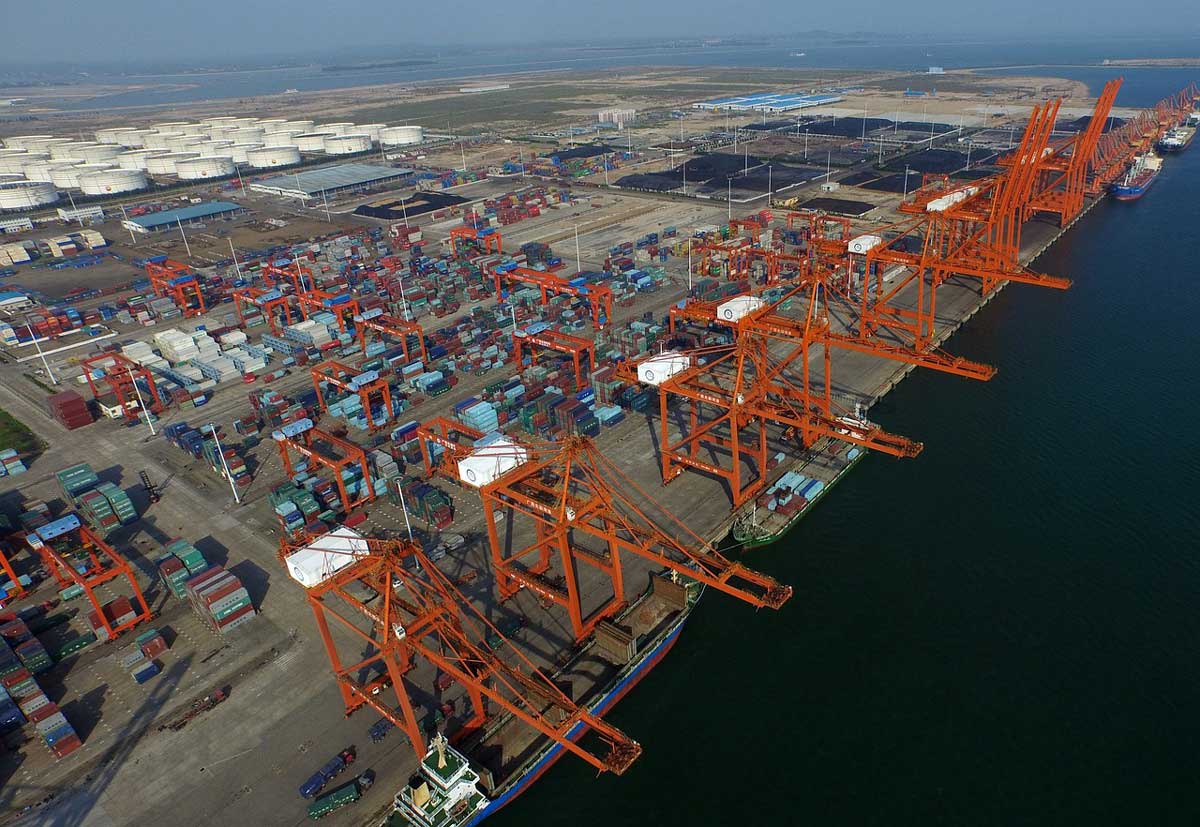
Adani Ports and Special Economic Zone’s (APSEZ) total cargo handling at their controlled ports increased by 19% to 36 MMT in May compared to the previous year. The company stated that there was growth observed across most ports and all three cargo segments. On a year-to-date basis, APSEZ's overall cargo volumes surged by 16 percent, reaching 68.5 MMT. The container segment experienced a 24 percent rise in volumes during the first five months of the year, while the dry bulk and liquids and gas segments witnessed an increase of 12 percent and 10 percent respectively.

Additionally, the rail volumes for the year-to-date period also saw a significant jump of 25 percent, amounting to 93,000 TEUs.

Earlier, the company had announced its plan to pay off $130 million of its debt early, following a tender offer for the early payment of approximately $413 million worth of debt. This move was made to enhance investor confidence, especially after the group's shares were negatively impacted by a report from Hindenburg Research, a US-based short seller.

During the same month, Deloitte, the company's auditor, raised concerns about APSEZ's transactions with three entities and expressed uncertainty about the company's compliance with local laws. In a qualified opinion, Deloitte stated that the evaluation conducted by the group did not provide sufficient appropriate audit evidence for the purpose of the audit.

Adani Ports and Special Economic Zone’s (APSEZ) total cargo handling at their controlled ports increased by 19% to 36 MMT in May compared to the previous year. The company stated that there was growth observed across most ports and all three cargo segments. On a year-to-date basis, APSEZ's overall cargo volumes surged by 16 percent, reaching 68.5 MMT. The container segment experienced a 24 percent rise in volumes during the first five months of the year, while the dry bulk and liquids and gas segments witnessed an increase of 12 percent and 10 percent respectively.Additionally, the rail volumes for the year-to-date period also saw a significant jump of 25 percent, amounting to 93,000 TEUs.Earlier, the company had announced its plan to pay off $130 million of its debt early, following a tender offer for the early payment of approximately $413 million worth of debt. This move was made to enhance investor confidence, especially after the group's shares were negatively impacted by a report from Hindenburg Research, a US-based short seller.During the same month, Deloitte, the company's auditor, raised concerns about APSEZ's transactions with three entities and expressed uncertainty about the company's compliance with local laws. In a qualified opinion, Deloitte stated that the evaluation conducted by the group did not provide sufficient appropriate audit evidence for the purpose of the audit.

Next Story
Infrastructure Urban

Implementation Status of Jal Jeevan Mission

Since August 2019 the Government has implemented Jal Jeevan Mission to provide assured potable water through household tap connections in rural India. At the start of the mission only 32.3 million (mn) rural households, representing 16.7 per cent, were reported to have tap water connections. States and union territories have reported that 125.8 mn additional rural households have since been provided with tap connections. As a result, of about 193.6 mn rural households roughly 158.2 mn, or 81.71 per cent, are reported to have tap water supply at home.\n\nThe State, district and village level st..

Next Story
Infrastructure Urban

Jal Jeevan Mission Reaches Eighty One Per Cent Rural Coverage

The Government reported substantial progress under the Jal Jeevan Mission, launched in August 2019 to provide tap water to every rural household. At launch only 32.3 million (mn) rural households had tap connections and states and Union territories reported provision of 125.8 mn additional households by March 2026. Consequently, out of about 193.6 mn rural households around 158.2 mn, or 81.71 per cent, are reported to have tap water at home. The Finance Minister announced extension of the mission until 2028 in the 2025-26 budget speech. The Swachh Bharat Mission Grameen, launched in October 20..

Next Story
Infrastructure Urban

Empowering Local Governance for Sustainable Rural Water Supply

The Ministry of Jal Shakti has aligned the Jal Jeevan Mission (JJM) with the 73rd Amendment to strengthen village level planning and community ownership of water supply. Gram Panchayats, village water and sanitation committees and Pani Samitis are to plan, implement, manage and maintain piped water systems, with gram sabha processes formalising handover and oversight. Implementation support agencies including non government organisations, community based organisations and self help groups have been empanelled to train local committees and promote women participation. Under JJM, the department ..

Advertisement

Subscribe to Our Newsletter

Get daily newsletters around different themes from Construction world.

STAY CONNECTED

Advertisement

Advertisement

Advertisement