Cargo Growth At Non-Major Ports Slows In FY26
PORTS & SHIPPING

Cargo Growth At Non-Major Ports Slows In FY26

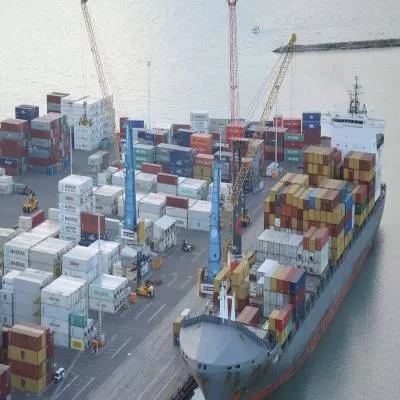
Non-major ports handled 753.07 million tonnes (mn t) of cargo in FY2025-26, reflecting a modest expansion as maritime trade continued to grow. The throughput represented a rise of 1.44 per cent year on year from 742.41 mn t in FY2024-25, signalling a slower growth trajectory than previous periods. The Ministry of Ports, Shipping and Waterways data indicated mixed commodity trends and a softer finish to the year.

Overseas cargo accounted for the bulk of throughput at 612.02 mn t, representing 81.27 per cent of total handled, while coastal movements stood at 141.05 mn t with an 18.73 per cent share. Both overseas and coastal segments grew about 1.4 per cent in the year, underlining modest demand across trade channels. Container traffic continued to contribute a significant share, representing 21.47 per cent of volumes and rising 2.25 per cent.

Activity moderated in March 2026 when non-major ports handled 62.11 mn t, down 4.13 per cent compared with March 2025, reflecting weaker month end flows. Overseas cargo in the month fell 6.09 per cent while coastal cargo rose 3.41 per cent, indicating a shift towards shorter distance movements. The monthly slowdown weighed on the annual growth rate despite full year gains.

State maritime boards in Gujarat, Andhra Pradesh, Maharashtra and Odisha remained dominant among non-major ports. Gujarat Maritime Board handled 485.25 mn t, accounting for more than 64 per cent of the non-major throughput, with Andhra Pradesh at 116.77 mn t, Maharashtra at 70.56 mn t and Odisha ports at 52.95 mn t. The concentration highlighted regional imbalances in cargo distribution.

Commodity patterns showed coal as the largest category with a 26.93 per cent share, while petroleum, oil and lubricants and crude products together accounted for 26.13 per cent and grew 13.47 per cent. Fertiliser cargo recorded the highest annual gain at 51.9 per cent even as foodgrains, iron ore and other categories declined and coal volumes dipped 0.86 per cent. Non-major port performance accompanied a record at major ports, which handled 915.17 mn t in FY2025-26, underscoring sector expansion.

"Join industry leaders at RAHSTA Expo, India's premier platform for roads, highways and traffic infrastructure. Register now to explore innovations, network with experts and shape the future of mobility."

Non-major ports handled 753.07 million tonnes (mn t) of cargo in FY2025-26, reflecting a modest expansion as maritime trade continued to grow. The throughput represented a rise of 1.44 per cent year on year from 742.41 mn t in FY2024-25, signalling a slower growth trajectory than previous periods. The Ministry of Ports, Shipping and Waterways data indicated mixed commodity trends and a softer finish to the year. Overseas cargo accounted for the bulk of throughput at 612.02 mn t, representing 81.27 per cent of total handled, while coastal movements stood at 141.05 mn t with an 18.73 per cent share. Both overseas and coastal segments grew about 1.4 per cent in the year, underlining modest demand across trade channels. Container traffic continued to contribute a significant share, representing 21.47 per cent of volumes and rising 2.25 per cent. Activity moderated in March 2026 when non-major ports handled 62.11 mn t, down 4.13 per cent compared with March 2025, reflecting weaker month end flows. Overseas cargo in the month fell 6.09 per cent while coastal cargo rose 3.41 per cent, indicating a shift towards shorter distance movements. The monthly slowdown weighed on the annual growth rate despite full year gains. State maritime boards in Gujarat, Andhra Pradesh, Maharashtra and Odisha remained dominant among non-major ports. Gujarat Maritime Board handled 485.25 mn t, accounting for more than 64 per cent of the non-major throughput, with Andhra Pradesh at 116.77 mn t, Maharashtra at 70.56 mn t and Odisha ports at 52.95 mn t. The concentration highlighted regional imbalances in cargo distribution. Commodity patterns showed coal as the largest category with a 26.93 per cent share, while petroleum, oil and lubricants and crude products together accounted for 26.13 per cent and grew 13.47 per cent. Fertiliser cargo recorded the highest annual gain at 51.9 per cent even as foodgrains, iron ore and other categories declined and coal volumes dipped 0.86 per cent. Non-major port performance accompanied a record at major ports, which handled 915.17 mn t in FY2025-26, underscoring sector expansion.

Next Story
Infrastructure Transport

Uttar Pradesh unveils infrastructure-led growth roadmap at RAHSTA

Mumbai, 9 July 2026: Uttar Pradesh’s ambitious infrastructure-led growth strategy took centre stage on Day 2 of the 16th RAHSTA Expo, where senior government officials outlined how expressways, industrial corridors and technology-driven governance are transforming the state into one of India's most attractive investment destinations.Delivering the keynote address, Srihari Pratap Shahi, IAS, Additional Chief Executive Officer, Uttar Pradesh Expressways Industrial Development Authority (UPEIDA), highlighted the state's long-term vision of integrating world-class expressways with industrial dev..

Next Story
Real Estate

NCW closes PRIME Offices Fund at Rs 40 billion

Nuvama and Cushman & Wakefield Management (NCW) has announced the final close of its flagship PRIME Offices Fund at approximately Rs 40 billion, exceeding its original target of Rs 30 billion following strong investor demand.The fund was launched to provide Indian investors with access to institutional-grade commercial office assets across key office markets in the country. According to NCW, the increase in the fund size was supported by strong investor participation and the availability of investment opportunities in India's office sector.The fund has already committed around 45 per cent ..

Next Story
Real Estate

Mayfair Housing adopts Autodesk Forma for digital project planning

Mayfair Housing has entered into a three-year strategic partnership with Autodesk to deploy Autodesk Forma, an AI-enabled cloud platform, as part of its digital transformation programme aimed at improving project planning and execution across its development and redevelopment portfolio.The platform will be integrated into the company's Building Information Modelling (BIM) workflow to support architects, planners and project teams during the early stages of design and development. Autodesk Forma combines real-world data, environmental simulations and collaborative workflows to facilitate data-d..

Advertisement

Subscribe to Our Newsletter

Get daily newsletters around different themes from Construction world.

STAY CONNECTED

Advertisement

Advertisement

Advertisement