India Expands Global Partnerships in Ports and Maritime Logistics
PORTS & SHIPPING

India Expands Global Partnerships in Ports and Maritime Logistics

The Government has expanded international engagement across ports, shipping and maritime geo-logistics through collaborations with foreign governments, multilateral institutions and global maritime industry partners. The partnerships span port modernisation, shipping-infrastructure development, digitisation, green-shipping initiatives and maritime skill development. Recent engagements include the India–Russia cooperation on the Northern Sea Route and Eastern Maritime Corridor, training of Indian seafarers in polar waters, the Indo-Danish Centre of Excellence in Green Shipping and the India–Singapore Green and Digital Shipping Corridor.

Through Joint Working Groups, bilateral meetings and formal instruments such as Memoranda of Understanding and Letters of Intent, India has pursued maritime collaboration with countries including Norway, the Netherlands, Denmark, Italy, South Korea, Singapore, Japan, Saudi Arabia, Sri Lanka, Myanmar and Oman.

India Maritime Week 2025, held in Mumbai from 27–31 October 2025, drew participation from more than eighty-five countries and over 100,000 delegates, reflecting strong international interest in India’s maritime sector.

The Government has also enacted key legislative reforms to modernise maritime governance and upgrade the legal framework. Recent laws passed by Parliament include the Merchant Shipping Act 2025, the Coastal Shipping Act 2025, the Indian Ports Act 2025, the Bills of Lading Act 2025, the Carriage of Goods by Sea Act 2025 and the Marine Aids to Navigation Act 2021. The Major Port Authority Act 2021, replacing the Major Port Trusts Act 1963, aims to enhance autonomy, operational flexibility and private-sector participation.

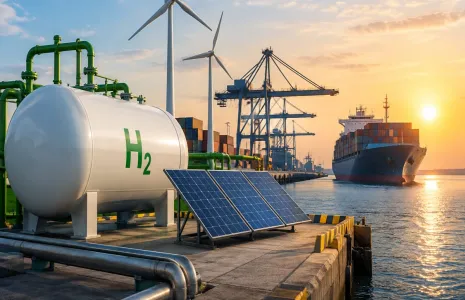
Multiple initiatives continue to strengthen port operations and maritime logistics. These include standardisation under the One Nation One Port initiative, mechanisation and PPP-based development, digitisation of operational processes, adoption of the Harit Sagar Green Port Guidelines 2023, establishment of green hydrogen and green ammonia hubs at three major ports under the National Green Hydrogen Mission and the modernisation of inland waterways through the Jal Marg Vikas Project for energy-efficient cargo movement.

This information was provided by the Union Minister for Ports, Shipping and Waterways in a written reply to the Rajya Sabha.

The Government has expanded international engagement across ports, shipping and maritime geo-logistics through collaborations with foreign governments, multilateral institutions and global maritime industry partners. The partnerships span port modernisation, shipping-infrastructure development, digitisation, green-shipping initiatives and maritime skill development. Recent engagements include the India–Russia cooperation on the Northern Sea Route and Eastern Maritime Corridor, training of Indian seafarers in polar waters, the Indo-Danish Centre of Excellence in Green Shipping and the India–Singapore Green and Digital Shipping Corridor. Through Joint Working Groups, bilateral meetings and formal instruments such as Memoranda of Understanding and Letters of Intent, India has pursued maritime collaboration with countries including Norway, the Netherlands, Denmark, Italy, South Korea, Singapore, Japan, Saudi Arabia, Sri Lanka, Myanmar and Oman. India Maritime Week 2025, held in Mumbai from 27–31 October 2025, drew participation from more than eighty-five countries and over 100,000 delegates, reflecting strong international interest in India’s maritime sector. The Government has also enacted key legislative reforms to modernise maritime governance and upgrade the legal framework. Recent laws passed by Parliament include the Merchant Shipping Act 2025, the Coastal Shipping Act 2025, the Indian Ports Act 2025, the Bills of Lading Act 2025, the Carriage of Goods by Sea Act 2025 and the Marine Aids to Navigation Act 2021. The Major Port Authority Act 2021, replacing the Major Port Trusts Act 1963, aims to enhance autonomy, operational flexibility and private-sector participation. Multiple initiatives continue to strengthen port operations and maritime logistics. These include standardisation under the One Nation One Port initiative, mechanisation and PPP-based development, digitisation of operational processes, adoption of the Harit Sagar Green Port Guidelines 2023, establishment of green hydrogen and green ammonia hubs at three major ports under the National Green Hydrogen Mission and the modernisation of inland waterways through the Jal Marg Vikas Project for energy-efficient cargo movement. This information was provided by the Union Minister for Ports, Shipping and Waterways in a written reply to the Rajya Sabha.

Next Story
Infrastructure Transport

Hejamadi Kodi Harbour Project Records 87% Progress in Karnataka

The Department of Fisheries has reported significant progress on the Hejamadi Kodi fishing harbour development in Udupi district, Karnataka. The project was granted administrative approval in August 2018 for the upgrade of the existing fish landing centre at a total cost of Rs 1.38 billion, with Rs 346.5 million sanctioned as financial assistance under the Sagarmala Scheme. The Department of Fisheries, Government of Karnataka, acting as the implementing agency, has indicated that physical progress stands at 87 per cent, with the project scheduled for completion by March 2026. The upgrade aims..

Advertisement

Subscribe to Our Newsletter

Get daily newsletters around different themes from Construction world.

STAY CONNECTED

Advertisement

Advertisement

Advertisement

Advertisement

Open In App