Sonowal: Inland Waterways To Power Northeast Growth
PORTS & SHIPPING

Sonowal: Inland Waterways To Power Northeast Growth

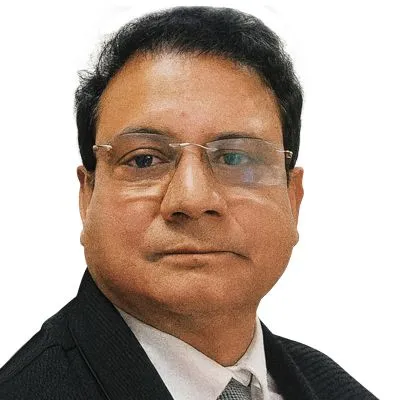
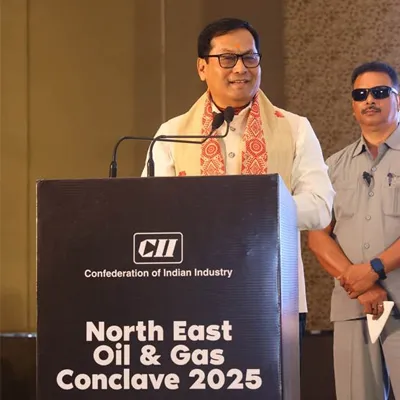
Union Minister of Ports, Shipping and Waterways, Sarbananda Sonowal, has said that the rapid modernisation of India’s inland waterways, particularly in the Northeast, is set to unlock major economic opportunities and strengthen the petroleum supply chain and export routes linking Assam with Bangladesh and Southeast Asia.

Speaking at the North East Oil & Gas Conclave 2025, he noted that under the leadership of Prime Minister Narendra Modi, renewed focus on Inland Water Transport (IWT) has enabled smoother cargo movement, reduced logistics costs and created a reliable multimodal network for transporting petroleum products and industrial cargo across the Brahmaputra and Barak river systems. This, he said, has revived one of the oldest channels of economic growth while repurposing economic activity in the region’s hinterland.

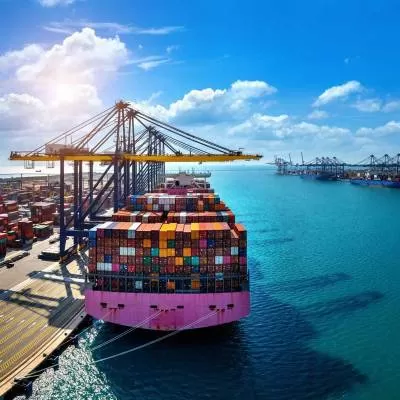
The Minister said jetties and terminals in Assam — including Pandu, Jogighopa, Dhubri, Bogibeel, Karimganj and Badarpur — have emerged as critical hubs for cross-border trade. These river terminals support the export of petroleum products and heavy industrial consignments to Bangladesh and beyond, cutting transit distance, travel time and fuel consumption compared with road transport.

Sonowal highlighted that the transport of over-dimensional cargo to Numaligarh Refinery for its expansion, along with ongoing movement of petroleum products on river routes, has demonstrated the operational efficiency and scalability of waterways as a long-term logistics solution. Year-round navigation, enabled by extensive dredging and fairway maintenance, ensures uninterrupted movement of heavy cargo for refineries, exploration projects and downstream industries.

“The inland waterways sector today stands as the backbone of energy transportation for the Northeast, reinforcing India’s energy security and opening new trade corridors,” he said, pointing out that annual cargo movement on National Waterway-2 is now approaching around 0.6 million tonnes, supported by faster turnaround times and reliable navigation.

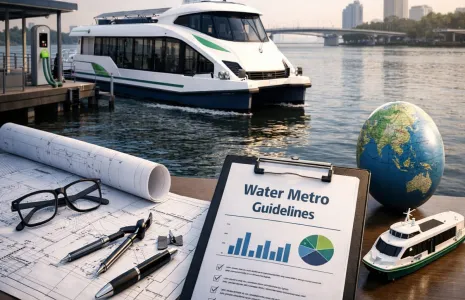
The Minister said the Government has undertaken inland waterway projects worth about Rs 10 billion in the Northeast in the past two years, including permanent cargo terminals, ship repair facilities, tourist jetties and urban water transport systems. A ship repair facility at Pandu, being developed at a cost of about Rs 2.39 billion, is expected to significantly reduce maintenance costs for river vessels that currently need to travel to Kolkata through Bangladesh for repairs.

Additional investments are being directed towards modern river-based tourism infrastructure, lighthouse development, and skill and training facilities. A Regional Centre of Excellence in Dibrugarh, being built at a cost of roughly Rs 1.88 billion, will train nearly 5,000 students in maritime skills and logistics operations.

Sonowal emphasised that inland waterways are central to India’s Act East Policy and to building a future-ready logistics ecosystem. “Our efforts are aimed at reducing logistics costs, boosting trade, and creating new employment and industrial opportunities. The Northeast is ready to lead India into a new era of connectivity, sustainability and prosperity,” he said.

He noted that several major projects have been launched for the Northeast by the Ministry of Ports, Shipping and Waterways in recent years and that 76 national waterways are expected to be operational by 2027. Cargo movement on national waterways reached a record 146 million tonnes last year, compared with just 18 million tonnes earlier. During India Maritime Week 2025, the Inland Waterways Authority of India signed MoUs worth about Rs 400 billion to improve the efficiency of waterborne logistics.

The Minister added that unprecedented increases — a 767 per cent rise in operational waterways, 635 per cent growth in cargo volume, a 233 per cent jump in investment and a 62 per cent increase in multimodal terminals — reflect remarkable progress in the sector.

Thanking the Confederation of Indian Industry (CII) for organising the conclave, Sonowal called for deeper collaboration between government and industry to accelerate private participation, innovation and infrastructure development in the energy and transport sectors.

He was joined at the event by Assam Minister Kaushik Roy, Assam Chief Secretary Ravi Kota, Joint Secretary in the Union Ministry of Petroleum and Natural Gas Vinod Sesan, and CII Assam Oil and Gas Chair S. K. Baruah, among other dignitaries.

"Join industry leaders at RAHSTA Expo, India's premier platform for roads, highways and traffic infrastructure. Register now to explore innovations, network with experts and shape the future of mobility."

Union Minister of Ports, Shipping and Waterways, Sarbananda Sonowal, has said that the rapid modernisation of India’s inland waterways, particularly in the Northeast, is set to unlock major economic opportunities and strengthen the petroleum supply chain and export routes linking Assam with Bangladesh and Southeast Asia. Speaking at the North East Oil & Gas Conclave 2025, he noted that under the leadership of Prime Minister Narendra Modi, renewed focus on Inland Water Transport (IWT) has enabled smoother cargo movement, reduced logistics costs and created a reliable multimodal network for transporting petroleum products and industrial cargo across the Brahmaputra and Barak river systems. This, he said, has revived one of the oldest channels of economic growth while repurposing economic activity in the region’s hinterland. The Minister said jetties and terminals in Assam — including Pandu, Jogighopa, Dhubri, Bogibeel, Karimganj and Badarpur — have emerged as critical hubs for cross-border trade. These river terminals support the export of petroleum products and heavy industrial consignments to Bangladesh and beyond, cutting transit distance, travel time and fuel consumption compared with road transport. Sonowal highlighted that the transport of over-dimensional cargo to Numaligarh Refinery for its expansion, along with ongoing movement of petroleum products on river routes, has demonstrated the operational efficiency and scalability of waterways as a long-term logistics solution. Year-round navigation, enabled by extensive dredging and fairway maintenance, ensures uninterrupted movement of heavy cargo for refineries, exploration projects and downstream industries. “The inland waterways sector today stands as the backbone of energy transportation for the Northeast, reinforcing India’s energy security and opening new trade corridors,” he said, pointing out that annual cargo movement on National Waterway-2 is now approaching around 0.6 million tonnes, supported by faster turnaround times and reliable navigation. The Minister said the Government has undertaken inland waterway projects worth about Rs 10 billion in the Northeast in the past two years, including permanent cargo terminals, ship repair facilities, tourist jetties and urban water transport systems. A ship repair facility at Pandu, being developed at a cost of about Rs 2.39 billion, is expected to significantly reduce maintenance costs for river vessels that currently need to travel to Kolkata through Bangladesh for repairs. Additional investments are being directed towards modern river-based tourism infrastructure, lighthouse development, and skill and training facilities. A Regional Centre of Excellence in Dibrugarh, being built at a cost of roughly Rs 1.88 billion, will train nearly 5,000 students in maritime skills and logistics operations. Sonowal emphasised that inland waterways are central to India’s Act East Policy and to building a future-ready logistics ecosystem. “Our efforts are aimed at reducing logistics costs, boosting trade, and creating new employment and industrial opportunities. The Northeast is ready to lead India into a new era of connectivity, sustainability and prosperity,” he said. He noted that several major projects have been launched for the Northeast by the Ministry of Ports, Shipping and Waterways in recent years and that 76 national waterways are expected to be operational by 2027. Cargo movement on national waterways reached a record 146 million tonnes last year, compared with just 18 million tonnes earlier. During India Maritime Week 2025, the Inland Waterways Authority of India signed MoUs worth about Rs 400 billion to improve the efficiency of waterborne logistics. The Minister added that unprecedented increases — a 767 per cent rise in operational waterways, 635 per cent growth in cargo volume, a 233 per cent jump in investment and a 62 per cent increase in multimodal terminals — reflect remarkable progress in the sector. Thanking the Confederation of Indian Industry (CII) for organising the conclave, Sonowal called for deeper collaboration between government and industry to accelerate private participation, innovation and infrastructure development in the energy and transport sectors. He was joined at the event by Assam Minister Kaushik Roy, Assam Chief Secretary Ravi Kota, Joint Secretary in the Union Ministry of Petroleum and Natural Gas Vinod Sesan, and CII Assam Oil and Gas Chair S. K. Baruah, among other dignitaries.

Next Story
Infrastructure Transport

Bhogapuram Airport Set For Take Off After Licence Issued

Union Civil Aviation Minister Kinjarapu Ram Mohan Naidu announced that Alluri Sitharama Raju Bhogapuram International Airport has achieved 100 per cent completion following issuance of its aerodrome licence by the Ministry of Civil Aviation after an inspection with public representatives, district officials and GMR Group representatives. The licence was granted after extensive verification over the past month to ensure that safety and operational standards were met. The Chief Minister's Office has already contacted the Prime Minister's Office to finalise an inauguration date and commercial fli..

Next Story
Infrastructure Urban

Auto Sector To Grow 22-24 Per Cent In Q1 FY27

Credit Rating Information Services of India (Crisil) estimated that India's automobile sector is expected to report revenue growth of 22-24 per cent year-on-year in the first quarter of FY27 and to be among the largest contributors to corporate revenue growth in the quarter. The agency estimated overall corporate revenue to have grown 11-11.5 per cent year-on-year in the quarter ended 30 June 2026, the fastest pace in two years despite supply chain disruptions and higher input costs from the West Asia conflict. This compared with growth of 9.6 per cent in the preceding quarter. Crisil said the..

Next Story
Infrastructure Urban

Nomura Sees Q1 Pressure On Cement Margins; Backs Major Players

Nomura said cement margins will be under pressure in the June quarter as fuel and packaging costs rose, although volume growth is expected to remain healthy. The brokerage forecast six to seven per cent year-on-year organic volume growth for the Indian cement industry in the period, with Shree Cement identified as likely to post the highest growth at 15 per cent year-on-year. It noted that the West and North regions outperformed on pricing, aiding companies with greater exposure in those markets. Average trade prices improved three per cent sequentially to around Rs 326 per bag after price inc..

Advertisement

Subscribe to Our Newsletter

Get daily newsletters around different themes from Construction world.

STAY CONNECTED

Advertisement

Advertisement

Advertisement