Statkraft, Deendayal Port Partner for Green Hydrogen
PORTS & SHIPPING

Statkraft, Deendayal Port Partner for Green Hydrogen

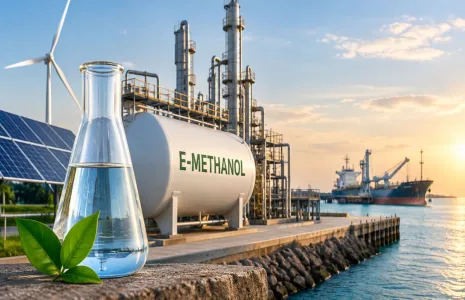
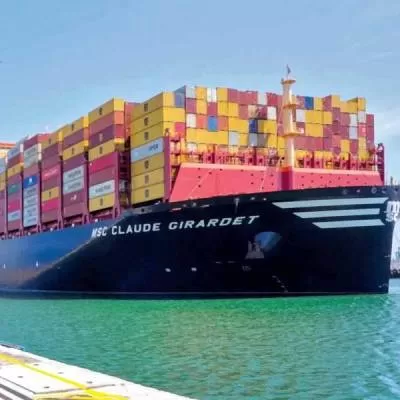
Statkraft, a renewable energy developer, and the Deendayal Port Authority (DPA) have signed a non-binding Memorandum of Understanding (MoU) to explore potential sites for establishing green hydrogen production facilities at Kandla port in Gujarat. The agreement, inked during the Global Maritime India Summit 2023 in Mumbai, marks the initial step in the development of a future green hydrogen hub at Deendayal Port.

India is currently a significant consumer of grey hydrogen, consuming around seven million tonnes annually, making it the world's second-largest hydrogen consumer. As India strives to achieve its net-zero emissions target by 2070, green hydrogen demand is expected to increase in one of the world's fastest-growing economies. This transition will play a vital role in reducing greenhouse gas emissions, particularly in hard-to-abate sectors such as steel, cement, and refineries. Green hydrogen can serve as a sustainable alternative to gray hydrogen, coal, and natural gas in various applications. India's hydrogen demand is projected to reach 12 million tonnes by 2030 and approximately 28 million tonnes by 2050, further emphasising the significance of green hydrogen in the nation's energy landscape.

Statkraft, a renewable energy developer, and the Deendayal Port Authority (DPA) have signed a non-binding Memorandum of Understanding (MoU) to explore potential sites for establishing green hydrogen production facilities at Kandla port in Gujarat. The agreement, inked during the Global Maritime India Summit 2023 in Mumbai, marks the initial step in the development of a future green hydrogen hub at Deendayal Port. India is currently a significant consumer of grey hydrogen, consuming around seven million tonnes annually, making it the world's second-largest hydrogen consumer. As India strives to achieve its net-zero emissions target by 2070, green hydrogen demand is expected to increase in one of the world's fastest-growing economies. This transition will play a vital role in reducing greenhouse gas emissions, particularly in hard-to-abate sectors such as steel, cement, and refineries. Green hydrogen can serve as a sustainable alternative to gray hydrogen, coal, and natural gas in various applications. India's hydrogen demand is projected to reach 12 million tonnes by 2030 and approximately 28 million tonnes by 2050, further emphasising the significance of green hydrogen in the nation's energy landscape.

Related Stories

Gold Stories

Next Story
Infrastructure Urban

KONE Opens India's First Digital Experience Centre in Pune

KONE, a global elevator and escalator manufacturer, has inaugurated its first Digital Experience Centre (DEC) in India, located in Pune. The facility aims to showcase how artificial intelligence (AI), connectivity and data-driven technologies can enhance customer experiences and improve building operations.The centre was inaugurated by Jussi Herlin, Executive Vice Chair, KONE Corporation; Philippe Delorme, President and CEO, KONE; and Nandan Nilekani, Co-founder and Chairman of the Board, Infosys.Designed as an interactive customer environment, the facility demonstrates digital solutions cover..

Next Story
Infrastructure Urban

CII GreenCo Launches Circularity Guidelines for Indian Industry

The Confederation of Indian Industry (CII) GreenCo Council has launched the CII GreenCo Circularity Guidelines – Pilot Version at the 17th CII GreenCo Waste & Resource Management Summit 2026 in Chennai. The initiative aims to strengthen resource efficiency, waste reduction and circular economy practices across Indian manufacturing and process industries.The guidelines introduce a structured framework with circularity indices covering raw materials, consumables, packaging and other resource inputs. These indicators will help industries assess existing practices, identify opportunities to ..

Next Story
Infrastructure Energy

Global Electronics Association Launches IPC-1783-CO2E Standard

The Global Electronics Association has introduced IPC-1783-CO2E, a new international standard aimed at improving consistency, transparency and comparability in product carbon footprint reporting across the electronics manufacturing industry.The standard, titled International Standard for Data Collection and Reporting of CO2 Equivalent (CO2e) Emissions for the Electronics Manufacturing Supply Chain, provides industry-specific guidance for collecting, estimating and reporting carbon emissions data.With increasing regulatory requirements and customer expectations, electronics manufacturers face c..

Advertisement

Subscribe to Our Newsletter

Get daily newsletters around different themes from Construction world.

STAY CONNECTED

Advertisement

SPECIAL OFFER
QR Code