Railways Boosts Ambikapur Links With Major New Projects
RAILWAYS & METRO RAIL

Railways Boosts Ambikapur Links With Major New Projects

The Government of India has fast-tracked several major railway projects to strengthen connectivity in the Ambikapur region of Chhattisgarh. The update was shared by Ashwini Vaishnaw, Minister for Railways, Information & Broadcasting, and Electronics & Information Technology, in response to an Unstarred Question in the Lok Sabha raised by MP Chintamani Maharaj.

Vaishnaw outlined the progress of surveys conducted by the South East Central Railway, Bilaspur Division, and the ongoing steps for approving new lines passing through Ambikapur. Three key projects have already recorded significant advancement. The Boridand–Ambikapur (Surajpur) doubling project, spanning 80 kilometres, is currently under execution. Detailed Project Reports have also been prepared for two new lines: the 262-kilometre Ambikapur–Ramanujganj–Barwadih line with a spur to Garhwa Road, and the 218-kilometre Sardega–Pathalgaon–Ambikapur line.

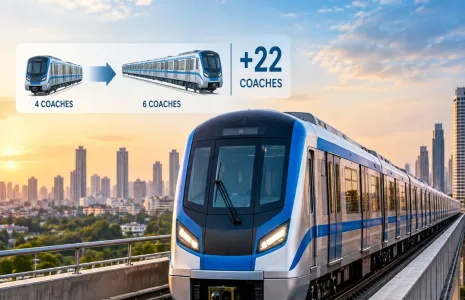
The Minister highlighted that budgetary support for infrastructure and safety works in Chhattisgarh has increased sharply. Annual funding of Rs 3.11 billion during 2009–2014 has risen to Rs 69.25 billion in 2025–26—an increase of more than twenty-two times. The pace of commissioning new tracks has also accelerated. Only 32 kilometres were commissioned during 2009–2014 (an average of 6.4 kilometres per year). In contrast, between 2014 and 2025, a total of 1,189 kilometres of track were commissioned (an average of 108.1 kilometres per year), marking a rise of more than fifteen times.

As of 1 April 2025, 26 projects—including six new lines and twenty doubling or multitracking works—covering 1,931 kilometres and costing Rs 316.19 billion have been sanctioned in the state. Of this, 1,023 kilometres have been commissioned, and Rs 163.25 billion has been spent up to March 2025.

In the last three years and the current financial year (2022–23 to 2025–26), 26 surveys covering 3,901 kilometres have been sanctioned in the South East Central Railway, including routes passing through Ambikapur.

Vaishnaw explained that the sanction of railway projects depends on parameters such as anticipated traffic, economic viability, first- and last-mile connectivity, bridging missing links, capacity augmentation, demands from state governments and public representatives, operational needs, socio-economic considerations and availability of funds.

Completion timelines depend on several factors, including land acquisition, forest clearances, shifting of utilities, statutory permissions, local law and order, geological and topographical challenges, and the number of workable months available at project sites. These elements collectively affect both cost and execution pace.

The Government reiterated its commitment to strengthening rail infrastructure in Chhattisgarh and ensuring timely progress of all sanctioned works in the Ambikapur region.

The Government of India has fast-tracked several major railway projects to strengthen connectivity in the Ambikapur region of Chhattisgarh. The update was shared by Ashwini Vaishnaw, Minister for Railways, Information & Broadcasting, and Electronics & Information Technology, in response to an Unstarred Question in the Lok Sabha raised by MP Chintamani Maharaj. Vaishnaw outlined the progress of surveys conducted by the South East Central Railway, Bilaspur Division, and the ongoing steps for approving new lines passing through Ambikapur. Three key projects have already recorded significant advancement. The Boridand–Ambikapur (Surajpur) doubling project, spanning 80 kilometres, is currently under execution. Detailed Project Reports have also been prepared for two new lines: the 262-kilometre Ambikapur–Ramanujganj–Barwadih line with a spur to Garhwa Road, and the 218-kilometre Sardega–Pathalgaon–Ambikapur line. The Minister highlighted that budgetary support for infrastructure and safety works in Chhattisgarh has increased sharply. Annual funding of Rs 3.11 billion during 2009–2014 has risen to Rs 69.25 billion in 2025–26—an increase of more than twenty-two times. The pace of commissioning new tracks has also accelerated. Only 32 kilometres were commissioned during 2009–2014 (an average of 6.4 kilometres per year). In contrast, between 2014 and 2025, a total of 1,189 kilometres of track were commissioned (an average of 108.1 kilometres per year), marking a rise of more than fifteen times. As of 1 April 2025, 26 projects—including six new lines and twenty doubling or multitracking works—covering 1,931 kilometres and costing Rs 316.19 billion have been sanctioned in the state. Of this, 1,023 kilometres have been commissioned, and Rs 163.25 billion has been spent up to March 2025. In the last three years and the current financial year (2022–23 to 2025–26), 26 surveys covering 3,901 kilometres have been sanctioned in the South East Central Railway, including routes passing through Ambikapur. Vaishnaw explained that the sanction of railway projects depends on parameters such as anticipated traffic, economic viability, first- and last-mile connectivity, bridging missing links, capacity augmentation, demands from state governments and public representatives, operational needs, socio-economic considerations and availability of funds. Completion timelines depend on several factors, including land acquisition, forest clearances, shifting of utilities, statutory permissions, local law and order, geological and topographical challenges, and the number of workable months available at project sites. These elements collectively affect both cost and execution pace. The Government reiterated its commitment to strengthening rail infrastructure in Chhattisgarh and ensuring timely progress of all sanctioned works in the Ambikapur region.

Next Story
Infrastructure Urban

Powerplay Rolls Out Procurement-Linked Credit for Contractors

Powerplay has announced the launch of Powerplay Credit, a project-linked working capital solution aimed at easing cash flow pressures faced by contractors during active construction execution. The solution has gone live across key markets in South India, with a wider national rollout planned for 2026.The launch comes amid rising activity in India’s construction sector across infrastructure, housing, industrial corridors, renewable energy and urban redevelopment. Contractors executing large corporate and government projects often face extended payment cycles, stage-based billing and delayed r..

Next Story
Infrastructure Urban

Jyoti Structures Commissions Galvanisation at Second Nashik Unit

Jyoti Structures has commissioned galvanisation operations at its second tower manufacturing unit in Nashik, strengthening its in-house capabilities across critical stages of power transmission infrastructure production. The listed Engineering, Procurement and Construction (EPC) company operates globally and has delivered projects for customers across more than 50 countries.The second Nashik unit, with an annual manufacturing capacity of 36,000 metric tonnes, has become operational following the completion of installation, testing and readiness of the new galvanising facilities. With this deve..

Next Story
Infrastructure Energy

Rosatom Connects First Kursk NPP-2 Unit to National Grid

Rosatom has launched the first power unit of the Kursk Nuclear Power Plant-2 (Kursk NPP-2) into Russia’s Unified Energy System, marking a key milestone in the country’s nuclear energy programme. The initial grid connection took place at the end of the year, bringing a new source of low-carbon electricity online for the Kursk region and the broader Central Energy System.The newly commissioned unit is the first implementation of the VVER-TOI reactor design, which incorporates advanced safety and performance features. With an installed capacity of 1,250 MW, it is the most powerful nuclear pow..

Advertisement

Subscribe to Our Newsletter

Get daily newsletters around different themes from Construction world.

STAY CONNECTED

Advertisement

Advertisement

Advertisement

Advertisement

Open In App