



VGF scheme change to push operational expenditure
PORTS & SHIPPING

VGF scheme change to push operational expenditure

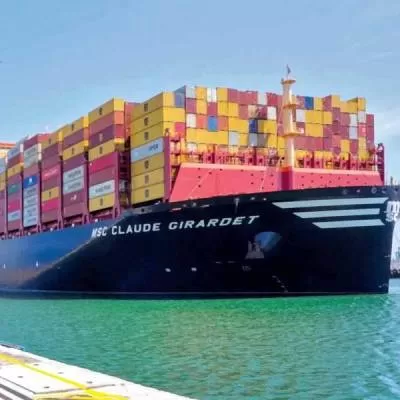
The shipping ministry has requested that the finance ministry take into account modifications to the viability gap funding programme in order to assist operational expenditure (opex) in an effort to boost coastal shipping.

An official stated, "Under the current guidelines, VGF (viability gap funding) is offered for capital expenditure, but in our assessment, it is required for operating expenditure due to the multiplicity of handling points in coastal shipping," adding that the shipping ministry has brought the issue up with the finance ministry. According to the official, the ministry has asked for revisions to the VGF standards.

Currently, VGF funding is offered for a variety of projects, including the building of transmission lines, food grain silos, and metro and road construction.

Nonetheless, VGF for coastal shipping would be necessary for businesses like Shipping Corporation of India (SCI), which are in the business of operating the service on the Indian coastline, in order to support the sector's development.

Nirmala Sitharaman, the finance minister, stated in her Budget address that coastal shipping would be promoted as the more economical and energy-efficient method of transport for both people and goods through the use of public-private partnerships (PPPs) and viability gap funding.

The shipping ministry has estimated that coastal shipping can move 340 million tonnes of goods annually. However, it necessitates the loading of goods into trucks or rail waggons, transportation to the originating ports, and then a round of emptying and reloading onto the ships.

The shipping ministry has requested that the finance ministry take into account modifications to the viability gap funding programme in order to assist operational expenditure (opex) in an effort to boost coastal shipping. An official stated, Under the current guidelines, VGF (viability gap funding) is offered for capital expenditure, but in our assessment, it is required for operating expenditure due to the multiplicity of handling points in coastal shipping, adding that the shipping ministry has brought the issue up with the finance ministry. According to the official, the ministry has asked for revisions to the VGF standards. Currently, VGF funding is offered for a variety of projects, including the building of transmission lines, food grain silos, and metro and road construction. Nonetheless, VGF for coastal shipping would be necessary for businesses like Shipping Corporation of India (SCI), which are in the business of operating the service on the Indian coastline, in order to support the sector's development. Nirmala Sitharaman, the finance minister, stated in her Budget address that coastal shipping would be promoted as the more economical and energy-efficient method of transport for both people and goods through the use of public-private partnerships (PPPs) and viability gap funding. The shipping ministry has estimated that coastal shipping can move 340 million tonnes of goods annually. However, it necessitates the loading of goods into trucks or rail waggons, transportation to the originating ports, and then a round of emptying and reloading onto the ships.

Next Story
Infrastructure Urban

India Expands Semiconductor Training To 500 Institutions

Under the Chips to Startups programme of the India Semiconductor Mission, the Union minister responsible for Railways, Information and Broadcasting, and Electronics and IT reported notable progress in talent development. He indicated that over the past four years substantial steps have been taken towards a 10-year target of training 85,000 engineers in semiconductor design. World-class EDA tools have been deployed in 315 academic institutions across the country to provide students with practical exposure to chip design. These EDA tools are supported by leading global firms and are accessible t..

Next Story
Infrastructure Urban

Delhi Institutions Support India Semiconductor Mission

The Government of India has prioritised talent development through training, upskilling and workforce development under the Chips to Startups initiative of the India Semiconductor Mission, with officials noting progress in four years towards a 10-year target of training 85,000 engineers in semiconductor design. Electronic design automation tools provided by Synopsys, Cadence, Siemens, Renesas, Ansys and AMD have been deployed in 315 academic institutions, enabling students to gain practical chip design experience. Chips have been fabricated and tested at the Semiconductor Laboratory, Mohali, a..

Next Story
Infrastructure Urban

NHA Announces Winners Of NHCX Hackathon At IIT Hyderabad

The National Health Authority (NHA) has concluded the NHCX Hackathon under the Ayushman Bharat Digital Mission (ABDM) to stimulate innovation around the National Health Claims Exchange (NHCX). The winning teams presented their solutions at the NHCX Innovation Meet held at IIT Hyderabad during a two-day event in March 2026 that also served as the hackathon grand finale. The hackathon itself ran from 22 to 28 February 2026 and aimed to accelerate paperless, transparent claims processing across India. The event was organised with a range of ecosystem partners, including the Insurance Regulatory a..

Advertisement

Subscribe to Our Newsletter

Get daily newsletters around different themes from Construction world.

STAY CONNECTED

Advertisement

Advertisement

Advertisement