Jitendra Singh Reviews IMD’s Multi-Hazard Early Warning System
SMART CITIES

Jitendra Singh Reviews IMD’s Multi-Hazard Early Warning System

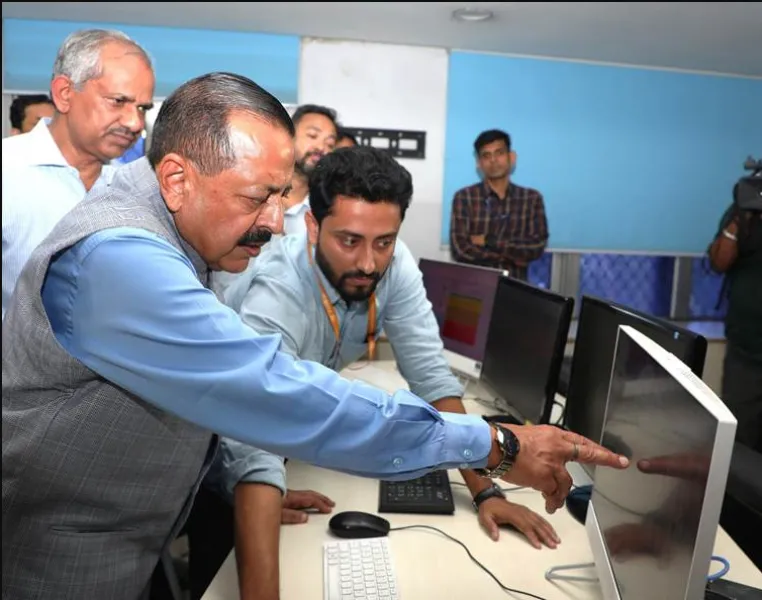
Union Minister Dr Jitendra Singh, Minister of State (Independent Charge) for Science and Technology, Earth Sciences, and Minister of State in the Prime Minister’s Office, visited the India Meteorological Department (IMD) and reviewed the in-house developed Web-GIS-based Multi-Hazard Early Warning Decision Support System (DSS).

The Minister commended the IMD for its remarkable progress in creating indigenous, technology-driven, and citizen-centric weather forecasting systems, which are enhancing public safety and disaster preparedness across the nation.

Dr Singh highlighted that the Multi-Hazard DSS has enabled estimated cost savings of Rs 2.5 billion, by eliminating dependence on foreign vendors and avoiding an annual maintenance cost of Rs 55 million, contributing to self-reliance under the Atmanirbhar Bharat initiative.

He also reviewed “Mausamgram” (Har Har Mausam, Har Ghar Mausam) — a citizen-focused digital platform offering hyperlocal, location-specific forecasts at the village level. The platform provides hourly forecasts for 36 hours, three-hourly forecasts for five days, and six-hourly forecasts for up to ten days. Users can access information by PIN code, location name, or by selecting their state, district, block, and gram panchayat. Available in all official Indian languages, Mausamgram ensures weather updates are accessible to all citizens.

The IMD has also re-engineered its forecast and warning system, improving its lead time from 5 to 7 days, reducing forecast preparation time by three hours, and enhancing accuracy by 15 to 20 per cent.

During interactions with IMD officials, Dr Singh recommended incorporating AI-driven tools into Mausamgram to make it even more interactive and accessible, and further strengthening the Multi-Hazard Early Warning System to deliver clear, actionable alerts that can save lives and minimise disaster impacts.

The Minister congratulated the IMD team for winning the National Award for e-Governance 2025 at the 28th National Conference on e-Governance in Visakhapatnam, recognising its innovation in using digital technology for public service delivery through the DSS platform.

He also lauded the Department’s work under the Special Swachhata Programme, which generated Rs 3 million in revenue through the disposal of old files and e-waste, freeing 600 square metres of office space.

Earlier, Dr Singh participated in the Special Swachhata Programme 5.0 at Mausam Bhavan, the IMD headquarters in New Delhi. As part of the “Ek Ped Maa Ke Naam” initiative, he planted a sapling and felicitated 50 Safai Mitras for their service in maintaining cleanliness.

Under the ongoing Mission Mausam, IMD is installing advanced meteorological instruments to enhance forecasting by 2030. The mission aims to enable severe weather hazard forecasting at a 5x5 km scale, dynamic impact-based forecasts, and risk-based early warnings reaching every household — fulfilling the vision of “Har Har Mausam, Har Ghar Mausam.”

"Join industry leaders at RAHSTA Expo, India's premier platform for roads, highways and traffic infrastructure. Register now to explore innovations, network with experts and shape the future of mobility."

Union Minister Dr Jitendra Singh, Minister of State (Independent Charge) for Science and Technology, Earth Sciences, and Minister of State in the Prime Minister’s Office, visited the India Meteorological Department (IMD) and reviewed the in-house developed Web-GIS-based Multi-Hazard Early Warning Decision Support System (DSS). The Minister commended the IMD for its remarkable progress in creating indigenous, technology-driven, and citizen-centric weather forecasting systems, which are enhancing public safety and disaster preparedness across the nation. Dr Singh highlighted that the Multi-Hazard DSS has enabled estimated cost savings of Rs 2.5 billion, by eliminating dependence on foreign vendors and avoiding an annual maintenance cost of Rs 55 million, contributing to self-reliance under the Atmanirbhar Bharat initiative. He also reviewed “Mausamgram” (Har Har Mausam, Har Ghar Mausam) — a citizen-focused digital platform offering hyperlocal, location-specific forecasts at the village level. The platform provides hourly forecasts for 36 hours, three-hourly forecasts for five days, and six-hourly forecasts for up to ten days. Users can access information by PIN code, location name, or by selecting their state, district, block, and gram panchayat. Available in all official Indian languages, Mausamgram ensures weather updates are accessible to all citizens. The IMD has also re-engineered its forecast and warning system, improving its lead time from 5 to 7 days, reducing forecast preparation time by three hours, and enhancing accuracy by 15 to 20 per cent. During interactions with IMD officials, Dr Singh recommended incorporating AI-driven tools into Mausamgram to make it even more interactive and accessible, and further strengthening the Multi-Hazard Early Warning System to deliver clear, actionable alerts that can save lives and minimise disaster impacts. The Minister congratulated the IMD team for winning the National Award for e-Governance 2025 at the 28th National Conference on e-Governance in Visakhapatnam, recognising its innovation in using digital technology for public service delivery through the DSS platform. He also lauded the Department’s work under the Special Swachhata Programme, which generated Rs 3 million in revenue through the disposal of old files and e-waste, freeing 600 square metres of office space. Earlier, Dr Singh participated in the Special Swachhata Programme 5.0 at Mausam Bhavan, the IMD headquarters in New Delhi. As part of the “Ek Ped Maa Ke Naam” initiative, he planted a sapling and felicitated 50 Safai Mitras for their service in maintaining cleanliness. Under the ongoing Mission Mausam, IMD is installing advanced meteorological instruments to enhance forecasting by 2030. The mission aims to enable severe weather hazard forecasting at a 5x5 km scale, dynamic impact-based forecasts, and risk-based early warnings reaching every household — fulfilling the vision of “Har Har Mausam, Har Ghar Mausam.”

Next Story
Real Estate

Pecan Realty Completes Rs 1.5 Billion Transactions

Pecan Realty has recently completed four institutional transactions worth over Rs 1.5 billion over the past two years, strengthening its position as an execution-led real estate platform. The deals include resolution-led acquisitions, structured finance transactions and capital partnerships across its development portfolio.The transactions covered acquisitions through the National Company Law Tribunal process and helped provide repayment or exits to both private and public sector lenders. The company said the deals demonstrate its ability to resolve complex project situations, work with instit..

Next Story
Real Estate

SNN Estates Expands North Bengaluru Housing Project

SNN Estates has announced an expansion of its SNN Estates Felicity residential project in North Bengaluru following strong buyer demand, with 75 per cent of the first-phase inventory sold within three days of launch.The developer will add 76 apartments in the new phase, taking the project's estimated revenue potential to around Rs 1,000 crore upon completion of Phase 2.Spread across 6.5 acres in Rachenahalli, near Manyata Tech Park, the project comprises 604 apartments in 1.5, 2, 2.5, 3 and 4 BHK configurations. The development includes a 50,000-sq-ft clubhouse with amenities such as sports co..

Next Story
Infrastructure Urban

SCG Drives ASEAN Industrial Transformation Strategy

SCG is strengthening its focus on ASEAN as a key growth region by advancing industrial transformation, enhancing competitiveness and building resilient regional value chains. Thammasak Sethaudom, President and Chief Executive Officer, SCG, highlighted the need for industries to continuously develop capabilities, strengthen resilience and deepen regional cooperation to achieve sustainable long-term growth.SCG views ASEAN as an important growth engine alongside China, supported by favourable demographics, trade connectivity and investment flows. With ASEAN’s GDP projected to grow by around 4.7..

Advertisement

Subscribe to Our Newsletter

Get daily newsletters around different themes from Construction world.

STAY CONNECTED

Advertisement

Advertisement

Advertisement