Dabur Leases Zero Point One Six Two Million Warehouse Space In UP
WAREHOUSING & LOGISTICS

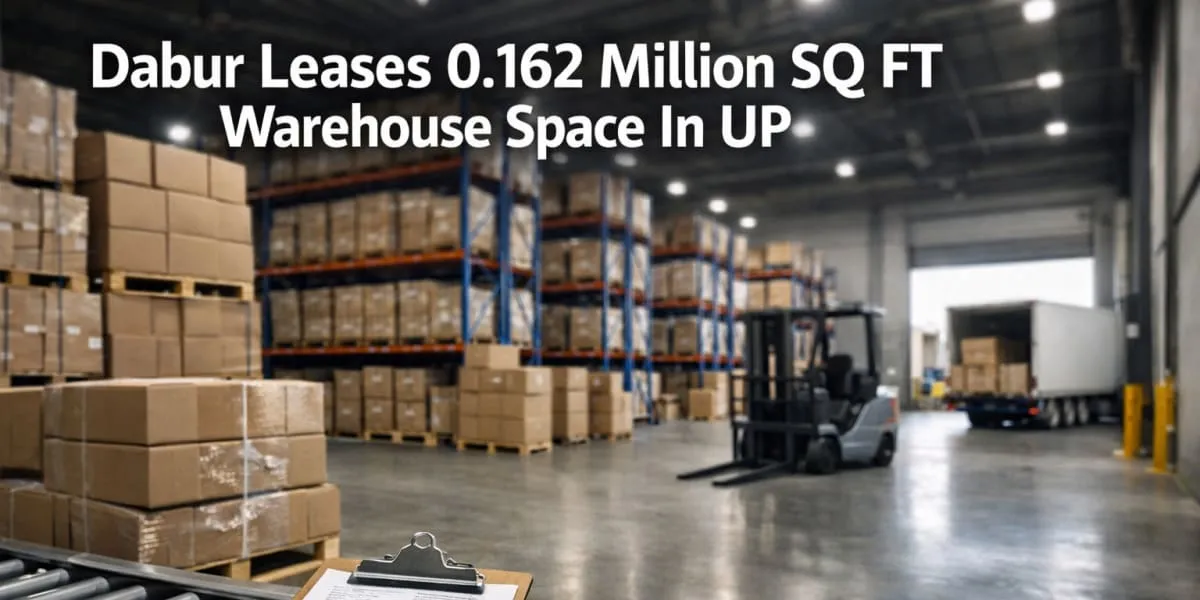
Dabur Leases Zero Point One Six Two Million Warehouse Space In UP

Dabur India Limited has leased zero point one six two million (mn) square foot (sq ft) of warehousing space in Uttar Pradesh as part of its logistics expansion. The company secured the facility under a lease arrangement that will support distribution across the state and adjacent markets. The lease attracted a rental of Rs two point six million (mn) per month.

It will accommodate finished goods and inventory management to help streamline supply chains and reduce transit times. The arrangement will enhance the company's control over storage operations and improve responsiveness to retail demand. The move aligns with ongoing efforts to optimise logistics infrastructure and cost efficiency.

Uttar Pradesh offers strategic access to a wide consumer base and road networks that link to major consumption centres. The location choice is intended to shorten delivery cycles and enable more frequent replenishment of retail shelves. Such leases contribute to the broader expansion of organised warehousing capacity in key regional hubs.

The transaction reflects continuing demand from consumer goods firms for scalable storage solutions close to end markets. Industry observers regard the lease as indicative of sustained investment in logistics by consumer goods companies. The company will integrate the site into its distribution network and monitor operational metrics to assess impact on service levels.

Leasing arrangements of this kind enable companies to scale capacity in line with demand while preserving capital for core business activities. By opting for leased warehousing, the company can prioritise investment in product development and market expansion rather than in fixed assets. Industry observers regard logistics optimisation as a continuing focus as retailers and distributors seek quicker turnover and reduced stockholding costs, reinforcing the role of strategically placed warehouses in maintaining competitive distribution networks. The arrangement supports seasonal peaks, promotions and cyclical demand effectively and reduces overall delivery time.

Dabur India Limited has leased zero point one six two million (mn) square foot (sq ft) of warehousing space in Uttar Pradesh as part of its logistics expansion. The company secured the facility under a lease arrangement that will support distribution across the state and adjacent markets. The lease attracted a rental of Rs two point six million (mn) per month. It will accommodate finished goods and inventory management to help streamline supply chains and reduce transit times. The arrangement will enhance the company's control over storage operations and improve responsiveness to retail demand. The move aligns with ongoing efforts to optimise logistics infrastructure and cost efficiency. Uttar Pradesh offers strategic access to a wide consumer base and road networks that link to major consumption centres. The location choice is intended to shorten delivery cycles and enable more frequent replenishment of retail shelves. Such leases contribute to the broader expansion of organised warehousing capacity in key regional hubs. The transaction reflects continuing demand from consumer goods firms for scalable storage solutions close to end markets. Industry observers regard the lease as indicative of sustained investment in logistics by consumer goods companies. The company will integrate the site into its distribution network and monitor operational metrics to assess impact on service levels. Leasing arrangements of this kind enable companies to scale capacity in line with demand while preserving capital for core business activities. By opting for leased warehousing, the company can prioritise investment in product development and market expansion rather than in fixed assets. Industry observers regard logistics optimisation as a continuing focus as retailers and distributors seek quicker turnover and reduced stockholding costs, reinforcing the role of strategically placed warehouses in maintaining competitive distribution networks. The arrangement supports seasonal peaks, promotions and cyclical demand effectively and reduces overall delivery time.

Next Story
Equipment

India CE Industry Ends FY26 on a Steady Recovery Path

India’s construction equipment industry closed FY26 on a stable note, reflecting measured resilience and gradually improving momentum. Total sales in Q4 FY26 rose 4 per cent year on year to 42,906 units, extending the recovery seen over the past two years.Domestic demand for the full year remained under pressure, declining 7 per cent, but exports provided strong support. Overall exports grew 31 per cent, while non-OEM exports increased 13 per cent, highlighting sustained demand from overseas markets.March 2026 further underlined the recovery, with sales rising 6 per cent year on year and 13 ..

Next Story
Infrastructure Urban

Leaders Question FIR Against Anil Agarwal

Several industry and public figures have questioned the FIR filed against Anil Agarwal following the boiler accident in Chhattisgarh, while also expressing condolences over the loss of lives and calling for a thorough investigation.Naveen Jindal said the tragedy was deeply painful and stressed that compensation, livelihood support for affected families and a fair probe were essential. He also questioned naming Agarwal in the FIR before completion of the investigation.Kiran Bedi urged restraint, saying investigations should focus on learning lessons and strengthening systems rather than prematu..

Next Story
Infrastructure Urban

Tier 2, 3 Cities Drive 66% of New D2C Orders

Tier 2 and Tier 3 cities accounted for 66 per cent of new direct-to-consumer (D2C) orders in FY 2026, according to a new analysis by Unicommerce.The report said buyers from smaller cities also contributed 60 per cent of incremental gross merchandise value (GMV) in FY 2026 compared with FY 2025, highlighting rising demand beyond metro markets.Overall, India’s D2C segment recorded strong growth, with order volumes rising 33 per cent and GMV increasing 32 per cent year-on-year. The findings are based on more than 400 million order items processed through brand websites on Unicommerce’s Uniwar..

Advertisement

Subscribe to Our Newsletter

Get daily newsletters around different themes from Construction world.

STAY CONNECTED

Advertisement

Advertisement

Advertisement