India Opens First Integrated Rail Logistics Hub in Sonik
WAREHOUSING & LOGISTICS

India Opens First Integrated Rail Logistics Hub in Sonik

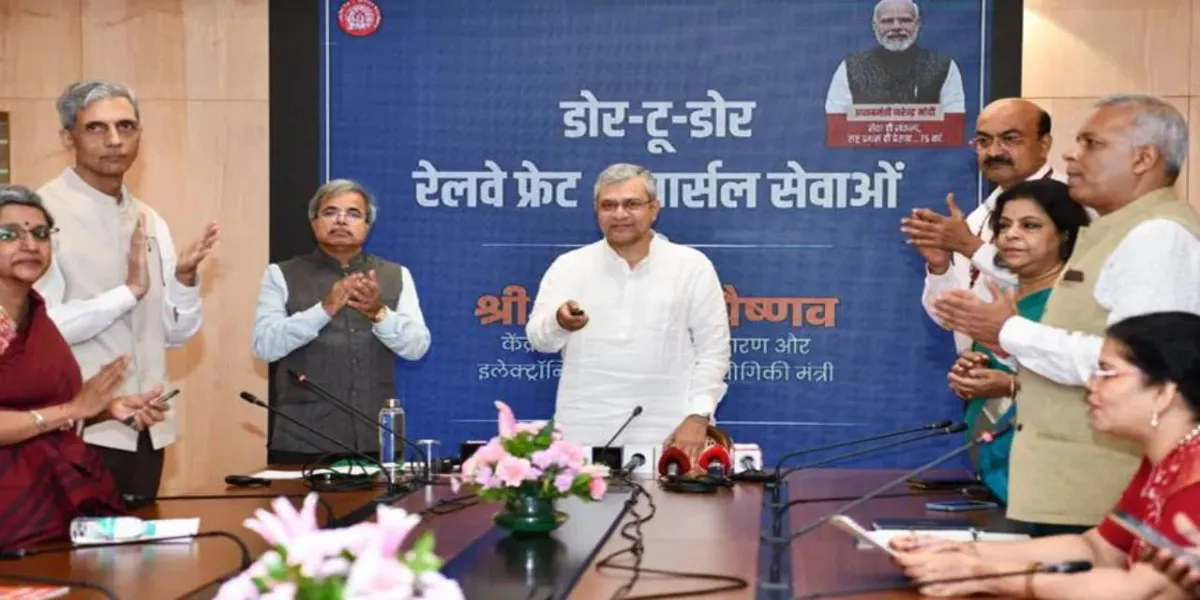
Union Minister for Railways, Communications and IT, Ashwini Vaishnaw, virtually inaugurated India’s first integrated logistics hub at Sonik and flagged off two new door-to-door freight services on 11 October 2025, marking a major transformation in Indian Railways’ cargo operations.

Speaking at the event, Vaishnaw said the new model would bridge the crucial gap between factories and railway terminals, enabling industries to move goods without filling entire rakes. “Enterprises can now send any number of containers directly to their destinations,” he stated, adding that the system would reduce logistics costs and improve overall efficiency.

The Sonik logistics hub, managed by Container Corporation of India (CONCOR), is strategically located between Lucknow and Kanpur — about 50 kilometres from Lucknow and 20 kilometres from Kanpur. Designed as a multimodal cargo terminal, it offers warehousing, inventory management, and distribution services. The facility will handle varied cargo, including fertilisers, food grains, cement, and agricultural machinery.

Alongside the inauguration, two innovative freight services were launched. The first is an assured transit container train connecting Delhi and Kolkata via Agra and Kanpur, guaranteeing delivery within 120 hours. Operating twice a week — every Wednesday and Saturday — it offers flexible booking through CONCOR’s mobile app, allowing users to choose door-to-door, door-to-terminal, or terminal-to-terminal services.

The second is a door-to-door parcel van service between Mumbai and Kolkata, already used by major brands such as Castrol India, VIP Industries, Godrej, and Nestlé. This service has achieved a 7.5 per cent reduction in logistics costs and cut transit times by nearly 30 per cent compared to road transport, demonstrating the efficiency of rail-based logistics.

Railway Board Chairman Satish Kumar said the development marks Indian Railways’ transition from being a traditional transporter to a complete logistics solution provider. “This initiative reflects the vision of Viksit Bharat, allowing consignments to move seamlessly from warehouses to final destinations,” he noted.

Vaishnaw also announced that Indian Railways will soon expand affordable rail-based transport for agricultural and construction equipment, such as tractors and JCBs, benefiting farmers and infrastructure sectors. Beginning with the Mumbai–Kolkata corridor, these services will progressively cover more cities nationwide.

As the world’s second-largest freight carrier, moving over 1.6 billion tonnes annually, Indian Railways continues to strengthen its logistics ecosystem through the Gati Shakti Cargo Terminals initiative. Under this programme, 115 multimodal terminals have already been developed to enhance efficiency and connectivity across India’s logistics network.

Union Minister for Railways, Communications and IT, Ashwini Vaishnaw, virtually inaugurated India’s first integrated logistics hub at Sonik and flagged off two new door-to-door freight services on 11 October 2025, marking a major transformation in Indian Railways’ cargo operations. Speaking at the event, Vaishnaw said the new model would bridge the crucial gap between factories and railway terminals, enabling industries to move goods without filling entire rakes. “Enterprises can now send any number of containers directly to their destinations,” he stated, adding that the system would reduce logistics costs and improve overall efficiency. The Sonik logistics hub, managed by Container Corporation of India (CONCOR), is strategically located between Lucknow and Kanpur — about 50 kilometres from Lucknow and 20 kilometres from Kanpur. Designed as a multimodal cargo terminal, it offers warehousing, inventory management, and distribution services. The facility will handle varied cargo, including fertilisers, food grains, cement, and agricultural machinery. Alongside the inauguration, two innovative freight services were launched. The first is an assured transit container train connecting Delhi and Kolkata via Agra and Kanpur, guaranteeing delivery within 120 hours. Operating twice a week — every Wednesday and Saturday — it offers flexible booking through CONCOR’s mobile app, allowing users to choose door-to-door, door-to-terminal, or terminal-to-terminal services. The second is a door-to-door parcel van service between Mumbai and Kolkata, already used by major brands such as Castrol India, VIP Industries, Godrej, and Nestlé. This service has achieved a 7.5 per cent reduction in logistics costs and cut transit times by nearly 30 per cent compared to road transport, demonstrating the efficiency of rail-based logistics. Railway Board Chairman Satish Kumar said the development marks Indian Railways’ transition from being a traditional transporter to a complete logistics solution provider. “This initiative reflects the vision of Viksit Bharat, allowing consignments to move seamlessly from warehouses to final destinations,” he noted. Vaishnaw also announced that Indian Railways will soon expand affordable rail-based transport for agricultural and construction equipment, such as tractors and JCBs, benefiting farmers and infrastructure sectors. Beginning with the Mumbai–Kolkata corridor, these services will progressively cover more cities nationwide. As the world’s second-largest freight carrier, moving over 1.6 billion tonnes annually, Indian Railways continues to strengthen its logistics ecosystem through the Gati Shakti Cargo Terminals initiative. Under this programme, 115 multimodal terminals have already been developed to enhance efficiency and connectivity across India’s logistics network.

Next Story
Infrastructure Transport

MMRDA advances 250 m on Orange Gate–Marine Drive tunnel

The Mumbai Metropolitan Region Development Authority (MMRDA) has completed 250 m of underground tunnelling for the Orange Gate–Marine Drive Urban Road Tunnel using India’s largest slurry shield tunnel boring machine (TBM) deployed for an urban road project.The project involves twin tunnels extending over 7 km beneath critical transport corridors, including Central Railway, Western Railway and Metro Line 3. The work requires high-precision engineering to navigate densely developed urban infrastructure.Once completed, the tunnel is expected to reduce travel time between Orange Gate and Marin..

Next Story
Infrastructure Urban

Hindustan Zinc Pays Rs 188.46 Billion in FY26

Hindustan Zinc contributed Rs 188.46 billion to the public exchequer in FY 2025-26, according to its 9th Tax Transparency Report. The contribution, equivalent to 46 per cent of the company’s revenue, included direct and indirect taxes, government royalties, dividends to the Government of India, withholding taxes and other statutory levies.The company’s five-year cumulative contribution to the exchequer stood at Rs 915.72 billion. In FY26, Hindustan Zinc reported revenue of Rs 408.44 billion, EBITDA of Rs 221.62 billion and profit after tax of Rs 138.32 billion. It also achieved its highest..

Next Story
Infrastructure Urban

World of Concrete India 2026 Opens in Mumbai

Informa Markets in India will host the 12th edition of World of Concrete India 2026 from 3–5 June 2026 at the Bombay Exhibition Centre, Mumbai. The specialised B2B exhibition will bring together manufacturers, suppliers, contractors, developers, architects, consultants, infrastructure companies, project leaders and government stakeholders.The event is expected to feature over 350 brands and more than 18,000 trade professionals. It will cover concrete and cement, dry mortar, precast technologies, formwork, construction chemicals, industrial and commercial flooring, scaffolding, safety solutio..

Advertisement

Subscribe to Our Newsletter

Get daily newsletters around different themes from Construction world.

STAY CONNECTED

Advertisement

Advertisement

Advertisement