
+
Bengaluru Cuts Unaccounted-for Water to 26.5 Per Cent
WATER & WASTE

Bengaluru Cuts Unaccounted-for Water to 26.5 Per Cent

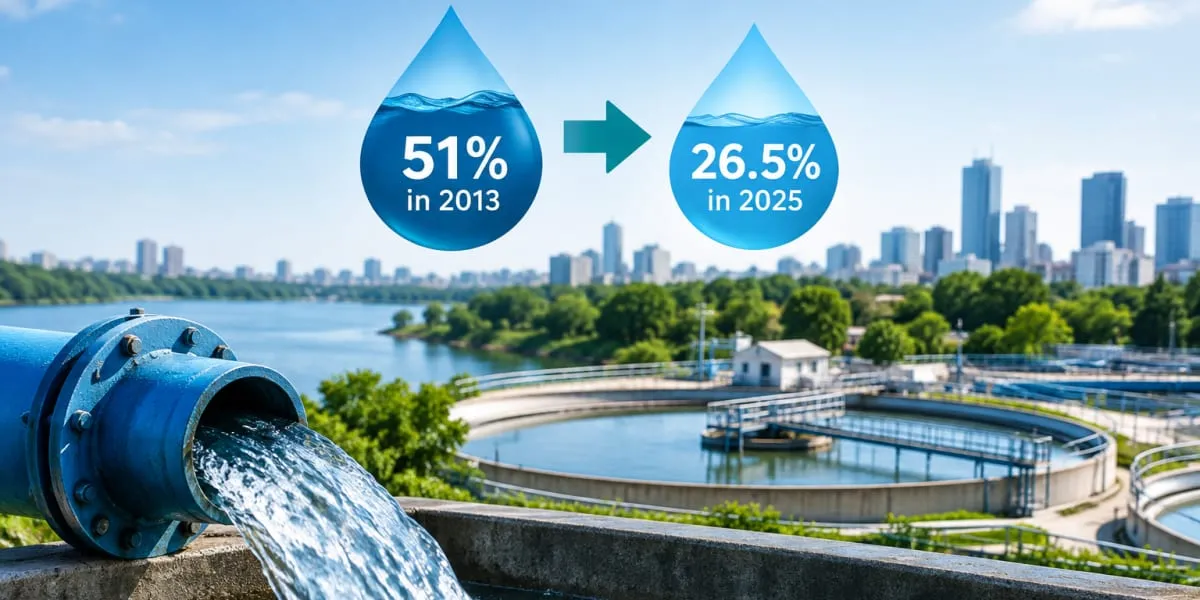
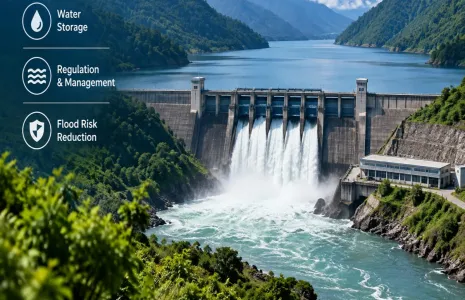
The Bengaluru Water Supply and Sewerage Board (BWSSB) has reduced unaccounted-for water from nearly 51 per cent in 2013 to 26.5 per cent in 2025, improving efficiency across a metropolitan region of 14 mn people. The reduction has saved nearly 200 mn litres of water a day without requiring equivalent additional capacity.

Bengaluru depends primarily on the Cauvery river system, with water transported over 100 km to the city. BWSSB operates six major treatment plants with combined installed capacity of 2,293 MLD and supplies nearly 150 litres per person per day. The Cauvery Water Supply Scheme Stage V, commissioned in October 2024 with Japan International Cooperation Agency support, added 775 MLD, while Stage VI is under consideration with a proposed addition of 500 MLD.

Operational improvements have been supported by an Integrated Intelligent Water and Sewerage Management Centre at Shimsha Bhavan in Jayanagar. Developed with JICA support and implemented by Yokogawa India, the facility uses Supervisory Control and Data Acquisition (SCADA) technology to monitor treatment plants, pumping stations, reservoirs, sewerage systems and distribution networks. It processes more than 500,000 operational data points and uses forecasting tools to identify pressure anomalies and potential leakages.

BWSSB has also deployed pump-monitoring systems across 78 pumping stations and introduced the sensor-based iPumpNet platform. The measures have helped identify inefficient equipment and reduce electricity consumption, generating annual savings of more than Rs. 400 mn. Geographic Information System mapping has improved asset visibility, maintenance planning and the detection of probable unauthorised connections.

The utility is expanding smart metering for bulk users through a Public Private Partnership model and is integrating sewage treatment plants into the central monitoring system. Nearly 90 per cent of treated sewage is reused for non-potable purposes. A pilot at Kadubeesanahalli supplies nearly 70,000 litres of recycled water daily to commercial buildings and technology parks, while a World Bank-funded contract worth Rs. 3.8 bn will support four advanced wastewater treatment plants in Bommanahalli. BWSSB joined the Smart Water Networks Forum in 2025, adding international recognition to Bengaluru’s shift towards predictive operations and circular water management.

The Bengaluru Water Supply and Sewerage Board (BWSSB) has reduced unaccounted-for water from nearly 51 per cent in 2013 to 26.5 per cent in 2025, improving efficiency across a metropolitan region of 14 mn people. The reduction has saved nearly 200 mn litres of water a day without requiring equivalent additional capacity. Bengaluru depends primarily on the Cauvery river system, with water transported over 100 km to the city. BWSSB operates six major treatment plants with combined installed capacity of 2,293 MLD and supplies nearly 150 litres per person per day. The Cauvery Water Supply Scheme Stage V, commissioned in October 2024 with Japan International Cooperation Agency support, added 775 MLD, while Stage VI is under consideration with a proposed addition of 500 MLD. Operational improvements have been supported by an Integrated Intelligent Water and Sewerage Management Centre at Shimsha Bhavan in Jayanagar. Developed with JICA support and implemented by Yokogawa India, the facility uses Supervisory Control and Data Acquisition (SCADA) technology to monitor treatment plants, pumping stations, reservoirs, sewerage systems and distribution networks. It processes more than 500,000 operational data points and uses forecasting tools to identify pressure anomalies and potential leakages. BWSSB has also deployed pump-monitoring systems across 78 pumping stations and introduced the sensor-based iPumpNet platform. The measures have helped identify inefficient equipment and reduce electricity consumption, generating annual savings of more than Rs. 400 mn. Geographic Information System mapping has improved asset visibility, maintenance planning and the detection of probable unauthorised connections. The utility is expanding smart metering for bulk users through a Public Private Partnership model and is integrating sewage treatment plants into the central monitoring system. Nearly 90 per cent of treated sewage is reused for non-potable purposes. A pilot at Kadubeesanahalli supplies nearly 70,000 litres of recycled water daily to commercial buildings and technology parks, while a World Bank-funded contract worth Rs. 3.8 bn will support four advanced wastewater treatment plants in Bommanahalli. BWSSB joined the Smart Water Networks Forum in 2025, adding international recognition to Bengaluru’s shift towards predictive operations and circular water management.

Related Stories

Gold Stories
Next Story
Building Material

Hard Worker Wins Three Honours at Kyoorius Design Awards

The Ramco Cements Limited’s construction chemicals brand, Hard Worker, has won three honours at the Kyoorius Design Awards 2026, including the Grand Prix – Grey Elephant in the Design in Action category.The brand also secured two Blue Elephant honours, one for Design in Action and another for Packaging, recognising the design approach behind its brand identity and packaging.Launched in 2025, Hard Worker entered the construction chemicals segment with the brand promise, “Hard-working products for hardworking people.” Its visual identity uses animals and birds to represent product benefi..

Next Story
Infrastructure Transport

Kopri-Patni Creek Bridge to Improve Thane-Navi Mumbai Connectivity

Road connectivity between Thane and Navi Mumbai is set to receive a boost with the proposed six-lane Kopri-Patni Creek Bridge, which will provide a new route across Thane Creek. The project is intended to create a direct link between the two urban centres and add capacity to the region’s road network. The bridge will connect Kopri in Thane East with Patni in Navi Mumbai. It will begin at Mith Bandar Road in Kopri, about 750 metres from Thane railway station, cross Thane Creek and land near Airoli Knowledge City Road in Navi Mumbai. The project has advanced with Akshya Infra Projects emerging..

Advertisement

Subscribe to Our Newsletter

Get daily newsletters around different themes from Construction world.

STAY CONNECTED

Advertisement

SPECIAL OFFER
QR Code