Centre Expands Drive to Boost Drip and Sprinkler Irrigation
WATER & WASTE

Centre Expands Drive to Boost Drip and Sprinkler Irrigation

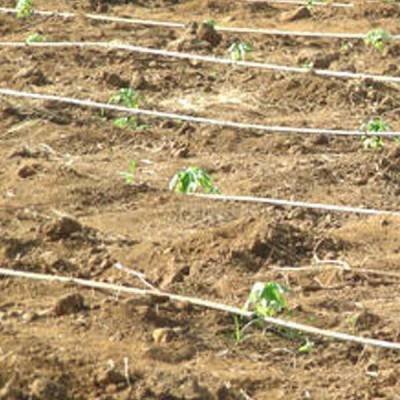
The Cabinet recently approved the Modernisation of Command Area Development and Water Management scheme as a sub-scheme under Pradhan Mantri Krishi Sinchayee Yojana. The initiative aims to modernise irrigation networks and deliver pressurised water supply from existing canal systems and other sources to the farm gate, supporting micro-irrigation adoption across designated clusters. The pilot phase covers 23 States and Union Territories, excluding Dadra and Nagar Haveli. The scheme seeks to improve on-farm water-use efficiency by promoting drip and sprinkler systems.
To advance the National Water Mission goal of increasing water-use efficiency by 20 per cent, the Bureau of Water Use Efficiency has undertaken several initiatives. The ‘Sahi Fasal’ campaign, launched in 2019, completed 14 programmes across seven States in 2024–25, encouraging farmers in water-stressed regions to shift to less water-intensive crops and adopt micro-irrigation techniques. Baseline studies of major and medium irrigation projects have been completed through leading water-management institutes. A regional conference on water-use efficiency in irrigation was also held in Jaipur, involving officials from six States, two Union Territories and farmer groups.
The Per Drop More Crop scheme, operational since 2015–16, continues to promote micro-irrigation at the farm level. Now implemented under the Rashtriya Krishi Vikas Yojana, it provides financial assistance of 55 per cent to small and marginal farmers and 45 per cent to others for drip and sprinkler systems, with a five-hectare per-beneficiary limit. States may offer additional top-up support. To further encourage adoption, a Micro Irrigation Fund with an initial corpus of Rs 50 billion—now increased to Rs 100 billion—was established with NABARD, supported by a 2 per cent interest subvention to States.
The Central Ground Water Board has completed aquifer mapping across the country under the National Aquifer Mapping and Management Programme, including Madhya Pradesh and Dadra and Nagar Haveli. Resulting groundwater-management plans emphasise crop diversification, adoption of water-efficient technologies and conservation practices such as drip and sprinkler systems. Public interaction programmes have been held nationwide to disseminate aquifer-management strategies at the community level.
ICAR promotes efficient irrigation practices across various crops, noting that micro-irrigation systems achieve water-use efficiency of 80–95 per cent compared with 30–50 per cent in conventional flood irrigation. Training, demonstrations and farmer advisories highlight practices such as raised-bed sowing, mulching, alternate wetting and drying, direct seeded rice, laser land levelling and drip fertigation. Central Agricultural Universities also support these efforts through research projects, precision-farming centres and climate-resilient agriculture programmes.
The Crop Diversification Programme under PM-RKVY encourages farmers in Punjab, Haryana and western Uttar Pradesh to shift from water-intensive paddy to pulses, oilseeds, millets, cotton and agroforestry. Krishi Vigyan Kendras are conducting demonstrations and training to promote these alternatives.
States plan, implement and maintain water-resources projects, with the Union Government providing technical and financial support under programmes such as PMKSY, National Projects and special packages. Modernisation and maintenance of canals are also funded under the Accelerated Irrigation Benefits Programme. Technological measures—including underground pipelines, piped distribution networks, SCADA-based systems and GIS-enabled monitoring—are being promoted to reduce conveyance losses and deliver micro-irrigation up to the farm gate.

The Cabinet recently approved the Modernisation of Command Area Development and Water Management scheme as a sub-scheme under Pradhan Mantri Krishi Sinchayee Yojana. The initiative aims to modernise irrigation networks and deliver pressurised water supply from existing canal systems and other sources to the farm gate, supporting micro-irrigation adoption across designated clusters. The pilot phase covers 23 States and Union Territories, excluding Dadra and Nagar Haveli. The scheme seeks to improve on-farm water-use efficiency by promoting drip and sprinkler systems.To advance the National Water Mission goal of increasing water-use efficiency by 20 per cent, the Bureau of Water Use Efficiency has undertaken several initiatives. The ‘Sahi Fasal’ campaign, launched in 2019, completed 14 programmes across seven States in 2024–25, encouraging farmers in water-stressed regions to shift to less water-intensive crops and adopt micro-irrigation techniques. Baseline studies of major and medium irrigation projects have been completed through leading water-management institutes. A regional conference on water-use efficiency in irrigation was also held in Jaipur, involving officials from six States, two Union Territories and farmer groups.The Per Drop More Crop scheme, operational since 2015–16, continues to promote micro-irrigation at the farm level. Now implemented under the Rashtriya Krishi Vikas Yojana, it provides financial assistance of 55 per cent to small and marginal farmers and 45 per cent to others for drip and sprinkler systems, with a five-hectare per-beneficiary limit. States may offer additional top-up support. To further encourage adoption, a Micro Irrigation Fund with an initial corpus of Rs 50 billion—now increased to Rs 100 billion—was established with NABARD, supported by a 2 per cent interest subvention to States.The Central Ground Water Board has completed aquifer mapping across the country under the National Aquifer Mapping and Management Programme, including Madhya Pradesh and Dadra and Nagar Haveli. Resulting groundwater-management plans emphasise crop diversification, adoption of water-efficient technologies and conservation practices such as drip and sprinkler systems. Public interaction programmes have been held nationwide to disseminate aquifer-management strategies at the community level.ICAR promotes efficient irrigation practices across various crops, noting that micro-irrigation systems achieve water-use efficiency of 80–95 per cent compared with 30–50 per cent in conventional flood irrigation. Training, demonstrations and farmer advisories highlight practices such as raised-bed sowing, mulching, alternate wetting and drying, direct seeded rice, laser land levelling and drip fertigation. Central Agricultural Universities also support these efforts through research projects, precision-farming centres and climate-resilient agriculture programmes.The Crop Diversification Programme under PM-RKVY encourages farmers in Punjab, Haryana and western Uttar Pradesh to shift from water-intensive paddy to pulses, oilseeds, millets, cotton and agroforestry. Krishi Vigyan Kendras are conducting demonstrations and training to promote these alternatives.States plan, implement and maintain water-resources projects, with the Union Government providing technical and financial support under programmes such as PMKSY, National Projects and special packages. Modernisation and maintenance of canals are also funded under the Accelerated Irrigation Benefits Programme. Technological measures—including underground pipelines, piped distribution networks, SCADA-based systems and GIS-enabled monitoring—are being promoted to reduce conveyance losses and deliver micro-irrigation up to the farm gate.

Next Story
Resources

Rustomjee Partners Rotary For SCHOOLR-ATHON 2025 In Dombivli

Rustomjee Group partnered with the Rotary Club of Dombivli Downtown for SCHOOLR-ATHON 2025, a student-community marathon held on 7 December 2025 along the Urban Woods by Rustomjee Drive Road in Dombivli. The event brought together more than 5,000 participants, including 2,200 young runners across 2 km, 3 km and 5 km race categories, promoting fitness, compassion and civic engagement.Proceeds from the marathon will support life-saving paediatric cardiac surgeries for 18 underprivileged children identified by the Rotary Club. With over 2,000 children currently on hospital waiting lists, this yea..

Next Story
Real Estate

Inspur Showcases Modular Construction Capability in Australia

Shandong Inspur Intelligent Building Technology Co., hosted its Smart Construction and Next-Generation Productivity Showcase in Brisbane, marking its first comprehensive introduction of its modular construction framework to the Australian market. The event drew builders, developers, design firms and engineering consultancies, with discussions centred on offshore modular delivery, regulatory pathways and the role of AI across the construction lifecycle.Haitao Huang, Chairman of TAUCO Australia, outlined the regulatory environment for modular construction, including National Construction Code re..

Next Story
Infrastructure Transport

Exercise Garuda 25 Strengthens Indo–French Air Force Ties

The eighth edition of Exercise Garuda, the bilateral air exercise between the Indian Air Force (IAF) and the French Air and Space Force, concluded recently at Air Base 118 in Mont-de-Marsan, France. The IAF contingent returned to India on 02 December 2025 following the successful completion of the engagement. The IAF participated with Su-30MKI fighters, supported by IL-78 air-to-air refuelling aircraft and C-17 Globemaster III transport aircraft. Both air forces undertook a series of complex missions in a realistic operational setting, including joint planning, integrated strike and escort op..

Advertisement

Subscribe to Our Newsletter

Get daily newsletters around different themes from Construction world.

STAY CONNECTED

Advertisement

Advertisement

Advertisement

Advertisement

Open In App