Centre Reviews Groundwater Safety Measures in Eastern UP
WATER & WASTE

Centre Reviews Groundwater Safety Measures in Eastern UP

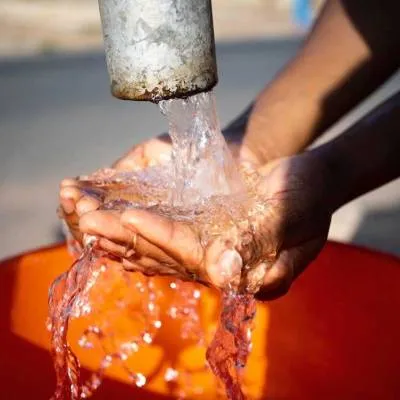
According to the Central Ground Water Board’s dynamic groundwater resource assessment for 2025, both Mau and Balia districts fall within the ‘safe’ category for groundwater extraction, with no district in eastern Uttar Pradesh classified as over-exploited or critical. While isolated pockets show the presence of arsenic, groundwater across the region remains largely potable.
Water being a State subject, the responsibility for managing groundwater sustainably rests primarily with State Governments. The Centre supplements these efforts through technical and financial support under various schemes. Since 2019, Jal Shakti Abhiyan has been implemented as a mission-mode programme promoting water harvesting and artificial recharge through convergence of ongoing initiatives. The Jal Sanchay Jan Bhagidari campaign, launched recently by the Prime Minister, further encourages community-led rainwater harvesting tailored to local needs.
CGWB continues to monitor groundwater levels and quality under the Ground Water Management and Regulation scheme. Following the completion of NAQUIM 1.0, the Board has launched NAQUIM 2.0, focusing on water-stressed and quality-affected areas. Mission Amrit Sarovar has also supported groundwater recharge, with nearly 69,000 water bodies rejuvenated nationwide.
Groundwater quality data—including arsenic concentrations—is routinely shared through reports and alerts for early action. Most groundwater-management activities are undertaken through convergence with State and Central schemes such as MGNREGS and PMKSY, with natural-resource management works constituting a major portion of MGNREGS expenditure.
Efforts to provide safe drinking water to all rural households are driven through Jal Jeevan Mission – Har Ghar Jal. Uttar Pradesh has been allocated Rs 608.16 billion as Central share since 2019, with States permitted to utilise up to 2 per cent of funds for water-quality surveillance. BIS:10500 standards have been adopted for tap-water quality, and States receive additional weightage for contamination-affected habitations. A national framework for water-quality monitoring has been implemented, supported by over 2,180 laboratories and trained village-level volunteers using field test kits. States have also been advised to install community water purification plants in affected areas.
CGWB has developed a cement sealing technology for accessing deeper, arsenic-free aquifers. To date, 525 arsenic-safe wells have been constructed nationwide, including 294 in Uttar Pradesh, with three in Mau and 53 in Balia. The Uttar Pradesh Jal Nigam has adopted this technique extensively, constructing 204 arsenic-safe wells across nine districts, benefiting around 0.5 million people.

According to the Central Ground Water Board’s dynamic groundwater resource assessment for 2025, both Mau and Balia districts fall within the ‘safe’ category for groundwater extraction, with no district in eastern Uttar Pradesh classified as over-exploited or critical. While isolated pockets show the presence of arsenic, groundwater across the region remains largely potable.Water being a State subject, the responsibility for managing groundwater sustainably rests primarily with State Governments. The Centre supplements these efforts through technical and financial support under various schemes. Since 2019, Jal Shakti Abhiyan has been implemented as a mission-mode programme promoting water harvesting and artificial recharge through convergence of ongoing initiatives. The Jal Sanchay Jan Bhagidari campaign, launched recently by the Prime Minister, further encourages community-led rainwater harvesting tailored to local needs.CGWB continues to monitor groundwater levels and quality under the Ground Water Management and Regulation scheme. Following the completion of NAQUIM 1.0, the Board has launched NAQUIM 2.0, focusing on water-stressed and quality-affected areas. Mission Amrit Sarovar has also supported groundwater recharge, with nearly 69,000 water bodies rejuvenated nationwide.Groundwater quality data—including arsenic concentrations—is routinely shared through reports and alerts for early action. Most groundwater-management activities are undertaken through convergence with State and Central schemes such as MGNREGS and PMKSY, with natural-resource management works constituting a major portion of MGNREGS expenditure.Efforts to provide safe drinking water to all rural households are driven through Jal Jeevan Mission – Har Ghar Jal. Uttar Pradesh has been allocated Rs 608.16 billion as Central share since 2019, with States permitted to utilise up to 2 per cent of funds for water-quality surveillance. BIS:10500 standards have been adopted for tap-water quality, and States receive additional weightage for contamination-affected habitations. A national framework for water-quality monitoring has been implemented, supported by over 2,180 laboratories and trained village-level volunteers using field test kits. States have also been advised to install community water purification plants in affected areas.CGWB has developed a cement sealing technology for accessing deeper, arsenic-free aquifers. To date, 525 arsenic-safe wells have been constructed nationwide, including 294 in Uttar Pradesh, with three in Mau and 53 in Balia. The Uttar Pradesh Jal Nigam has adopted this technique extensively, constructing 204 arsenic-safe wells across nine districts, benefiting around 0.5 million people.

Next Story
Resources

Rustomjee Partners Rotary For SCHOOLR-ATHON 2025 In Dombivli

Rustomjee Group partnered with the Rotary Club of Dombivli Downtown for SCHOOLR-ATHON 2025, a student-community marathon held on 7 December 2025 along the Urban Woods by Rustomjee Drive Road in Dombivli. The event brought together more than 5,000 participants, including 2,200 young runners across 2 km, 3 km and 5 km race categories, promoting fitness, compassion and civic engagement.Proceeds from the marathon will support life-saving paediatric cardiac surgeries for 18 underprivileged children identified by the Rotary Club. With over 2,000 children currently on hospital waiting lists, this yea..

Next Story
Real Estate

Inspur Showcases Modular Construction Capability in Australia

Shandong Inspur Intelligent Building Technology Co., hosted its Smart Construction and Next-Generation Productivity Showcase in Brisbane, marking its first comprehensive introduction of its modular construction framework to the Australian market. The event drew builders, developers, design firms and engineering consultancies, with discussions centred on offshore modular delivery, regulatory pathways and the role of AI across the construction lifecycle.Haitao Huang, Chairman of TAUCO Australia, outlined the regulatory environment for modular construction, including National Construction Code re..

Next Story
Infrastructure Transport

Exercise Garuda 25 Strengthens Indo–French Air Force Ties

The eighth edition of Exercise Garuda, the bilateral air exercise between the Indian Air Force (IAF) and the French Air and Space Force, concluded recently at Air Base 118 in Mont-de-Marsan, France. The IAF contingent returned to India on 02 December 2025 following the successful completion of the engagement. The IAF participated with Su-30MKI fighters, supported by IL-78 air-to-air refuelling aircraft and C-17 Globemaster III transport aircraft. Both air forces undertook a series of complex missions in a realistic operational setting, including joint planning, integrated strike and escort op..

Advertisement

Subscribe to Our Newsletter

Get daily newsletters around different themes from Construction world.

STAY CONNECTED

Advertisement

Advertisement

Advertisement

Advertisement

Open In App