Government Reports Progress on Ganga Rejuvenation Efforts
WATER & WASTE

Government Reports Progress on Ganga Rejuvenation Efforts

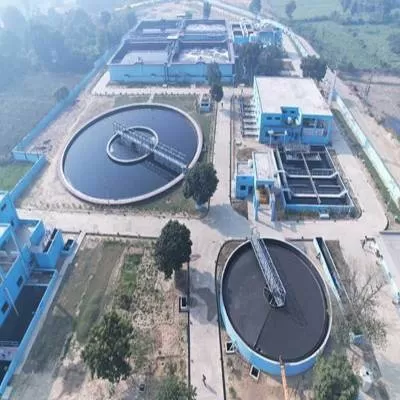
Recent assessments indicate notable progress in the Government’s efforts to clean and rejuvenate the river Ganga. The five Ganga main-stem States collectively generate around 10,160 MLD of sewage, against which 7,820 MLD of treatment capacity is currently available. Projects totalling 1,996 MLD are under various stages of completion to bridge the existing gap.
The Central Pollution Control Board monitors water quality at 112 locations across Uttarakhand, Uttar Pradesh, Bihar, Jharkhand and West Bengal. As per its 2025 Polluted River Stretch report, several stretches of the Ganga have shown improvement since 2018. Uttarakhand’s previously identified polluted segment has been removed from the list, while stretches in Uttar Pradesh and Bihar show partial or marginal improvement. Jharkhand continues to register no polluted stretches, and West Bengal has recorded a shift from Priority III to Priority V, indicating improvement.
Based on 2025 data (January to August), the river meets bathing criteria for pH and Dissolved Oxygen at all monitored locations. Biochemical Oxygen Demand standards are met across the entire stretch in Uttarakhand, Jharkhand, Bihar and West Bengal, with exceptions in identified pockets of Uttar Pradesh. Biomonitoring at 76 locations along the Ganga and Yamuna systems shows biological water quality ranging from ‘Good’ to ‘Moderate’, indicating a healthy ecological potential.
Over the last five financial years, the National Mission for Clean Ganga has sanctioned 69 projects worth Rs 1174.1 million, creating 2,161 MLD of additional capacity. Physical achievements have advanced steadily, supported by annual fund allocations and disbursements. In 2024–25, 612 MLD of capacity was delivered against the 473 MLD target, while in 2025–26 (till late November) 83 MLD has been achieved.
The Government has adopted a technology-driven strategy integrating innovations such as the Hybrid Annuity Model, a 15-year operations and maintenance framework, and interception-and-diversion methods for sewage management. River Basin Management has been strengthened through a dedicated unit focusing on plastic waste, climate resilience and disaster-risk considerations.
Enhanced monitoring uses LiDAR and drone surveys to map drains, parametric surveillance of STPs, and CCTV-enabled oversight. Public disclosure of STP performance strengthens accountability. Urban River Management Plans are being prepared to guide river-sensitive master planning, aided by newly created Centres of Excellence working on decision-support tools, digital twins and pollutant characterisation.
Nature-based solutions form a key component of the rejuvenation strategy, with initiatives focusing on wetland restoration, higher order streams, floodplain rejuvenation and enhanced riparian habitats. These measures support base-flow maintenance, groundwater recharge and biodiversity.
NMCG continues to evolve into a national template for integrated river rejuvenation, moving from isolated interventions to a basin-wide, sustainable, and circular-economy-driven approach. Current priorities include saturating sewage treatment capacity across the Ganga main stem and major tributaries, ecological restoration using nature-based solutions, and comprehensive urban and basin governance frameworks.

Recent assessments indicate notable progress in the Government’s efforts to clean and rejuvenate the river Ganga. The five Ganga main-stem States collectively generate around 10,160 MLD of sewage, against which 7,820 MLD of treatment capacity is currently available. Projects totalling 1,996 MLD are under various stages of completion to bridge the existing gap.The Central Pollution Control Board monitors water quality at 112 locations across Uttarakhand, Uttar Pradesh, Bihar, Jharkhand and West Bengal. As per its 2025 Polluted River Stretch report, several stretches of the Ganga have shown improvement since 2018. Uttarakhand’s previously identified polluted segment has been removed from the list, while stretches in Uttar Pradesh and Bihar show partial or marginal improvement. Jharkhand continues to register no polluted stretches, and West Bengal has recorded a shift from Priority III to Priority V, indicating improvement.Based on 2025 data (January to August), the river meets bathing criteria for pH and Dissolved Oxygen at all monitored locations. Biochemical Oxygen Demand standards are met across the entire stretch in Uttarakhand, Jharkhand, Bihar and West Bengal, with exceptions in identified pockets of Uttar Pradesh. Biomonitoring at 76 locations along the Ganga and Yamuna systems shows biological water quality ranging from ‘Good’ to ‘Moderate’, indicating a healthy ecological potential.Over the last five financial years, the National Mission for Clean Ganga has sanctioned 69 projects worth Rs 1174.1 million, creating 2,161 MLD of additional capacity. Physical achievements have advanced steadily, supported by annual fund allocations and disbursements. In 2024–25, 612 MLD of capacity was delivered against the 473 MLD target, while in 2025–26 (till late November) 83 MLD has been achieved.The Government has adopted a technology-driven strategy integrating innovations such as the Hybrid Annuity Model, a 15-year operations and maintenance framework, and interception-and-diversion methods for sewage management. River Basin Management has been strengthened through a dedicated unit focusing on plastic waste, climate resilience and disaster-risk considerations.Enhanced monitoring uses LiDAR and drone surveys to map drains, parametric surveillance of STPs, and CCTV-enabled oversight. Public disclosure of STP performance strengthens accountability. Urban River Management Plans are being prepared to guide river-sensitive master planning, aided by newly created Centres of Excellence working on decision-support tools, digital twins and pollutant characterisation.Nature-based solutions form a key component of the rejuvenation strategy, with initiatives focusing on wetland restoration, higher order streams, floodplain rejuvenation and enhanced riparian habitats. These measures support base-flow maintenance, groundwater recharge and biodiversity.NMCG continues to evolve into a national template for integrated river rejuvenation, moving from isolated interventions to a basin-wide, sustainable, and circular-economy-driven approach. Current priorities include saturating sewage treatment capacity across the Ganga main stem and major tributaries, ecological restoration using nature-based solutions, and comprehensive urban and basin governance frameworks.

Next Story
Resources

Rustomjee Partners Rotary For SCHOOLR-ATHON 2025 In Dombivli

Rustomjee Group partnered with the Rotary Club of Dombivli Downtown for SCHOOLR-ATHON 2025, a student-community marathon held on 7 December 2025 along the Urban Woods by Rustomjee Drive Road in Dombivli. The event brought together more than 5,000 participants, including 2,200 young runners across 2 km, 3 km and 5 km race categories, promoting fitness, compassion and civic engagement.Proceeds from the marathon will support life-saving paediatric cardiac surgeries for 18 underprivileged children identified by the Rotary Club. With over 2,000 children currently on hospital waiting lists, this yea..

Next Story
Real Estate

Inspur Showcases Modular Construction Capability in Australia

Shandong Inspur Intelligent Building Technology Co., hosted its Smart Construction and Next-Generation Productivity Showcase in Brisbane, marking its first comprehensive introduction of its modular construction framework to the Australian market. The event drew builders, developers, design firms and engineering consultancies, with discussions centred on offshore modular delivery, regulatory pathways and the role of AI across the construction lifecycle.Haitao Huang, Chairman of TAUCO Australia, outlined the regulatory environment for modular construction, including National Construction Code re..

Next Story
Infrastructure Transport

Exercise Garuda 25 Strengthens Indo–French Air Force Ties

The eighth edition of Exercise Garuda, the bilateral air exercise between the Indian Air Force (IAF) and the French Air and Space Force, concluded recently at Air Base 118 in Mont-de-Marsan, France. The IAF contingent returned to India on 02 December 2025 following the successful completion of the engagement. The IAF participated with Su-30MKI fighters, supported by IL-78 air-to-air refuelling aircraft and C-17 Globemaster III transport aircraft. Both air forces undertook a series of complex missions in a realistic operational setting, including joint planning, integrated strike and escort op..

Advertisement

Subscribe to Our Newsletter

Get daily newsletters around different themes from Construction world.

STAY CONNECTED

Advertisement

Advertisement

Advertisement

Advertisement

Open In App