


Jawaharnagar Waste Plant to Open in August
WATER & WASTE

Jawaharnagar Waste Plant to Open in August

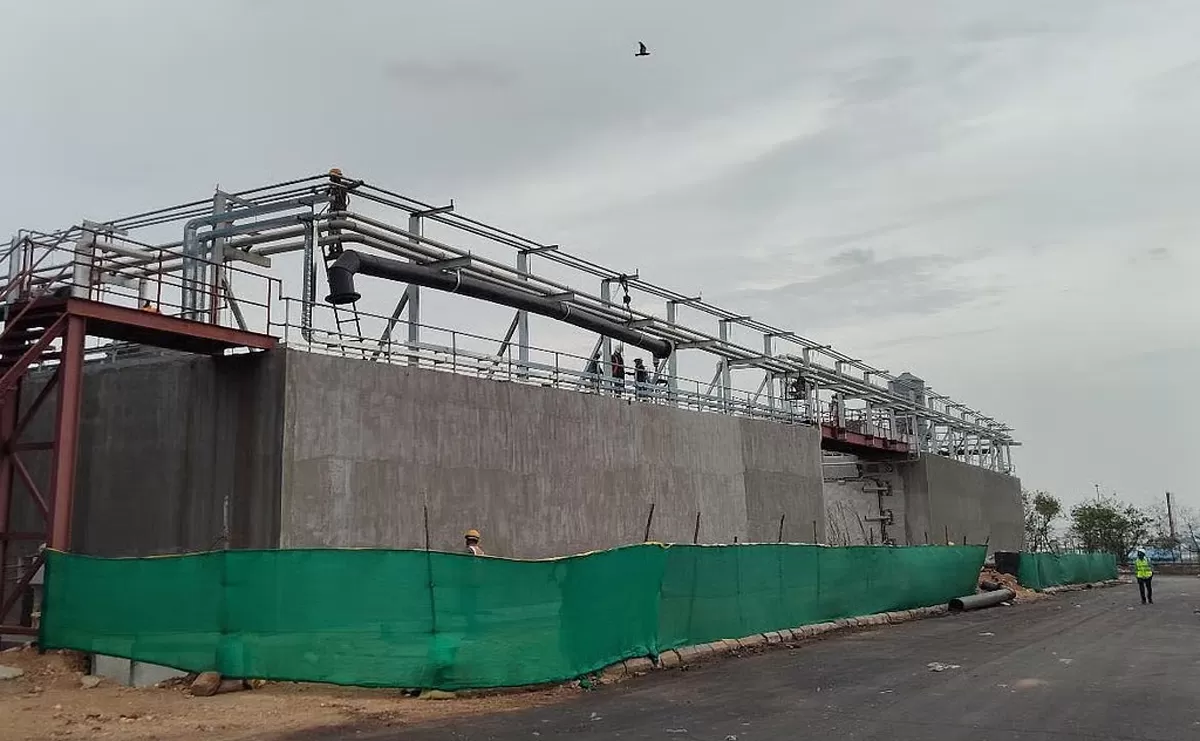
A new waste-to-energy plant in Jawaharnagar is nearing completion and is expected to commence operations in August, according to the Greater Hyderabad Municipal Corporation (GHMC). Designed to handle 300 tonnes of compostable waste daily, the facility will use dry bio-methanation technology to convert organic waste into bio-CNG and high-quality compost.

The advanced system—already in use across several European nations—operates within a fully enclosed setup. This process not only reduces landfill-bound waste but also produces clean energy, aiding in the reduction of fossil fuel dependency and carbon emissions.

The GHMC stated that the plant will deploy the “Muller 3A” technique, a three-phase method involving aerobic, anaerobic, and aerobic treatment. Unlike conventional wet biogas systems, the dry method requires minimal water and eliminates odours and leachate leakage, as the entire process occurs in a sealed environment.

Key Benefits:
  • Higher biogas output: The process yields more methane, enabling efficient bio-CNG production.
  • Nutrient-rich compost: The residue serves as agricultural compost.
  • Urban scalability: The technology is adaptable for cities of varying sizes, offering a sustainable model for urban waste management.
The project is a part of GHMC’s broader initiative to implement sustainable and scalable waste solutions across Hyderabad. 

A new waste-to-energy plant in Jawaharnagar is nearing completion and is expected to commence operations in August, according to the Greater Hyderabad Municipal Corporation (GHMC). Designed to handle 300 tonnes of compostable waste daily, the facility will use dry bio-methanation technology to convert organic waste into bio-CNG and high-quality compost.The advanced system—already in use across several European nations—operates within a fully enclosed setup. This process not only reduces landfill-bound waste but also produces clean energy, aiding in the reduction of fossil fuel dependency and carbon emissions.The GHMC stated that the plant will deploy the “Muller 3A” technique, a three-phase method involving aerobic, anaerobic, and aerobic treatment. Unlike conventional wet biogas systems, the dry method requires minimal water and eliminates odours and leachate leakage, as the entire process occurs in a sealed environment.Key Benefits:Higher biogas output: The process yields more methane, enabling efficient bio-CNG production.Nutrient-rich compost: The residue serves as agricultural compost.Urban scalability: The technology is adaptable for cities of varying sizes, offering a sustainable model for urban waste management.The project is a part of GHMC’s broader initiative to implement sustainable and scalable waste solutions across Hyderabad. 

Next Story
Infrastructure Urban

India Expands Semiconductor Training To 500 Institutions

Under the Chips to Startups programme of the India Semiconductor Mission, the Union minister responsible for Railways, Information and Broadcasting, and Electronics and IT reported notable progress in talent development. He indicated that over the past four years substantial steps have been taken towards a 10-year target of training 85,000 engineers in semiconductor design. World-class EDA tools have been deployed in 315 academic institutions across the country to provide students with practical exposure to chip design. These EDA tools are supported by leading global firms and are accessible t..

Next Story
Infrastructure Urban

Delhi Institutions Support India Semiconductor Mission

The Government of India has prioritised talent development through training, upskilling and workforce development under the Chips to Startups initiative of the India Semiconductor Mission, with officials noting progress in four years towards a 10-year target of training 85,000 engineers in semiconductor design. Electronic design automation tools provided by Synopsys, Cadence, Siemens, Renesas, Ansys and AMD have been deployed in 315 academic institutions, enabling students to gain practical chip design experience. Chips have been fabricated and tested at the Semiconductor Laboratory, Mohali, a..

Next Story
Infrastructure Urban

NHA Announces Winners Of NHCX Hackathon At IIT Hyderabad

The National Health Authority (NHA) has concluded the NHCX Hackathon under the Ayushman Bharat Digital Mission (ABDM) to stimulate innovation around the National Health Claims Exchange (NHCX). The winning teams presented their solutions at the NHCX Innovation Meet held at IIT Hyderabad during a two-day event in March 2026 that also served as the hackathon grand finale. The hackathon itself ran from 22 to 28 February 2026 and aimed to accelerate paperless, transparent claims processing across India. The event was organised with a range of ecosystem partners, including the Insurance Regulatory a..

Advertisement

Subscribe to Our Newsletter

Get daily newsletters around different themes from Construction world.

STAY CONNECTED

Advertisement

Advertisement

Advertisement