Report Flags Localised Heavy Metal Contamination in Groundwater
WATER & WASTE

Report Flags Localised Heavy Metal Contamination in Groundwater

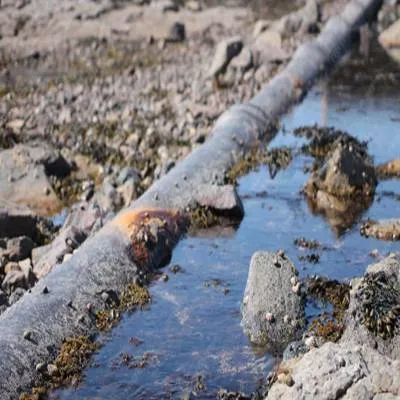
The Central Ground Water Board (CGWB) has reported that groundwater across India remains largely potable, with heavy metal contamination confined to isolated pockets. Routine monitoring covers basic parameters such as fluoride, nitrate and electrical conductivity, while trace metals including chromium, mercury and cadmium are tested based on specific requirements.

According to the Annual Ground Water Quality Report 2025, CGWB collected 3,415 samples from 26 States and Union Territories for arsenic assessment during the 2024 pre- and post-monsoon seasons. Of these, 123 samples—3.6 per cent—exceeded the permissible limit of 10 ppb. A separate analysis of 2,537 samples from 21 States and UTs found that 24 samples—0.95 per cent—surpassed the permissible limit for lead at 0.01 mg/L. State-wise details are provided in two annexures.

Under the National Aquifer Mapping and Management Programme (NAQUIM), aquifer studies incorporate quality assessments and recommended remedial measures, with findings shared with state agencies for further action. Responsibility for addressing contamination and providing safe drinking water rests primarily with state governments, though several central initiatives support mitigation.

The Jal Jeevan Mission continues to prioritise contamination-free drinking water for rural households, guided by BIS:10500 quality standards. States receive a funding weightage for populations affected by chemical contaminants, and water quality monitoring protocols were formalised through a national framework issued in October 2021. More than 2,180 laboratories and trained village-level volunteers support routine testing through field kits, while community purification plants are advised for habitations facing persistent quality issues.

CGWB disseminates groundwater quality data regularly through reports and alerts, and has introduced a revised Standard Operating Procedure to enable denser and more frequent sampling in sensitive areas. The Board has also developed a cement sealing technology to access deeper arsenic-free aquifers, constructing 525 safe exploratory wells across Bihar, West Bengal and Uttar Pradesh, and is supporting states to replicate the approach.

Artificial recharge measures—implemented through initiatives such as Jal Shakti Abhiyan, Jal Sanchay Jan Bhagidari, Atal Bhujal Yojana, PMKSY and MGNREGS—help dilute contaminants in affected aquifers. Broader water quality improvements also rely on strengthening surface water systems through sewage treatment, effluent management and river conservation programmes under NMCG and NRCP.

Pollution control efforts are overseen by the Central Pollution Control Board along with state agencies under the Water (Prevention & Control) Act, 1974 and the Environment (Protection) Act, 1986. Industry-specific effluent standards and compliance frameworks continue to guide enforcement to reduce pollution at source.

The Central Ground Water Board (CGWB) has reported that groundwater across India remains largely potable, with heavy metal contamination confined to isolated pockets. Routine monitoring covers basic parameters such as fluoride, nitrate and electrical conductivity, while trace metals including chromium, mercury and cadmium are tested based on specific requirements. According to the Annual Ground Water Quality Report 2025, CGWB collected 3,415 samples from 26 States and Union Territories for arsenic assessment during the 2024 pre- and post-monsoon seasons. Of these, 123 samples—3.6 per cent—exceeded the permissible limit of 10 ppb. A separate analysis of 2,537 samples from 21 States and UTs found that 24 samples—0.95 per cent—surpassed the permissible limit for lead at 0.01 mg/L. State-wise details are provided in two annexures. Under the National Aquifer Mapping and Management Programme (NAQUIM), aquifer studies incorporate quality assessments and recommended remedial measures, with findings shared with state agencies for further action. Responsibility for addressing contamination and providing safe drinking water rests primarily with state governments, though several central initiatives support mitigation. The Jal Jeevan Mission continues to prioritise contamination-free drinking water for rural households, guided by BIS:10500 quality standards. States receive a funding weightage for populations affected by chemical contaminants, and water quality monitoring protocols were formalised through a national framework issued in October 2021. More than 2,180 laboratories and trained village-level volunteers support routine testing through field kits, while community purification plants are advised for habitations facing persistent quality issues. CGWB disseminates groundwater quality data regularly through reports and alerts, and has introduced a revised Standard Operating Procedure to enable denser and more frequent sampling in sensitive areas. The Board has also developed a cement sealing technology to access deeper arsenic-free aquifers, constructing 525 safe exploratory wells across Bihar, West Bengal and Uttar Pradesh, and is supporting states to replicate the approach. Artificial recharge measures—implemented through initiatives such as Jal Shakti Abhiyan, Jal Sanchay Jan Bhagidari, Atal Bhujal Yojana, PMKSY and MGNREGS—help dilute contaminants in affected aquifers. Broader water quality improvements also rely on strengthening surface water systems through sewage treatment, effluent management and river conservation programmes under NMCG and NRCP. Pollution control efforts are overseen by the Central Pollution Control Board along with state agencies under the Water (Prevention & Control) Act, 1974 and the Environment (Protection) Act, 1986. Industry-specific effluent standards and compliance frameworks continue to guide enforcement to reduce pollution at source.

Next Story
Infrastructure Urban

Centre Boosts FPO Growth With New Credit And Market Support

The Government is implementing the Central Sector Scheme on the formation and promotion of 10,000 Farmer Producer Organisations (FPOs), under which all 10,000 FPOs have now been registered. The scheme provides Rs 1.8 million per FPO for three years as management support, a matching equity grant of up to Rs 1.5 million, and a credit guarantee of up to Rs 0.02 billion through eligible lending institutions. It also offers assistance for training, market linkages and alignment with other schemes. FPOs receive support to obtain input licences for seed, fertiliser and pesticide supplies, as well as..

Next Story
Infrastructure Urban

PM-KISAN Drives Farm Income Gains And Rural Stability

The PM-KISAN scheme, a central sector initiative launched in February 2019, aims to support the financial needs of farmers holding cultivable land. Under the scheme, Rs 6,000 per year is transferred in three equal instalments to Aadhaar-seeded bank accounts through Direct Benefit Transfer. Eligibility is based primarily on cultivable landholding, with certain exclusions for individuals of higher economic status. A farmer-centric digital infrastructure ensures scheme benefits reach farmers across India without intermediaries. With full transparency in registration and verification, the Governm..

Next Story
Infrastructure Urban

Govt Extends Pro Tem Security Certificate To Two Years

In a further push to improve ease of doing business and ensure continuity for the telecom industry, the National Centre for Communication Security (NCCS) under the Department of Telecommunications has extended the validity of the Pro Tem Security Certification from six months to two years. The Pro Tem Certification, initially launched in October 2024 with a six-month validity, was designed to prevent business disruption for IP Router and Wi-Fi CPE products, which became subject to mandatory security certification from 1 October 2024. Under this certification, OEMs submit a declaration confirm..

Advertisement

Subscribe to Our Newsletter

Get daily newsletters around different themes from Construction world.

STAY CONNECTED

Advertisement

Advertisement

Advertisement

Advertisement

Open In App