Study Highlights Freshwater Sponges’ Role in Fighting Metal Pollution
WATER & WASTE

Study Highlights Freshwater Sponges’ Role in Fighting Metal Pollution

Scientists have identified freshwater sponges and their associated microbial communities as powerful natural allies in tackling toxic metal pollution, offering new hope for sustainable water quality management. A recent study has revealed that these sponges can act both as bioindicators and effective absorbents of harmful metals such as arsenic, lead and cadmium.

The findings come from a study published in Microbiology Spectrum by researchers from Bose Institute, an autonomous institute under the Department of Science and Technology, Government of India. The research focused on freshwater sponges from the Sundarban delta, an ecologically sensitive and underexplored region facing increasing pollution pressure.

Led by Dr Abhrajyoti Ghosh, Department of Biological Sciences, the study demonstrated that sponge-associated microbial communities play a crucial ecological role in detoxifying polluted waters and supporting ecosystem health. The work was supported by a DST SERB National Post-Doctoral Fellowship awarded to Dr Dhruba Bhattacharya and marks the first report on bacterial diversity in freshwater sponges from the Sundarbans.

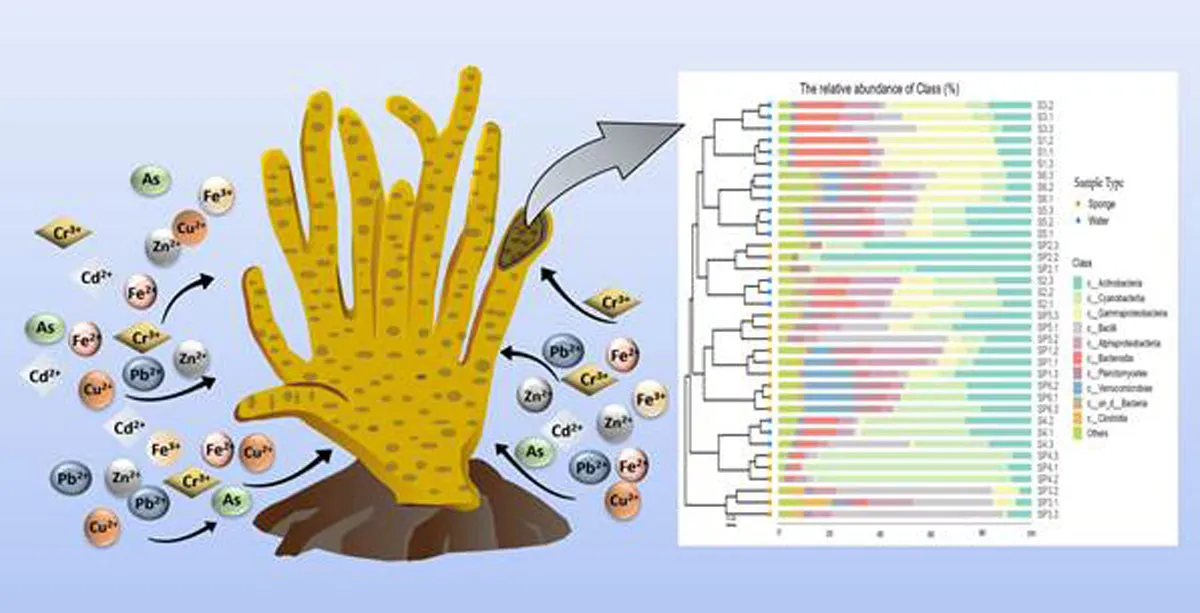
Researchers found that the microbial communities hosted by sponges are distinct from those present in surrounding water bodies and are shaped by both sponge species and habitat. Significantly, the sponges were shown to accumulate much higher concentrations of toxic metals than the ambient environment, highlighting their strong bioaccumulation capacity. This is particularly relevant given the widespread heavy metal contamination across the Gangetic plain.

Beyond metal accumulation, the study revealed that sponge-associated bacteria are enriched with genes linked to metal ion transport, metal resistance and antimicrobial resistance. These functional traits suggest that microbial symbionts actively contribute to detoxification processes and help sponges survive in contaminated environments.

The research underscores the ecological importance of the sponge–microbe partnership and reinforces the potential of freshwater sponges as reliable bioindicators for monitoring pollution. The findings also open new avenues for nature-based bioremediation strategies aimed at restoring polluted freshwater and estuarine ecosystems.

Scientists have identified freshwater sponges and their associated microbial communities as powerful natural allies in tackling toxic metal pollution, offering new hope for sustainable water quality management. A recent study has revealed that these sponges can act both as bioindicators and effective absorbents of harmful metals such as arsenic, lead and cadmium.The findings come from a study published in Microbiology Spectrum by researchers from Bose Institute, an autonomous institute under the Department of Science and Technology, Government of India. The research focused on freshwater sponges from the Sundarban delta, an ecologically sensitive and underexplored region facing increasing pollution pressure.Led by Dr Abhrajyoti Ghosh, Department of Biological Sciences, the study demonstrated that sponge-associated microbial communities play a crucial ecological role in detoxifying polluted waters and supporting ecosystem health. The work was supported by a DST SERB National Post-Doctoral Fellowship awarded to Dr Dhruba Bhattacharya and marks the first report on bacterial diversity in freshwater sponges from the Sundarbans.Researchers found that the microbial communities hosted by sponges are distinct from those present in surrounding water bodies and are shaped by both sponge species and habitat. Significantly, the sponges were shown to accumulate much higher concentrations of toxic metals than the ambient environment, highlighting their strong bioaccumulation capacity. This is particularly relevant given the widespread heavy metal contamination across the Gangetic plain.Beyond metal accumulation, the study revealed that sponge-associated bacteria are enriched with genes linked to metal ion transport, metal resistance and antimicrobial resistance. These functional traits suggest that microbial symbionts actively contribute to detoxification processes and help sponges survive in contaminated environments.The research underscores the ecological importance of the sponge–microbe partnership and reinforces the potential of freshwater sponges as reliable bioindicators for monitoring pollution. The findings also open new avenues for nature-based bioremediation strategies aimed at restoring polluted freshwater and estuarine ecosystems.

Next Story
Technology

Bluebeam launches Task Link and mobile upgrades

Bluebeam, part of the Nemetschek Group, has announced the launch of Task Link along with major upgrades to its iOS and Android applications, aimed at unifying office and field teams across construction projects.Task Link is described as a first-of-its-kind native integration between Bluebeam Revu and GoCanvas, enabling a connected workflow between planning and on-site execution. Through the integration, tasks can be pushed directly from Revu to the field, with real-time updates and automated notifications as work progresses. Field teams can capture verifiable on-site data using GoCanvas mobile..

Next Story
Building Material

Kumaraswamy Invites Envoys to Join Flagship Bharat Steel 2026

Union Minister for Steel and Heavy Industries, HD Kumaraswamy, held an interactive meeting with Ambassadors and diplomatic representatives of key partner countries, inviting them to actively participate in Bharat Steel 2026, the flagship international conference-cum-exhibition of the Ministry of Steel scheduled for April 2026.The meeting saw strong participation from representatives of countries that play a significant role in the global steel value chain. It formed part of the Ministry’s broader outreach efforts to deepen international cooperation and strengthen India’s engagement with ma..

Next Story
Infrastructure Transport

Centre Clears Rs 8.87 Bn Plan for World-class Mumbai Marina

The Union Government has approved a Rs 8.87 billion proposal to develop a world-class marina at Mumbai Harbour, a move expected to significantly boost coastal shipping, maritime tourism and waterfront-led urban development in India’s financial capital.The proposed ‘Viksit Bharat Mumbai Marina’ has been cleared by the Ministry of Ports, Shipping and Waterways in line with the vision of Prime Minister Narendra Modi to create global-standard tourism destinations and strengthen the country’s maritime economy. The project is designed to open up Mumbai’s waterfront for public use while att..

Advertisement

Subscribe to Our Newsletter

Get daily newsletters around different themes from Construction world.

STAY CONNECTED

Advertisement

Advertisement

Advertisement

Advertisement

Open In App