Zero Tolerance Enforced for Violations under Jal Jeevan Mission
WATER & WASTE

Zero Tolerance Enforced for Violations under Jal Jeevan Mission

The Government of India has reiterated a zero-tolerance approach towards financial, procedural and quality-related violations under the Jal Jeevan Mission (JJM), with several states reporting stringent action against erring officials, contractors and agencies.

Six states — Tamil Nadu, Tripura, Gujarat, Assam, Maharashtra and Rajasthan — have imposed penalties and initiated recovery proceedings in cases involving financial irregularities and substandard work. Uttar Pradesh and Tripura reported recoveries from contractors on account of liquidated damages, while Karnataka and Tripura initiated recoveries through forfeiture of earnest money deposits and fixed deposit receipts.

Uttar Pradesh examined 14,264 complaints received through multiple channels, including suo motu cognisance. Enquiries have been completed in 14,212 cases, while 52 remain under process. Action was taken in 434 cases involving 171 departmental officials, 120 contractors and 143 third-party inspection agencies (TPIAs), with the remaining complaints either resolved or found irrelevant.

In Gujarat, irregularities across 620 villages in Mahisagar district led to a reported financial loss of Rs 1.20 billion. Recovery orders were issued against 112 implementing agencies, of which Rs 60.65 million has been recovered so far. All agencies have been debarred, an FIR has been registered, and the CID Crime Branch is investigating the matter. Nine officials and contractors have been arrested to date.

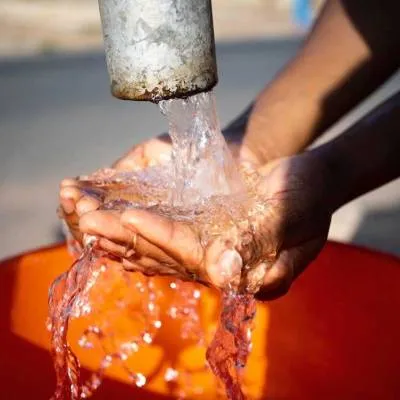
Launched in August 2019, JJM aims to provide safe and adequate tap water to every rural household. As of December 11, 2025, more than 150.76 million rural households — 81.41 per cent of the total — have tap water connections, compared to 30.23 million at the mission’s inception.

According to data from 32 states and Union Territories, action has been taken against 621 departmental officials, 969 contractors and 153 TPIAs. States have been directed to thoroughly examine every complaint, conduct prompt field verification and take disciplinary, contractual and legal action to ensure transparency and accountability under the mission.

The Government of India has reiterated a zero-tolerance approach towards financial, procedural and quality-related violations under the Jal Jeevan Mission (JJM), with several states reporting stringent action against erring officials, contractors and agencies.Six states — Tamil Nadu, Tripura, Gujarat, Assam, Maharashtra and Rajasthan — have imposed penalties and initiated recovery proceedings in cases involving financial irregularities and substandard work. Uttar Pradesh and Tripura reported recoveries from contractors on account of liquidated damages, while Karnataka and Tripura initiated recoveries through forfeiture of earnest money deposits and fixed deposit receipts.Uttar Pradesh examined 14,264 complaints received through multiple channels, including suo motu cognisance. Enquiries have been completed in 14,212 cases, while 52 remain under process. Action was taken in 434 cases involving 171 departmental officials, 120 contractors and 143 third-party inspection agencies (TPIAs), with the remaining complaints either resolved or found irrelevant.In Gujarat, irregularities across 620 villages in Mahisagar district led to a reported financial loss of Rs 1.20 billion. Recovery orders were issued against 112 implementing agencies, of which Rs 60.65 million has been recovered so far. All agencies have been debarred, an FIR has been registered, and the CID Crime Branch is investigating the matter. Nine officials and contractors have been arrested to date.Launched in August 2019, JJM aims to provide safe and adequate tap water to every rural household. As of December 11, 2025, more than 150.76 million rural households — 81.41 per cent of the total — have tap water connections, compared to 30.23 million at the mission’s inception.According to data from 32 states and Union Territories, action has been taken against 621 departmental officials, 969 contractors and 153 TPIAs. States have been directed to thoroughly examine every complaint, conduct prompt field verification and take disciplinary, contractual and legal action to ensure transparency and accountability under the mission.

Next Story
Building Material

Kumaraswamy Invites Envoys to Join Flagship Bharat Steel 2026

Union Minister for Steel and Heavy Industries, HD Kumaraswamy, held an interactive meeting with Ambassadors and diplomatic representatives of key partner countries, inviting them to actively participate in Bharat Steel 2026, the flagship international conference-cum-exhibition of the Ministry of Steel scheduled for April 2026.The meeting saw strong participation from representatives of countries that play a significant role in the global steel value chain. It formed part of the Ministry’s broader outreach efforts to deepen international cooperation and strengthen India’s engagement with ma..

Next Story
Infrastructure Transport

Centre Clears Rs 8.87 Bn Plan for World-class Mumbai Marina

The Union Government has approved a Rs 8.87 billion proposal to develop a world-class marina at Mumbai Harbour, a move expected to significantly boost coastal shipping, maritime tourism and waterfront-led urban development in India’s financial capital.The proposed ‘Viksit Bharat Mumbai Marina’ has been cleared by the Ministry of Ports, Shipping and Waterways in line with the vision of Prime Minister Narendra Modi to create global-standard tourism destinations and strengthen the country’s maritime economy. The project is designed to open up Mumbai’s waterfront for public use while att..

Next Story
Infrastructure Urban

Study Highlights Freshwater Sponges’ Role in Fighting Metal Pollution

Scientists have identified freshwater sponges and their associated microbial communities as powerful natural allies in tackling toxic metal pollution, offering new hope for sustainable water quality management. A recent study has revealed that these sponges can act both as bioindicators and effective absorbents of harmful metals such as arsenic, lead and cadmium.The findings come from a study published in Microbiology Spectrum by researchers from Bose Institute, an autonomous institute under the Department of Science and Technology, Government of India. The research focused on freshwater spong..

Advertisement

Subscribe to Our Newsletter

Get daily newsletters around different themes from Construction world.

STAY CONNECTED

Advertisement

Advertisement

Advertisement

Advertisement

Open In App