
Are buildings designed for seismic performance?
Concrete

Are buildings designed for seismic performance?

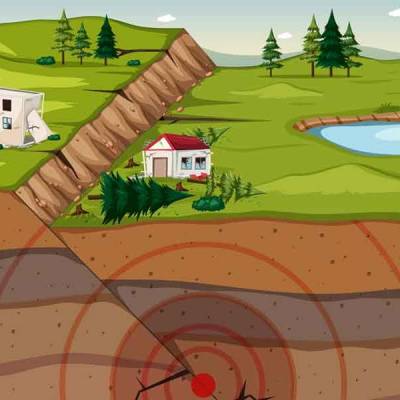
A survey reported by the National Disaster Management Authority (NDMA) has found that in the past 25 years, over 25,000 human fatalities were caused primarily by the collapse of buildings during earthquakes (2015). Reports also indicate that the observed performance of reinforced concrete (RC) buildings is highly unsatisfactory. While a well-designed RC building should be able to withstand an earthquake of up to 7.5 on the Richter scale, during the 2001 Bhuj earthquake in Gujarat, RC buildings collapsed from an earthquake of just 6 on the Richter scale.

According to Dr Paresh Shah, Professor & Dean, Faculty of Technology, CEPT University, “Many designers do not have enough expertise for earthquake-resistant design or ductile detailing of structures; so, their designed structures may be unsafe in case of an earthquake of larger magnitude.”

And Dr Pramod Kumar Gupta, Professor, Structural Engineering, Department of Civil Engineering, IIT-Roorkee, says, “We have seen the performance of different buildings constructed at different places over the past 100 years. The intensity of earthquakes at different places is not same.”

SHRIYAL SETHUMADHAVAN

A survey reported by the National Disaster Management Authority (NDMA) has found that in the past 25 years, over 25,000 human fatalities were caused primarily by the collapse of buildings during earthquakes (2015). Reports also indicate that the observed performance of reinforced concrete (RC) buildings is highly unsatisfactory. While a well-designed RC building should be able to withstand an earthquake of up to 7.5 on the Richter scale, during the 2001 Bhuj earthquake in Gujarat, RC buildings collapsed from an earthquake of just 6 on the Richter scale. According to Dr Paresh Shah, Professor & Dean, Faculty of Technology, CEPT University, “Many designers do not have enough expertise for earthquake-resistant design or ductile detailing of structures; so, their designed structures may be unsafe in case of an earthquake of larger magnitude.” And Dr Pramod Kumar Gupta, Professor, Structural Engineering, Department of Civil Engineering, IIT-Roorkee, says, “We have seen the performance of different buildings constructed at different places over the past 100 years. The intensity of earthquakes at different places is not same.” SHRIYAL SETHUMADHAVAN

Next Story
Infrastructure Urban

Mount Invests Rs 250 Cr, Adds PUF & PEB Plants, 400+ Jobs

TUMKUR, Karnataka, January 8, 2025 - Mount Roofing & Structures Private Limited, one of India's  fastest-growing manufacturers in PUF and a leading solutions provider across Pre-Engineered Building  (PEB) and Polycarbonate sheets, simultaneously inaugurated its second fully automated continuous  Sandwich Panel manufacturing line and a new PEB manufacturing plant at its integrated campus in  Tumkur." The milestone expansion, part of a total investment of INR 250 crores, marks a significant  advancement in the company's commitment to engineered performance, manu..

Next Story
Infrastructure Urban

Titan Intech Strengthens UltraLED Push With Global LED Veteran

Titan Intech has announced the induction of global LED industry veteran Su Piow Ko to its Board of Directors, marking a strategic step in strengthening its UltraLED Displays roadmap and building globally competitive LED display solutions from India.The appointment aligns with Titan Intech’s ambition to position India as a hub for advanced, high-quality LED display manufacturing. With an increased focus on UltraLED Displays, the company aims to enhance technical governance, raise manufacturing standards and expand its presence across global markets.Su Piow Ko brings over three decades of inte..

Next Story
Infrastructure Urban

Dun & Bradstreet Flags New Growth Engines in India 2026 Outlook

Dun & Bradstreet has released its India 2026: D&B’s Perspective report, projecting a stable macroeconomic environment underpinned by fresh opportunities for productivity-led and inclusive growth. The report outlines how India’s next growth phase will be driven by digitised logistics, trusted data ecosystems, clean energy and rising city vitality.According to the outlook, India’s GDP growth is expected to reach around 6.6 per cent by FY2027, supported by resilient consumer demand and sustained public investment. Manufacturing is seen entering a new phase, moving beyond scale towar..

Advertisement

Subscribe to Our Newsletter

Get daily newsletters around different themes from Construction world.

STAY CONNECTED

Advertisement

Advertisement

Advertisement

Advertisement

Open In App