Disbursals of financing to contractors needs to be done in a timely manner
RAILWAYS & METRO RAIL

Disbursals of financing to contractors needs to be done in a timely manner

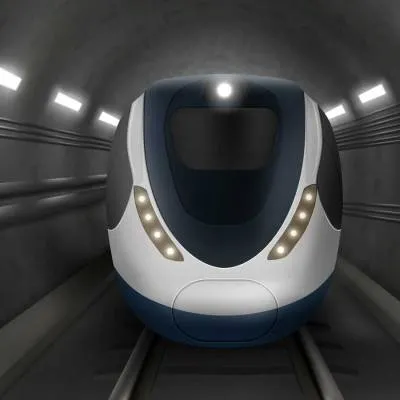
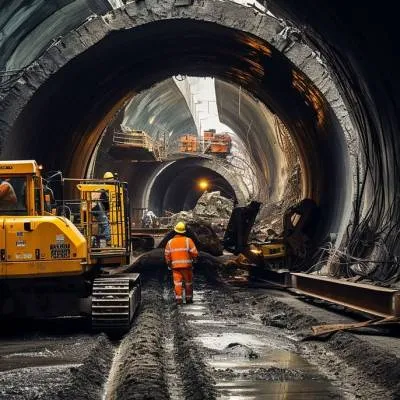
Metro-rail lines are one of the best mass-transit options for the public in congested city areas. Rahul Shah, COO-Urban Infrastructure, Tata Projects, shares his views and elaborates on the big construction opportunities coming up in this segmentwith SHRIYAL SETHUMADHAVAN. 

How do you view the current growth and construction opportunity in this segment?
There are 67 metro-rail projects across 27 cities in India. Of these, nearly 54 projects are at various stages of development and many more are being planned. Hence, huge potential exist for setting up metro-rail lines across Indian cities.

How do you view the availability of funds for project execution?
These projects are economically viable and, therefore, will not face funding constraints. In addition, many domestic and international financial institutions are keen to fund metro-rail projects. 

How do you view the construction opportunities in the sector for the next five years?
We are currently undertaking projects in Mumbai, Pune and Ahmedabad. We have also recently executed metro-rail projects within stipulated timelines in Lucknow and Ghaziabad.
We feel there is a huge potential to setup metro-rail lines across Indian cities. About 650 km are currently operational, and another 600 km of sanctioned metro-rail lines are under construction and are expected to be operational in the next five years. In addition, proposals for about 1,000 km are under planning. This gives us immense confidence in the long-term potential of the sector and shall contribute significantly to our company’s overall growth. 

Any recommendations to give a further fillip to the sector?
By 2030, it is estimated that India will have 71 metropolitan cities, of which seven would have a population of over 10 million. This will make our cities denser and congested, thereby necessitating a reliable and top-notch, intra-city commuting option. Here, metro-rail networks will emerge as the best mass public transportation model that can be adopted nationwide. However, we feel the decision-making process and awarding of contracts needs to be faster. The issue of securing local-level permissions needs to be simplified and quicker. Right of way is an issue that needs to be addressed so that timely project completion is achieved. Disbursals of financing to contractors need to be done in a timely manner. This will not only support the government’s developmental agenda but also spur domestic industry.

Considering the metro-rail and other construction segments, which sectors will the company’s business focus on?
As an end-to-end player in the infrastructure sector, we expect enhanced opportunities across the entire business, thereby spurring the company onto higher growth levels in future. We feel the Government will continue to focus on infrastructure projects and expedite their implementation. We foresee huge potential in metro-rail, roads, water supply and wastewater management, power and transmission, housing, smart cities, industrial facilities and allied amenities such as construction of hospitals, hotels, educational institutions and tourism facilities. 

Metro-rail lines are one of the best mass-transit options for the public in congested city areas. Rahul Shah, COO-Urban Infrastructure, Tata Projects, shares his views and elaborates on the big construction opportunities coming up in this segmentwith SHRIYAL SETHUMADHAVAN. How do you view the current growth and construction opportunity in this segment?There are 67 metro-rail projects across 27 cities in India. Of these, nearly 54 projects are at various stages of development and many more are being planned. Hence, huge potential exist for setting up metro-rail lines across Indian cities.How do you view the availability of funds for project execution?These projects are economically viable and, therefore, will not face funding constraints. In addition, many domestic and international financial institutions are keen to fund metro-rail projects. How do you view the construction opportunities in the sector for the next five years?We are currently undertaking projects in Mumbai, Pune and Ahmedabad. We have also recently executed metro-rail projects within stipulated timelines in Lucknow and Ghaziabad.We feel there is a huge potential to setup metro-rail lines across Indian cities. About 650 km are currently operational, and another 600 km of sanctioned metro-rail lines are under construction and are expected to be operational in the next five years. In addition, proposals for about 1,000 km are under planning. This gives us immense confidence in the long-term potential of the sector and shall contribute significantly to our company’s overall growth. Any recommendations to give a further fillip to the sector?By 2030, it is estimated that India will have 71 metropolitan cities, of which seven would have a population of over 10 million. This will make our cities denser and congested, thereby necessitating a reliable and top-notch, intra-city commuting option. Here, metro-rail networks will emerge as the best mass public transportation model that can be adopted nationwide. However, we feel the decision-making process and awarding of contracts needs to be faster. The issue of securing local-level permissions needs to be simplified and quicker. Right of way is an issue that needs to be addressed so that timely project completion is achieved. Disbursals of financing to contractors need to be done in a timely manner. This will not only support the government’s developmental agenda but also spur domestic industry.Considering the metro-rail and other construction segments, which sectors will the company’s business focus on?As an end-to-end player in the infrastructure sector, we expect enhanced opportunities across the entire business, thereby spurring the company onto higher growth levels in future. We feel the Government will continue to focus on infrastructure projects and expedite their implementation. We foresee huge potential in metro-rail, roads, water supply and wastewater management, power and transmission, housing, smart cities, industrial facilities and allied amenities such as construction of hospitals, hotels, educational institutions and tourism facilities. 

Next Story
Infrastructure Transport

Dhalbhumgarh Airport Faces 150-km Rule Hurdle

The issue has resurfaced following a recent statement by Union Civil Aviation Minister Ram Mohan Naidu, who said that under existing aviation policy, a new greenfield airport is generally not permitted within an aerial distance of 150 kilometres of an operational civilian airport. He added, however, that if a formal proposal is submitted, its impact on the existing airport can be examined and relaxations may be considered on a case-by-case basis. While the clarification has revived some hope for Dhalbhumgarh, it has also underlined the scale of the technical challenge facing the project. Unde..

Next Story
Infrastructure Transport

Stakeholders Seek Parallel Ops For Vizag Airports

With road and metro rail links to Bhogapuram still several years away, stakeholders in north Andhra Pradesh have renewed demands to continue civil operations at INS Dega even after the commissioning of Bhogapuram International Airport. The new airport is expected to begin commercial operations from June. Officials said close to 80 per cent of the airport infrastructure at Bhogapuram, including the terminal building and internal approach roads, has already been completed. However, inadequate external connectivity remains a key concern. Making a case for parallel operations, Andhra Pradesh Air ..

Next Story
Infrastructure Transport

Govt To Roll Out V2V Tech To Cut Road Crashes

In an effort to curb road accidents, particularly in low-visibility conditions such as dense fog, the government is set to roll out vehicle-to-vehicle (V2V) communication technology that will allow cars to exchange real-time data and alert drivers to potential dangers. The announcement was made by Union Road Transport and Highways Minister Nitin Gadkari after the 43rd meeting of the Transport Development Council. The technology involves installing an on-board unit (OBU) in vehicles, enabling wireless data exchange between nearby cars. This will allow vehicles to share information such as spee..

Advertisement

Subscribe to Our Newsletter

Get daily newsletters around different themes from Construction world.

STAY CONNECTED

Advertisement

Advertisement

Advertisement

Advertisement

Open In App