India's Cement Sector Cuts Energy Use, but Worker Safety Worsens
Cement

India's Cement Sector Cuts Energy Use, but Worker Safety Worsens

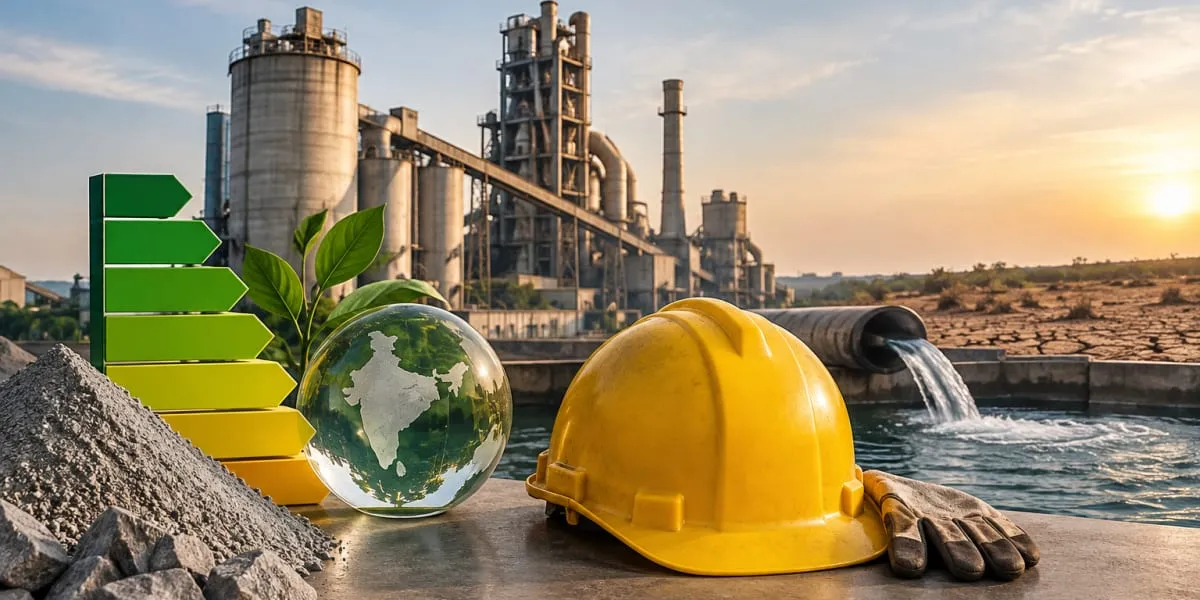
India's cement sector has improved its energy and carbon efficiency, but rising groundwater use in water-stressed regions and deteriorating worker safety remain significant concerns, according to a report by the International Forum for Environment, Sustainability & Technology (iFOREST). The findings also highlighted weak policy implementation and gaps in sustainability reporting.

India, the world's second-largest cement producer, uses about 2.54 gigajoules of energy per tonne (GJ/t), below the global average of 2.88 GJ/t. However, renewable sources accounted for only 5.1 per cent of the sector's energy mix, indicating continued dependence on conventional sources.

The report assessed 18 cement companies against 107 Business Responsibility and Sustainability Reporting indicators for FY24 and FY25. The companies covered 87 per cent of India's cement production. Carbon emissions intensity declined from 0.58 to 0.57 tonnes of carbon dioxide per tonne, but total emissions increased 4 per cent to 224.3 mn t, equivalent to about 6 to 7 per cent of India's overall emissions.

Overall water withdrawal declined 9.5 per cent during the study period, while withdrawals in water-stressed areas, mainly in Rajasthan, increased by more than 20 per cent. Groundwater's share of withdrawals in these areas rose from 27 per cent to 38 per cent, raising concerns about the sector's impact on vulnerable water resources.

The sector employs about 228,000 people, including 63 per cent contractual workers, 3.1 per cent women and 0.07 per cent persons with disabilities. Women in key managerial roles earned 26.8 per cent less than men, while median pay for women workers fell 11.1 per cent in FY25 as men's pay increased. Worker injuries rose 36.5 per cent to 359, and fatalities increased from 17 to 22, with workers accounting for more than 90 per cent of deaths.

iFOREST recommended cement-specific reporting guidance, standardised metrics, mandatory production disclosure and third-party verification. It also called for environmental, social and governance policies to be integrated into business strategies and implemented more effectively on the ground.

India's cement sector has improved its energy and carbon efficiency, but rising groundwater use in water-stressed regions and deteriorating worker safety remain significant concerns, according to a report by the International Forum for Environment, Sustainability & Technology (iFOREST). The findings also highlighted weak policy implementation and gaps in sustainability reporting. India, the world's second-largest cement producer, uses about 2.54 gigajoules of energy per tonne (GJ/t), below the global average of 2.88 GJ/t. However, renewable sources accounted for only 5.1 per cent of the sector's energy mix, indicating continued dependence on conventional sources. The report assessed 18 cement companies against 107 Business Responsibility and Sustainability Reporting indicators for FY24 and FY25. The companies covered 87 per cent of India's cement production. Carbon emissions intensity declined from 0.58 to 0.57 tonnes of carbon dioxide per tonne, but total emissions increased 4 per cent to 224.3 mn t, equivalent to about 6 to 7 per cent of India's overall emissions. Overall water withdrawal declined 9.5 per cent during the study period, while withdrawals in water-stressed areas, mainly in Rajasthan, increased by more than 20 per cent. Groundwater's share of withdrawals in these areas rose from 27 per cent to 38 per cent, raising concerns about the sector's impact on vulnerable water resources. The sector employs about 228,000 people, including 63 per cent contractual workers, 3.1 per cent women and 0.07 per cent persons with disabilities. Women in key managerial roles earned 26.8 per cent less than men, while median pay for women workers fell 11.1 per cent in FY25 as men's pay increased. Worker injuries rose 36.5 per cent to 359, and fatalities increased from 17 to 22, with workers accounting for more than 90 per cent of deaths. iFOREST recommended cement-specific reporting guidance, standardised metrics, mandatory production disclosure and third-party verification. It also called for environmental, social and governance policies to be integrated into business strategies and implemented more effectively on the ground.

Related Stories

Gold Stories

Next Story
Resources

Hettich India And ECO Schulte Form Joint Venture In India

Hettich India and German company ECO Schulte have announced a strategic joint venture to strengthen their presence in India's architectural hardware market. The partnership was announced at ACETECH Mumbai on November 20, 2026, bringing together the two family-owned businesses with a combined engineering heritage of 238 years.The venture combines Hettich's expertise in furniture fittings and interior solutions with ECO Schulte's experience in architectural door hardware and engineered door systems. Its focus will span residential, commercial, institutional and infrastructure projects.Hettich, w..

Next Story
Real Estate

Address Maker sells over 200 Apollo Address plots in six weeks

The Address Maker Group has sold more than two-thirds of the inventory at its Apollo Address villa-plot development in Nelamangala, North-West Bengaluru, within six weeks of its launch. With over 200 plots purchased and approximately 100 remaining, the project has recorded the fastest sales pace in the developer's history.Spread across 23 acres within a larger 90-acre township, Apollo Address offers villa plots ranging from 1,200 to 2,400 sq ft. Inspired by classical Greek architecture, the development features planned infrastructure, landscaped open spaces and residential amenities.Nearly 30 ..

Next Story
Equipment

Zoomlion strengthens equipment partnerships in Australia

Zoomlion Heavy Industry Science & Technology has reaffirmed its commitment to expanding operations in Australia, with Chairman and CEO Zhan Chunxin meeting customers and business partners in Sydney to strengthen long-term partnerships and discuss opportunities for closer collaboration.The meeting, held on 4 November 2026, focused on equipment quality, technical support, spare parts availability, local training and customer service improvements. Representatives from the tower crane, concrete machinery, earthmoving, aerial work platform, agricultural machinery and financial sectors participa..

Advertisement

Subscribe to Our Newsletter

Get daily newsletters around different themes from Construction world.

STAY CONNECTED

Advertisement

SPECIAL OFFER
QR Code