



JSW Cement Opens Nagaur Integrated Plant in North India
Cement

JSW Cement Opens Nagaur Integrated Plant in North India

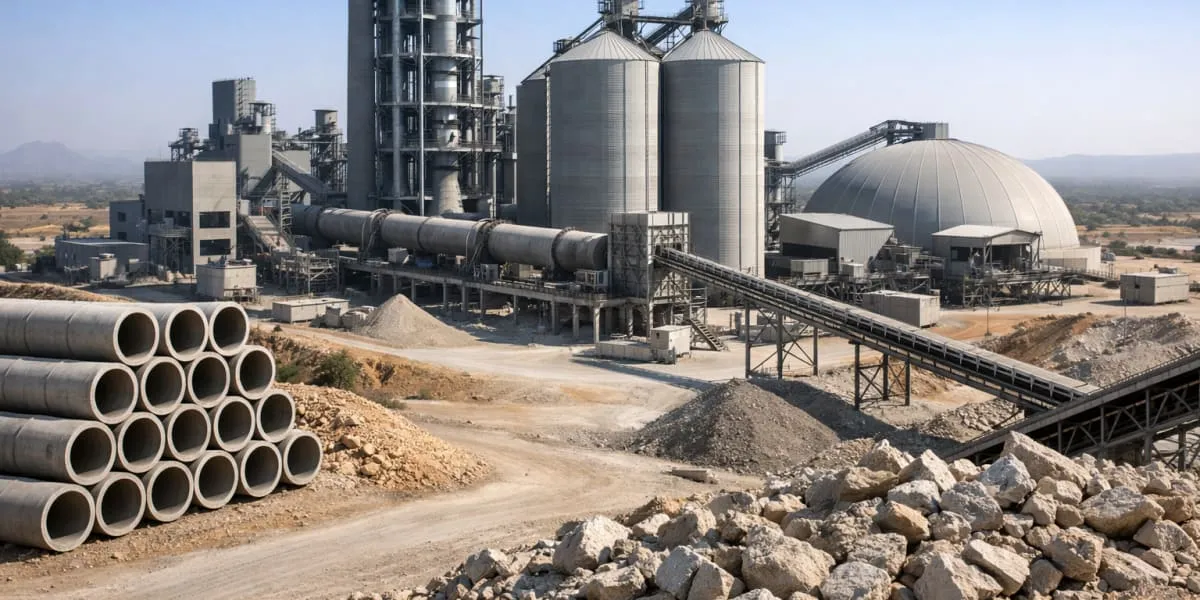
JSW Cement has commenced production at a new greenfield integrated cement manufacturing plant in Nagaur in Rajasthan, marking its first such facility in north India. The commissioning expands the company’s national footprint and raises its total cement grinding capacity to 24.1 million tonnes per annum (MTPA) and its total clinker manufacturing capacity, including the capacity at its joint venture JSW Cement FZC, to nine point seven four MTPA. The development is positioned to strengthen supply chains to key high growth markets in the region.

The Nagaur integrated plant comprises a three point three zero MTPA clinkerisation unit and a two point five zero MTPA cement grinding unit, with an additional one point zero MTPA grinding unit currently under construction. The site is strategically located to serve Rajasthan, Haryana, Punjab and the National Capital Region. The facility aims to improve logistical efficiencies and reduce lead times for customers across northern markets.

Project funding has been arranged through a strategic mix of equity and long-term debt, with the company allocating Rs eight billion (bn) from the fresh issue proceeds of its initial public offering towards part financing of the unit. Company leadership indicated that the plant was commissioned within 21 months and that the expansion places the business on track to reach a mid-term capacity target of 41.85 MTPA on or before FY29 and a long-term ambition of 60 MTPA. The move forms part of a broader plan to position the company as a pan-India player.

The Nagaur plant incorporates several sustainability measures including provisions for co-processing of alternative fuels in the kiln and a seven km overland belt conveyor to transport limestone from the mines, thereby reducing road transport emissions. The world-class facility will also soon feature a 16 megawatt (MW) Waste Heat Recovery System (WHRS) to capture and reuse process heat and lower the carbon footprint. These measures are intended to support the company’s commitment to environmentally responsible manufacturing.

JSW Cement has commenced production at a new greenfield integrated cement manufacturing plant in Nagaur in Rajasthan, marking its first such facility in north India. The commissioning expands the company’s national footprint and raises its total cement grinding capacity to 24.1 million tonnes per annum (MTPA) and its total clinker manufacturing capacity, including the capacity at its joint venture JSW Cement FZC, to nine point seven four MTPA. The development is positioned to strengthen supply chains to key high growth markets in the region. The Nagaur integrated plant comprises a three point three zero MTPA clinkerisation unit and a two point five zero MTPA cement grinding unit, with an additional one point zero MTPA grinding unit currently under construction. The site is strategically located to serve Rajasthan, Haryana, Punjab and the National Capital Region. The facility aims to improve logistical efficiencies and reduce lead times for customers across northern markets. Project funding has been arranged through a strategic mix of equity and long-term debt, with the company allocating Rs eight billion (bn) from the fresh issue proceeds of its initial public offering towards part financing of the unit. Company leadership indicated that the plant was commissioned within 21 months and that the expansion places the business on track to reach a mid-term capacity target of 41.85 MTPA on or before FY29 and a long-term ambition of 60 MTPA. The move forms part of a broader plan to position the company as a pan-India player. The Nagaur plant incorporates several sustainability measures including provisions for co-processing of alternative fuels in the kiln and a seven km overland belt conveyor to transport limestone from the mines, thereby reducing road transport emissions. The world-class facility will also soon feature a 16 megawatt (MW) Waste Heat Recovery System (WHRS) to capture and reuse process heat and lower the carbon footprint. These measures are intended to support the company’s commitment to environmentally responsible manufacturing.

Next Story
Infrastructure Urban

Greenply Advances Sustainability with ESG and Plantation Drive

Greenply Industries Limited has recently reinforced its sustainability commitment by integrating environmental, social and governance (ESG) principles across its operations. The company continues to align its growth strategy with environmental stewardship, resource efficiency and transparent governance.Guided by its ESG framework, Greenply focuses on measuring and managing its environmental and social impact while setting clear, measurable sustainability goals. This approach ensures transparency and drives continuous improvement across its business processes.A key highlight of its sustainabili..

Next Story
Infrastructure Urban

BIO-ROXX Boosts Efficiency at Mühlacker Biomethane Plant

The Mühlacker biomethane plant in Baden-Württemberg, Germany, has recently enhanced its operational efficiency by integrating the BIO-ROXX substrate preparation module from Wangen Pumps. The system improves substrate consistency, handles long fibres, and effectively removes solid contaminants, addressing the growing complexity of biogas feedstocks.The plant, established in 2007, processes around 30,000 tonnes of feedstock annually from over 120 suppliers, producing biomethane and fertilisers. With increasing use of long-fibre materials such as straw and manure, the existing dry infeed system..

Next Story
Infrastructure Urban

HIRECT Launches Copper Conductors for High-Power Transformers

Hind Rectifiers (HIRECT) has recently announced the commercial availability of advanced copper conductors from its expanded facility in Sinnar, Nashik. The new product portfolio includes Continuously Transposed Conductors (CTC), Paper Insulated Copper Conductors (PICC), and Enameled Paper Insulated Copper Conductors (EPICC), designed for high-power transformers, traction motors, and wound components.The conductors are engineered to support key infrastructure sectors such as power grids, railway systems, and industrial power networks, while also strengthening the company’s presence in global ..

Advertisement

Subscribe to Our Newsletter

Get daily newsletters around different themes from Construction world.

STAY CONNECTED

Advertisement

Advertisement

Advertisement