Passive House Conference Highlights Energy-Efficient Construction
Real Estate

Passive House Conference Highlights Energy-Efficient Construction

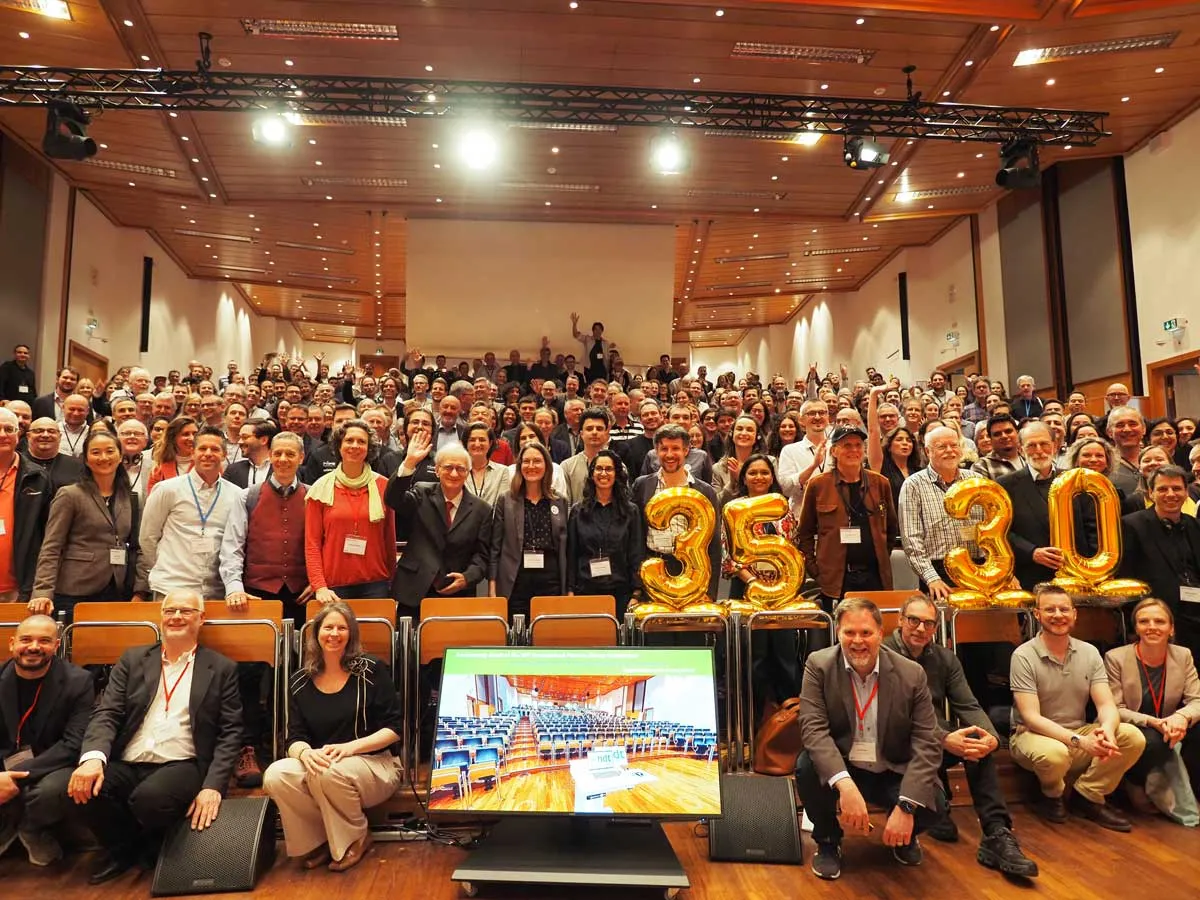
The 28th International Passive House Conference in Essen, Germany, gathered around 450 participants to discuss climate-friendly, energy-efficient buildings. For two days, the Haus der Technik hosted presentations and debates focused on renovation to the EnerPHit standard and sustainable social housing, alongside anniversary celebrations marking 35 years since the first Passive House and 30 years of the Passive House Institute.

Inaugurated by the Passive House Institute with Katharina Schubert (NRW.Energy4Climate), Michael Theben (North Rhine-Westphalian Ministry of Economic Affairs), and Paula Brandmeyer (Deutsche Umwelthilfe), the conference emphasised substantial improvements to existing building stock rather than superficial renovations. Jan Steiger and László Lepp highlighted that high energy efficiency and renewable energy integration complement each other and are crucial to making energy affordable for low-income households.

Several international retrofit projects were showcased. In Groningen, Netherlands, 119 owner-occupied flats were upgraded while residents remained in place, achieving the EnerPHit standard with reduced energy costs, enhanced comfort, and increased property value. A 1962 office building in Brittany, France, overcame asbestos challenges through prefabricated elements to meet EnerPHit requirements. In New York, a historic fire station was converted into four energy-efficient apartments, demonstrating Passive House components’ applicability to heritage structures.

Affordable housing retrofits were also highlighted. Tavros, near Athens, involved eight low-income households and aimed to reduce heating and cooling energy use by 90 per cent while enhancing living standards. Training local tradespeople and refugees addressed the labour shortage, as part of the EU-backed RINNO project. The building’s rooftop photovoltaics achieved the EnerPHit Plus standard, serving as a model for 250 similar buildings in the area.

Other international projects underscored the global relevance of sustainable social housing. Scotland and Cyprus implemented energy-efficient renovations, while Austria’s Neue Heimat Tirol upgraded 3,800 homes in Innsbruck, creating 5,000 Passive House standard social housing units with integrated rooftop solar systems covering electricity and heating costs. Harald Konrad Malzer emphasised that energy-efficient construction is both cost-effective and resilient.

In New York’s Harlem, the Sendero Verde development delivered over 700 affordable units, complemented by communal health, education, and green spaces. Architect Deborah Moelis highlighted the improved quality of life, with Dragoș-Ionut Arnăutu certifying adherence to Passive House standards. In Ontario, Canada, Dave Fraser presented a 24-unit social housing project using prefabricated elements, stressing that Passive House buildings minimise long-term operating costs, boost user satisfaction, and reduce vacancy rates.

Wolfgang Feist reflected on the origins of Passive House, recalling initial scepticism when he and three families built the first house in Darmstadt in 1991. Lessons from the 1970s energy crises and research in southern China inspired the approach, incorporating airtightness, thermal bridge prevention, triple-glazed windows, and heat-recovery ventilation. Amory Lovins’ visit confirmed its practical value, remarking, “This isn’t just a scientific experiment! It’s the solution!”

The Passive House Institute, founded in 1996, continues to drive energy transition through clear objectives, qualified experts, reliable planning tools, specialist training, and quality assurance of buildings and components. Specialist exhibitions ran alongside the conference, showcasing energy-efficient windows, ventilation units, and airtightness testing systems. Participants visited exemplary kindergartens, student hostels, and climate-friendly urban districts in Hilden, Düsseldorf, and Cologne, cementing the practical lessons of sustainable building design.

The 28th International Passive House Conference in Essen, Germany, gathered around 450 participants to discuss climate-friendly, energy-efficient buildings. For two days, the Haus der Technik hosted presentations and debates focused on renovation to the EnerPHit standard and sustainable social housing, alongside anniversary celebrations marking 35 years since the first Passive House and 30 years of the Passive House Institute.Inaugurated by the Passive House Institute with Katharina Schubert (NRW.Energy4Climate), Michael Theben (North Rhine-Westphalian Ministry of Economic Affairs), and Paula Brandmeyer (Deutsche Umwelthilfe), the conference emphasised substantial improvements to existing building stock rather than superficial renovations. Jan Steiger and László Lepp highlighted that high energy efficiency and renewable energy integration complement each other and are crucial to making energy affordable for low-income households.Several international retrofit projects were showcased. In Groningen, Netherlands, 119 owner-occupied flats were upgraded while residents remained in place, achieving the EnerPHit standard with reduced energy costs, enhanced comfort, and increased property value. A 1962 office building in Brittany, France, overcame asbestos challenges through prefabricated elements to meet EnerPHit requirements. In New York, a historic fire station was converted into four energy-efficient apartments, demonstrating Passive House components’ applicability to heritage structures.Affordable housing retrofits were also highlighted. Tavros, near Athens, involved eight low-income households and aimed to reduce heating and cooling energy use by 90 per cent while enhancing living standards. Training local tradespeople and refugees addressed the labour shortage, as part of the EU-backed RINNO project. The building’s rooftop photovoltaics achieved the EnerPHit Plus standard, serving as a model for 250 similar buildings in the area.Other international projects underscored the global relevance of sustainable social housing. Scotland and Cyprus implemented energy-efficient renovations, while Austria’s Neue Heimat Tirol upgraded 3,800 homes in Innsbruck, creating 5,000 Passive House standard social housing units with integrated rooftop solar systems covering electricity and heating costs. Harald Konrad Malzer emphasised that energy-efficient construction is both cost-effective and resilient.In New York’s Harlem, the Sendero Verde development delivered over 700 affordable units, complemented by communal health, education, and green spaces. Architect Deborah Moelis highlighted the improved quality of life, with Dragoș-Ionut Arnăutu certifying adherence to Passive House standards. In Ontario, Canada, Dave Fraser presented a 24-unit social housing project using prefabricated elements, stressing that Passive House buildings minimise long-term operating costs, boost user satisfaction, and reduce vacancy rates.Wolfgang Feist reflected on the origins of Passive House, recalling initial scepticism when he and three families built the first house in Darmstadt in 1991. Lessons from the 1970s energy crises and research in southern China inspired the approach, incorporating airtightness, thermal bridge prevention, triple-glazed windows, and heat-recovery ventilation. Amory Lovins’ visit confirmed its practical value, remarking, “This isn’t just a scientific experiment! It’s the solution!”The Passive House Institute, founded in 1996, continues to drive energy transition through clear objectives, qualified experts, reliable planning tools, specialist training, and quality assurance of buildings and components. Specialist exhibitions ran alongside the conference, showcasing energy-efficient windows, ventilation units, and airtightness testing systems. Participants visited exemplary kindergartens, student hostels, and climate-friendly urban districts in Hilden, Düsseldorf, and Cologne, cementing the practical lessons of sustainable building design.

Next Story
Infrastructure Transport

Afcons Secures Rs 53.01 Billion Vadhvan Breakwater Contract

Afcons Infrastructure has received the Letter of Award from Vadhvan Port Project for the construction of a 10.14-km-long breakwater at the upcoming Vadhvan Port in Maharashtra. Valued at Rs 53.01 billion, the project will create what is set to become the second longest breakwater in the world upon completion.The contract marks a significant milestone for the marine infrastructure specialist and is expected to play a crucial role in the development of Vadhvan Port, envisaged as India's largest public port and one of the world's biggest container ports.Krishnamurthy Subramanian, Executive Chairm..

Next Story
Infrastructure Energy

India Clean Industry Pipeline Grows 30%

India’s clean industry project pipeline has grown by 30 per cent over a six-month period, reflecting rising interest in low-carbon industrial growth amid geopolitical and supply-chain uncertainty.Mission Possible Partnership’s latest Global Project Tracker shows that India now has the world’s third-largest clean industrial project pipeline by project count, after China and the United States. The country has 65 projects across four sectors and 11 states, representing an estimated $433.07 billion investment opportunity in clean fuels, chemicals and low-carbon manufacturing.The pipeline inc..

Next Story
Infrastructure Urban

Kärcher Showcases Professional Cleaning Solutions

Kärcher India recently showcased its professional cleaning solutions portfolio for commercial, industrial, hospitality, healthcare, retail, automotive and institutional applications. The range includes cleaning agents and detergents designed to support efficiency, material safety, operational reliability and hygiene across multiple environments.Under floor cleaning, Kärcher offers solutions such as FloorPro Deep Cleaner RM 751, FloorPro Shine Cleaner RM 755, FloorPro Fine Stoneware Cleaner RM 753, FloorPro Crystallising Agent RM 749 and High Gloss Crystallising Powder RM 775. These products ..

Advertisement

Subscribe to Our Newsletter

Get daily newsletters around different themes from Construction world.

STAY CONNECTED

Advertisement

Advertisement

Advertisement