


India Reaches One Billion Tonne Coal Production Again
COAL & MINING

India Reaches One Billion Tonne Coal Production Again

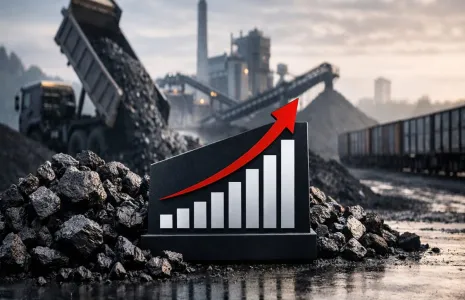
The Government of India has achieved one billion tonne (bn t) coal production on 20 March 2026 for the second year running. The milestone underscores the country’s growing self?reliance in the energy sector and its commitment to ensuring uninterrupted fuel supply to key industries. The achievement reflects sustained and coordinated efforts across the coal sector and the invaluable contribution of all stakeholders. Officials emphasised continued collaboration between public and private entities to sustain output and to address operational challenges across mining, transportation and handling.

The elevated production level has enabled the country to meet rising energy demand while supporting the power sector to maintain record?high coal stock levels at coal?based thermal power plants. The outcome is credited to robust planning, efficient execution and strengthened coordination across the coal value chain. These developments have contributed meaningfully to the nation’s economic growth trajectory. Improvements in distribution and rail and road logistics are being prioritised to ensure timely delivery to thermal plants and to minimise stock disruptions.

The Ministry of Coal said it will remain steadfast in fostering a stable, transparent and performance?driven ecosystem through proactive policy interventions and rigorous performance monitoring. Close engagement with industry participants is ensuring reliable coal availability and seamless operations across sectors. The ministry linked the achievement to the national vision of Viksit Bharat 2047 and the broader resolve to build a resilient energy framework. Monitoring mechanisms are being strengthened to track production, stock levels and movement throughout the supply chain for stakeholders.

Officials noted that sustained domestic production capacity reduces reliance on imports and underpins energy security for manufacturing, power generation and other fuel?dependent industries. Continued focus will centre on maintaining production levels, improving logistics and enhancing safety and environmental standards within mines. The government intends to balance increased output with operational safeguards to support sustainable development.

The Government of India has achieved one billion tonne (bn t) coal production on 20 March 2026 for the second year running. The milestone underscores the country’s growing self?reliance in the energy sector and its commitment to ensuring uninterrupted fuel supply to key industries. The achievement reflects sustained and coordinated efforts across the coal sector and the invaluable contribution of all stakeholders. Officials emphasised continued collaboration between public and private entities to sustain output and to address operational challenges across mining, transportation and handling. The elevated production level has enabled the country to meet rising energy demand while supporting the power sector to maintain record?high coal stock levels at coal?based thermal power plants. The outcome is credited to robust planning, efficient execution and strengthened coordination across the coal value chain. These developments have contributed meaningfully to the nation’s economic growth trajectory. Improvements in distribution and rail and road logistics are being prioritised to ensure timely delivery to thermal plants and to minimise stock disruptions. The Ministry of Coal said it will remain steadfast in fostering a stable, transparent and performance?driven ecosystem through proactive policy interventions and rigorous performance monitoring. Close engagement with industry participants is ensuring reliable coal availability and seamless operations across sectors. The ministry linked the achievement to the national vision of Viksit Bharat 2047 and the broader resolve to build a resilient energy framework. Monitoring mechanisms are being strengthened to track production, stock levels and movement throughout the supply chain for stakeholders. Officials noted that sustained domestic production capacity reduces reliance on imports and underpins energy security for manufacturing, power generation and other fuel?dependent industries. Continued focus will centre on maintaining production levels, improving logistics and enhancing safety and environmental standards within mines. The government intends to balance increased output with operational safeguards to support sustainable development.

Next Story
Real Estate

FractoProp Secures SEBI Nod for Ridhama Real Estate Fund

FractoProp, a real estate-focused fund management company, has received registration from the Securities and Exchange Board of India (SEBI) for the Ridhama Real Estate Fund, a Category II Alternative Investment Fund (AIF). The approval marks a milestone as the firm expands its platform to offer structured real estate investment opportunities to institutional and sophisticated investors. The fund is targeting a corpus of Rs 50 crore, with a greenshoe option of up to Rs 75 crore, taking the total potential fund size to Rs 125 crore. The Ridhama Real Estate Fund will focus on structured credit ..

Next Story
Real Estate

Flex Spaces Reshaping Tier-2 Office Markets

India's leading cosmopolitan centres such as Bengaluru, Hyderabad, NCR and MMR continue to anchor the office market, but absorption surged by almost 30 per cent to 78.2 million (mn) sq ft in 2025 compared with 2023. Over 40 per cent of this demand was driven by Global Capability Centres (GCCs), whose footprint expanded by almost 50 per cent to approximately 35 million (mn) sq ft. As global uncertainty persists, large international companies regard India as a stable safe haven and are shifting focus from saturated Tier-1 markets to Tier-2 cities. The structural shift is underpinned by governmen..

Next Story
Infrastructure Urban

Bharat Electricity Summit To Showcase Rs50 tn Investment Opportunities

The Bharat Electricity Summit 2026 will be held from 19 to 22 March 2026 at Yashobhoomi in New Delhi and will convene international energy ministers, Indian central and state ministers and regulators. The four-day event is expected to feature more than 100 sessions, over 300 speakers, more than 500 exhibitors and 25,000 visitors from over 80 countries. The gathering will aim to foster dialogue on energy transition, grid modernisation, investment and technology indigenisation. Senior speakers will include Union ministers, the secretary of the Ministry of Power and the chairperson of the Central..

Advertisement

Subscribe to Our Newsletter

Get daily newsletters around different themes from Construction world.

STAY CONNECTED

Advertisement

Advertisement

Advertisement