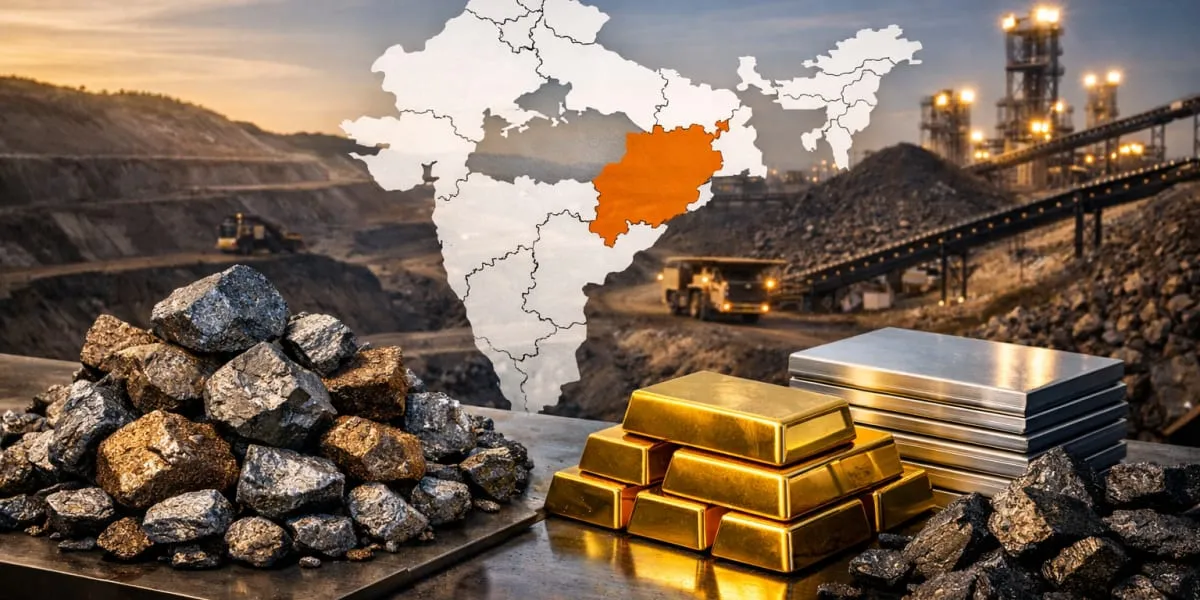
Odisha Leads India’s Mining Economy as East Drives Growth
COAL & MINING

Odisha Leads India’s Mining Economy as East Drives Growth

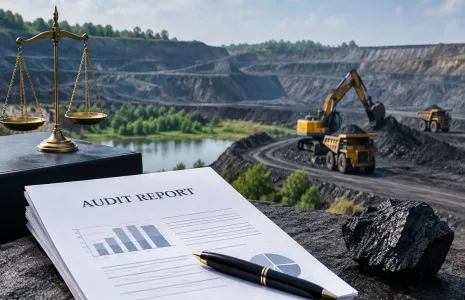
The Assocham?ICRA report, based on Ministry of Statistics and Programme Implementation data, identified Odisha as the largest contributor to India’s mining gross value added, at 14 per cent in FY2025. The study placed Gujarat at 12.9 per cent and Maharashtra at 12.1 per cent, while Rajasthan and Madhya Pradesh contributed 9.6 per cent and 8.6 per cent respectively. These five states jointly accounted for over 57 per cent of national mining GVA, highlighting regional concentration in the sector.

The report observed that mining made a modest contribution to the gross state domestic product of industrially diversified states, with Maharashtra and Gujarat at three point four per cent and two point eight per cent. By contrast, eastern states showed deeper integration, with Odisha at 12.9 per cent and Chhattisgarh at eleven per cent, while Assam, Tripura and Jharkhand recorded eight point six per cent, eight point three per cent and seven point seven per cent respectively. The pattern reflected differing degrees of economic diversification and reform.

The decade to FY2025 saw uneven growth, with Madhya Pradesh recording the highest compound annual growth rate (CAGR) at 12.5 per cent, followed by Gujarat at 11.9 per cent, Telangana at 11.4 per cent and Odisha at 10.8 per cent, while Jharkhand lagged at four point five per cent. Mineral block auctions served as a marker of reform, with Madhya Pradesh auctioning 156 blocks and Odisha 97, ahead of Chhattisgarh at 95, Karnataka at 63 and Maharashtra at 62. Auction portfolios varied by state according to local resource endowments.

Production figures underscored Odisha’s dominance, with the state accounting for over 38 per cent of the value of mineral production in FY2026. Iron ore output reached 155 million (mn) tonnes (t) in FY2025, about 53 per cent of national output, while coal output was 237 mn t in FY2024, nearly 24 per cent of India’s 997 mn t. Odisha also produced 17.5 mn t of bauxite, about 73 per cent of national supply, and held 96 per cent of chromite reserves.

The Assocham?ICRA report, based on Ministry of Statistics and Programme Implementation data, identified Odisha as the largest contributor to India’s mining gross value added, at 14 per cent in FY2025. The study placed Gujarat at 12.9 per cent and Maharashtra at 12.1 per cent, while Rajasthan and Madhya Pradesh contributed 9.6 per cent and 8.6 per cent respectively. These five states jointly accounted for over 57 per cent of national mining GVA, highlighting regional concentration in the sector. The report observed that mining made a modest contribution to the gross state domestic product of industrially diversified states, with Maharashtra and Gujarat at three point four per cent and two point eight per cent. By contrast, eastern states showed deeper integration, with Odisha at 12.9 per cent and Chhattisgarh at eleven per cent, while Assam, Tripura and Jharkhand recorded eight point six per cent, eight point three per cent and seven point seven per cent respectively. The pattern reflected differing degrees of economic diversification and reform. The decade to FY2025 saw uneven growth, with Madhya Pradesh recording the highest compound annual growth rate (CAGR) at 12.5 per cent, followed by Gujarat at 11.9 per cent, Telangana at 11.4 per cent and Odisha at 10.8 per cent, while Jharkhand lagged at four point five per cent. Mineral block auctions served as a marker of reform, with Madhya Pradesh auctioning 156 blocks and Odisha 97, ahead of Chhattisgarh at 95, Karnataka at 63 and Maharashtra at 62. Auction portfolios varied by state according to local resource endowments. Production figures underscored Odisha’s dominance, with the state accounting for over 38 per cent of the value of mineral production in FY2026. Iron ore output reached 155 million (mn) tonnes (t) in FY2025, about 53 per cent of national output, while coal output was 237 mn t in FY2024, nearly 24 per cent of India’s 997 mn t. Odisha also produced 17.5 mn t of bauxite, about 73 per cent of national supply, and held 96 per cent of chromite reserves.

Next Story
Technology

India Data Centre Market to Cross USD 22 Bn by 2030: Vestian

India’s data centre market is projected to more than double from around USD 10 billion in 2025 to USD 22 billion by 2030, according to a latest report by Vestian. The growth is expected to be driven by rising cloud adoption, expanding AI workloads and increasing demand for data-intensive digital services.Vestian noted that the global data centre sector is witnessing rapid expansion, with current installed capacity estimated at 40–50 GW and projections exceeding 100 GW by 2030. Within this evolving landscape, India is emerging as a strategic hub in the Asia-Pacific region, supported by its ..

Next Story
Real Estate

Retail Leasing Hits 4.3 Mn Sq Ft in H2 2025: ANAROCK RELEAP 2026

India’s retail real estate market recorded a total retail absorption of around 4.3 million sq ft across the top seven cities in H2 2025, reflecting steady leasing activity despite a dynamic market environment, according to ANAROCK Retail’s flagship report, RELEAP 2026.The report highlights a structural shift in the sector as organised retail moves beyond transactional formats toward experience-led spaces that combine shopping, entertainment and dining. Apparel emerged as the leading category driving leasing demand during the period, followed by entertainment, hypermarkets/supermarkets, and..

Next Story
Building Material

Berger Paints Launches ‘Garmi Gone, Thandak On’ Cooling Range

Berger Paints India has launched its Home Cooling Paints Range along with a nationwide campaign titled ‘Garmi Gone, Thandak On’, as rising temperatures continue to pose growing challenges for households across India.The company said the campaign promotes smarter and energy-efficient cooling solutions by focusing on preventing heat from entering homes rather than relying solely on air conditioning. Berger Paints stated that a significant amount of heat enters homes through walls, rooftops and structural openings, making surface protection an important factor in reducing indoor discomfort du..

Advertisement

Subscribe to Our Newsletter

Get daily newsletters around different themes from Construction world.

STAY CONNECTED

Advertisement

Advertisement

Advertisement