+
Rajasthan Could Save Rs. 85 bn by Replacing Coal with RE-Storage
COAL & MINING

Rajasthan Could Save Rs. 85 bn by Replacing Coal with RE-Storage

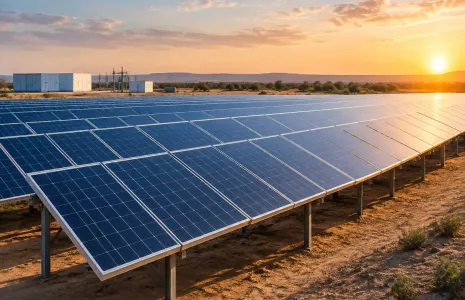
Rajasthan could save up to Rs. 85 bn in power procurement costs in 2030 by meeting emerging reliability requirements through renewable energy (RE) and storage instead of new coal capacity, according to a study by the Council on Energy, Environment and Water (CEEW). The study assesses a February 2025 proposal by state distribution companies (discoms) to contract 3,200 MW of new coal capacity.

CEEW said Rajasthan’s projected 2030 shortfall is primarily a timing and flexibility challenge rather than a capacity deficit. Nearly 90 per cent of the projected 5.5 bn-unit shortfall is expected during non-solar hours, when solar generation is unavailable and the grid requires resources capable of responding quickly to demand changes.

Using 15-minute production-cost simulations, the study compared business as usual with two alternatives: adding 3,200 MW of coal capacity, or procuring equivalent energy through a combination of solar, wind and battery storage. The assessment examined whether each pathway could meet demand at the same reliability level in every 15-minute block throughout 2030.

The study found that the proposed coal capacity, designed to generate more than 20 bn units annually, would still leave about 1 per cent of demand unmet while addressing a 5.5 bn-unit deficit. This would fall short of the Central Electricity Authority’s 0.05 per cent reliability benchmark. CEEW recommended scenario-based integrated resource planning, technology-neutral procurement and stronger regulatory capacity to assess proposals independently.

Replacing new coal with RE and storage could generate net savings of Rs. 11.4 bn to Rs. 85 bn in 2030 and help discoms earn Rs. 35 bn by selling surplus electricity on power exchanges. The pathway could also attract Rs. 600 bn in clean-energy investment and create about 27,000 full-time-equivalent jobs, compared with 2,560 under new coal. It would reduce power-sector carbon dioxide emissions by 24 per cent to 52 mn tonnes, against 68 mn tonnes under coal. Rajasthan’s electricity demand grew at an 8 per cent compound annual growth rate between FY22 and FY25 and is projected to reach 1.5 times FY25 levels by FY30.

Rajasthan could save up to Rs. 85 bn in power procurement costs in 2030 by meeting emerging reliability requirements through renewable energy (RE) and storage instead of new coal capacity, according to a study by the Council on Energy, Environment and Water (CEEW). The study assesses a February 2025 proposal by state distribution companies (discoms) to contract 3,200 MW of new coal capacity. CEEW said Rajasthan’s projected 2030 shortfall is primarily a timing and flexibility challenge rather than a capacity deficit. Nearly 90 per cent of the projected 5.5 bn-unit shortfall is expected during non-solar hours, when solar generation is unavailable and the grid requires resources capable of responding quickly to demand changes. Using 15-minute production-cost simulations, the study compared business as usual with two alternatives: adding 3,200 MW of coal capacity, or procuring equivalent energy through a combination of solar, wind and battery storage. The assessment examined whether each pathway could meet demand at the same reliability level in every 15-minute block throughout 2030. The study found that the proposed coal capacity, designed to generate more than 20 bn units annually, would still leave about 1 per cent of demand unmet while addressing a 5.5 bn-unit deficit. This would fall short of the Central Electricity Authority’s 0.05 per cent reliability benchmark. CEEW recommended scenario-based integrated resource planning, technology-neutral procurement and stronger regulatory capacity to assess proposals independently. Replacing new coal with RE and storage could generate net savings of Rs. 11.4 bn to Rs. 85 bn in 2030 and help discoms earn Rs. 35 bn by selling surplus electricity on power exchanges. The pathway could also attract Rs. 600 bn in clean-energy investment and create about 27,000 full-time-equivalent jobs, compared with 2,560 under new coal. It would reduce power-sector carbon dioxide emissions by 24 per cent to 52 mn tonnes, against 68 mn tonnes under coal. Rajasthan’s electricity demand grew at an 8 per cent compound annual growth rate between FY22 and FY25 and is projected to reach 1.5 times FY25 levels by FY30.

Related Stories

Gold Stories
Next Story
Infrastructure Transport

Kopri-Patni Creek Bridge to Improve Thane-Navi Mumbai Connectivity

Road connectivity between Thane and Navi Mumbai is set to receive a boost with the proposed six-lane Kopri-Patni Creek Bridge, which will provide a new route across Thane Creek. The project is intended to create a direct link between the two urban centres and add capacity to the region’s road network. The bridge will connect Kopri in Thane East with Patni in Navi Mumbai. It will begin at Mith Bandar Road in Kopri, about 750 metres from Thane railway station, cross Thane Creek and land near Airoli Knowledge City Road in Navi Mumbai. The project has advanced with Akshya Infra Projects emerging..

Next Story
Infrastructure Urban

Bengaluru Cuts Unaccounted-for Water to 26.5 Per Cent

The Bengaluru Water Supply and Sewerage Board (BWSSB) has reduced unaccounted-for water from nearly 51 per cent in 2013 to 26.5 per cent in 2025, improving efficiency across a metropolitan region of 14 mn people. The reduction has saved nearly 200 mn litres of water a day without requiring equivalent additional capacity. Bengaluru depends primarily on the Cauvery river system, with water transported over 100 km to the city. BWSSB operates six major treatment plants with combined installed capacity of 2,293 MLD and supplies nearly 150 litres per person per day. The Cauvery Water Supply Scheme S..

Next Story
Infrastructure Transport

J&K Government Approves Free Public Transport for Differently-Abled

The Jammu and Kashmir Government has sanctioned free travel for differently-abled persons on public transport, fulfilling a key Budget announcement made in March. The decision was announced on Wednesday and is intended to improve access to essential transport services across the Union Territory. The facility will cover services operated by the Jammu and Kashmir Road Transport Corporation (JKRTC). It will also apply to e-buses operated by Jammu Smart City and Srinagar Smart City, extending the concession across public transport networks in the Jammu and Srinagar areas. The Office of Chief Minis..

Advertisement

Subscribe to Our Newsletter

Get daily newsletters around different themes from Construction world.

STAY CONNECTED

Advertisement

SPECIAL OFFER
QR Code