


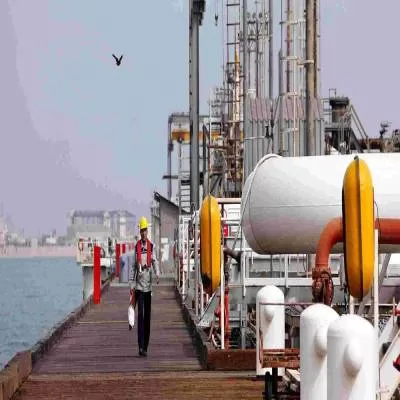


Brent Crude Surges 10 Per Cent To $119 After Iran Strikes
OIL & GAS

Brent Crude Surges 10 Per Cent To $119 After Iran Strikes

Brent crude surged 10 per cent to $119 per barrel after Iranian strikes on Gulf energy infrastructure, including a missile attack on Qatar's Ras Laffan liquefied natural gas hub and drone strikes on refineries in Saudi Arabia and Kuwait. The attacks sent energy prices sharply higher and weighed on global equity markets as investors assessed the prospect of prolonged supply disruption.

Iranian missiles were reported to have caused extensive damage at Ras Laffan, while drones ignited fires at a Saudi refinery on the Red Sea and at two facilities in Kuwait, prompting immediate concerns about regional output. World oil benchmarks climbed, European gas rose as much as 35 per cent, and international benchmark Brent later retreated to around a six per cent gain while the main US contract, West Texas Intermediate, was up zero point three per cent. Market commentators said the escalation underscored the vulnerability of Gulf energy infrastructure to broader regional hostilities.

Equity markets reflected the shock, with the Frankfurt and London exchanges each losing around two per cent and Paris down one point seven per cent, while Tokyo fell by more than three per cent and other Asian bourses also weakened. Analysts noted that shipping through the Strait of Hormuz had been effectively curtailed at times, affecting one fifth of global oil and gas flows and heightening supply risk. The scale of the price moves prompted fresh debate over the likely duration and economic impact of the disruption.

The surge in energy costs raised concerns about renewed inflationary pressure and the potential for higher policy rates, leaving central banks to weigh the implications for monetary strategy. Recent data showing US wholesale inflation rising more than expected before the attacks was cited as an additional factor that could complicate decisions for the Federal Reserve, the Bank of England and the European Central Bank. Other central banks responded with varied measures, with the Bank of Japan holding rates and the Reserve Bank of Australia increasing its key rate amid sharply higher fuel prices.

Brent crude surged 10 per cent to $119 per barrel after Iranian strikes on Gulf energy infrastructure, including a missile attack on Qatar's Ras Laffan liquefied natural gas hub and drone strikes on refineries in Saudi Arabia and Kuwait. The attacks sent energy prices sharply higher and weighed on global equity markets as investors assessed the prospect of prolonged supply disruption. Iranian missiles were reported to have caused extensive damage at Ras Laffan, while drones ignited fires at a Saudi refinery on the Red Sea and at two facilities in Kuwait, prompting immediate concerns about regional output. World oil benchmarks climbed, European gas rose as much as 35 per cent, and international benchmark Brent later retreated to around a six per cent gain while the main US contract, West Texas Intermediate, was up zero point three per cent. Market commentators said the escalation underscored the vulnerability of Gulf energy infrastructure to broader regional hostilities. Equity markets reflected the shock, with the Frankfurt and London exchanges each losing around two per cent and Paris down one point seven per cent, while Tokyo fell by more than three per cent and other Asian bourses also weakened. Analysts noted that shipping through the Strait of Hormuz had been effectively curtailed at times, affecting one fifth of global oil and gas flows and heightening supply risk. The scale of the price moves prompted fresh debate over the likely duration and economic impact of the disruption. The surge in energy costs raised concerns about renewed inflationary pressure and the potential for higher policy rates, leaving central banks to weigh the implications for monetary strategy. Recent data showing US wholesale inflation rising more than expected before the attacks was cited as an additional factor that could complicate decisions for the Federal Reserve, the Bank of England and the European Central Bank. Other central banks responded with varied measures, with the Bank of Japan holding rates and the Reserve Bank of Australia increasing its key rate amid sharply higher fuel prices.

Next Story
Infrastructure Urban

Flender Unveils N-ZAPEX Gear Couplings for Cost-Effective Operation

Flender has unveiled its new N-ZAPEX gear couplings, setting a new industry standard for drive applications in harsh conditions, such as those found in steel, cement, mining, and oil & gas industries. Designed to deliver economic benefits over the entire lifecycle, the N-ZAPEX series offers the highest torque density and misalignment capacities on the market.The N-ZAPEX is available in two versions, XN and XW, each tailored to meet different customer requirements. The XN variant focuses on standardisation, reduced complexity, and cost-effectiveness for smaller sizes, featuring reusable com..

Next Story
Infrastructure Urban

Anil Agarwal Calls for Entrepreneurial Role in Natural Resource PSUs

Anil Agarwal, Chairman of Vedanta, has highlighted the transformative potential of greater entrepreneurial involvement in India's public sector companies within the natural resources space. In a LinkedIn post, he emphasised the importance of empowering India’s pool of entrepreneurs alongside skilled public-sector talent to strengthen domestic production and reduce the country’s reliance on imports.Agarwal drew comparisons with India’s agricultural success, where self-sufficiency and surplus production were achieved. He suggested that a similar approach could unlock substantial value in p..

Next Story
Technology

Advaiya Launches Change Log Archival App for Microsoft Dynamics 365

Advaiya has launched its Change Log Archival app for Microsoft Dynamics 365 Business Central on the Microsoft Marketplace. The app enables organisations to securely archive large volumes of change log data outside the core ERP system while ensuring auditability, compliance, and traceability.As organisations face growing change log records that increase database size and impact system performance, the Change Log Archival app addresses these challenges by archiving historical logs to Azure Blob Storage. This solution optimises storage, maintains data integrity, and ensures accessibility, allowin..

Advertisement

Subscribe to Our Newsletter

Get daily newsletters around different themes from Construction world.

STAY CONNECTED

Advertisement

Advertisement

Advertisement